India Updates e-Visa Output Formats, Enhancing Security and Clarity
India has quietly upgraded its e-Visa issuance system, refining the PDF output with clearer layouts, enhanced security features, and improved readability for travelers and border officials alike.
As India pursues further modernization, a subtle yet significant change to its e-Visa system has just taken effect. Contrary to circulating rumors, this is not a full overhaul of the application process—the update centers solely on the design and content of the issued documents, specifically the PDF files generated at the end of the procedure.
More Than Just Cosmetic Changes
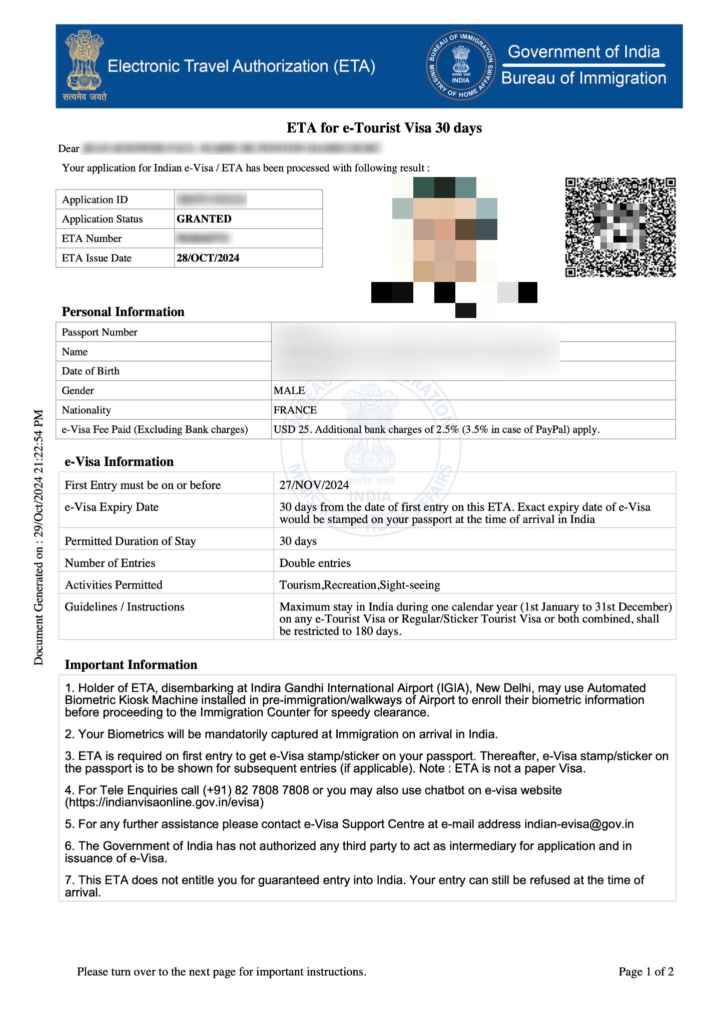
At first glance, the update may appear to be a superficial redesign. However, the revised India e-Visa documents go beyond mere aesthetics. The new format is engineered to enhance security and improve legibility for both travelers and border authorities.
Key improvements include:
A clearer, more open layout that enhances readability;
Optimized fonts designed for enhanced on-screen clarity;
Additional visual security elements;
Improved compatibility with standard electronic document readers.
Critically, the update aims to eliminate confusion around permitted entry dates and authorized stay periods in India, as previously addressed in our reporting.
Structural Improvements
Personal Information: Traveler data is now grouped under a dedicated "Personal Information" section, making it easier to verify.
Visa Details: Visa-related information is presented with clear descriptors, including an "e-Visa Information" header.
Validity Period: The updated format specifies that the exact visa duration will be stamped at the Indian port of entry, offering greater flexibility.
Authorized Activities: Activities are listed more concisely in the new version.
Guidelines and Instructions: The "Guidelines / Instructions" section is more comprehensive, and a new additional instruction page has been added. The document now lists all possible Indian entry points.
While these changes may seem small, they are expected to streamline frontline inspections and reduce the risk of misinterpretation. We’ve already processed dozens on behalf of our travelers this morning.
Consistency Keeps the Process Reliable
The application process remains unchanged. Travelers will still access the same online form and provide the same information as previously required. This consistency is reassuring for those already familiar with the e-Visa process. The Indian e-Visa, a traveler-preferred document issued by the Government of India for nearly a decade, is processed from Mumbai; no embassy involvement is required in its issuance.
Nonetheless, this update to the final output is consequential. It reflects India’s ongoing commitment to incremental improvement without disrupting user experience.
A Move Toward Fully Digital Visas?
Some industry observers view this revamp as a precursor to full digitalization of Indian visas. By optimizing the PDF format, India may be laying the groundwork for future transition to entirely digital, mobile-accessible visas that could be retrieved via a simple QR code, a model already being piloted by several countries under the so-called "invisible visa" trend. India, with its established reputation as a tech leader, appears well-positioned to adopt such a system in the mid-term.
Spécialiste de la veille réglementaire et experte en contenus destinations, elle analyse quotidiennement l’évolution des formalités d’entrée pour traduire la complexité administrative en guides pratiques. Son rôle combine expertise terrain et précision technique afin de garantir la fiabilité des informations délivrées aux voyageurs.