
More than 137,000 commercial flights set a new world record on july 13
The aviation industry hit an unprecedented milestone on July 13, 2023, with more than 137,000 commercial flights in a single day, driven by post-pandemic travel demand. Air traffic soared to over 20,000 flights simultaneously at peak times, though military and private flights were excluded from the count.
On Thursday, July 13, 2023, 137,225 commercial flights were recorded by flight-tracking platform Flightradar24, making it the busiest day ever for commercial aviation, surpassing last week’s record by 3,000 flights. At peak moments, more than 20,000 flights were airborne simultaneously. This figure excludes military and some private flights.
Ironically, the same week brought another global landmark: the hottest day ever recorded on Earth, with an average global temperature of 17.23 °C.
Stronger air travel rebound than ever before post-pandemic
Airline bookings soared after COVID-19 restrictions eased. By May 2023, passenger numbers were at 96% of May 2019 levels—close to pre-pandemic totals. Yet the rebound has now set its own record: Flightradar24 confirmed more than 137,000 commercial flights in a single day on July 13.
An all-time high for real-time flight tracking
“The busiest day for commercial aviation we have ever tracked,” the site noted on Twitter. “More than 195,000 flights were visible at one moment.
Impact on airlines and passengers
Sky-high traffic brings real strain. easyJet announced it would cancel 1,700 flights between July and September due to capacity constraints, and other carriers may follow with delays or cancellations as global airspace reaches saturation.
Mapping the day’s overload
The market is saturated and travelers show no sign of cutting back: on the Flightradar24.com live map, the planet was a glowing scatter of aircraft, so dense that national borders were nearly erased by overlapping flight paths.
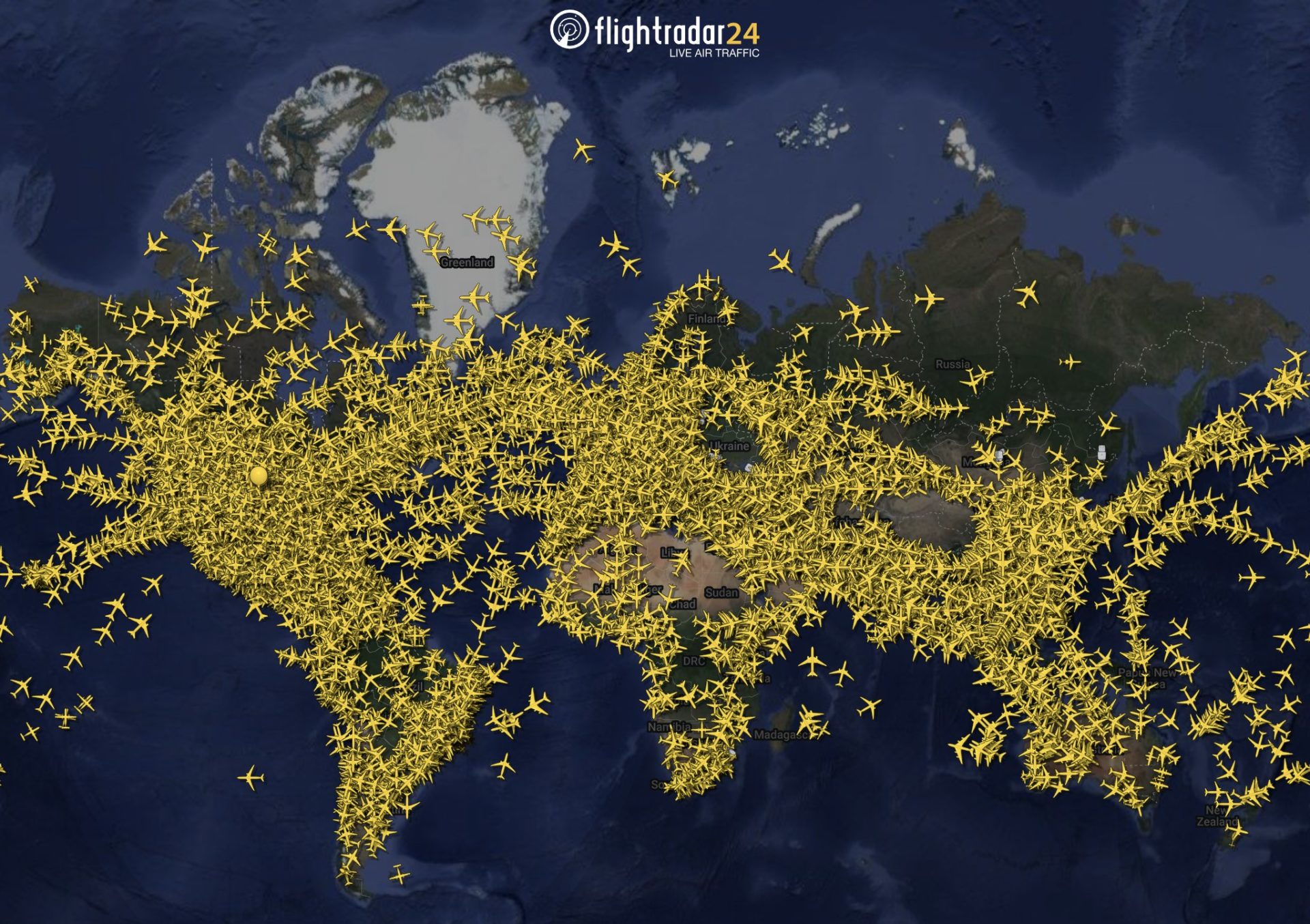
The skies on July 13, 2023: FlightRadar24’s snapshot of record air traffic.
Outlook: rising skies and evolving responses
With demand still climbing, solutions are needed to manage the influx and curb environmental impact. Emerging technologies promise better air-traffic control and lower CO₂ emissions, while travelers may need to adjust plans and choose rail or other transport options for shorter routes when feasible.
Environmental challenges loom large
The rapid traffic surge intensifies the sector’s environmental pressures—greenhouse-gas emissions and noise pollution remain major hurdles. Next-generation aircraft and alternative fuels are vital, yet scaling these solutions must keep pace with the accelerating growth in flights.
A specialist in regulatory monitoring and a content destination expert, she analyzes daily changes in entry formalities to turn complex administrative processes into practical guides. Her role blends ground-level expertise with technical precision to ensure the reliability of the information provided to travelers.

