New Zealand Eases Certified Translation Rules for Visitor Visas in 2025
From 26 May 2025, New Zealand’s Immigration NZ will no longer require certified translations for visitor visa documents in non-English languages, easing the process for international travelers.
·
International travelers have a new reason to celebrate: starting 26 May 2025, Immigration New Zealand (INZ) will relax its rules on certifying translated documents for long‑stay visitor visa applications. Applicants will no longer be required to submit certified translations of supporting documents written in any language other than English.
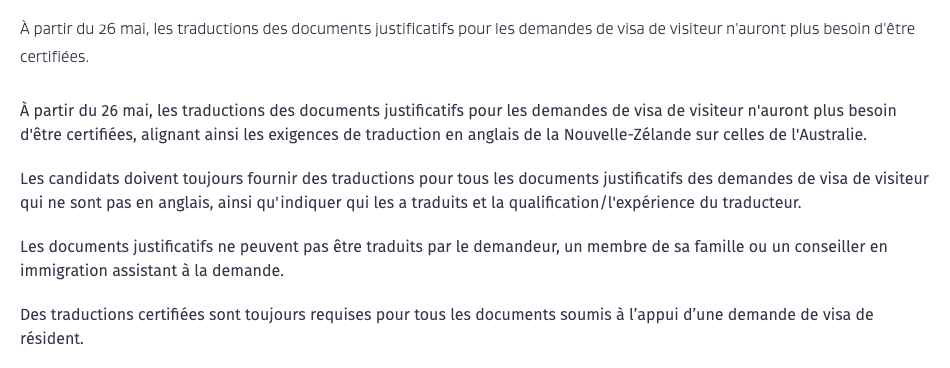
Screenshot from Immigration New Zealand website
What’s changing
From 26 May 2025, visitor‑visa applicants must still provide translations for non‑English documents, but official certification will no longer be mandatory. The change brings New Zealand closer to Australia’s more flexible policy and aims to make the process faster, cheaper and simpler.
Key takeaways
Certified translations no longer required for visitor‑visa applications.
Translations remain compulsory, but must now include:
the translator’s name
qualifications or relevant experience
a signed declaration that the translator is neither the applicant, a family member, nor an immigration adviser
Exception: certified translations are still required for resident visas.
Before & after comparison
Requirement | Pre–26 May 2025 | From 26 May 2025 onwards |
|---|---|---|
Certified translation mandatory | Yes | No |
Who may translate? | Certified translator only | Any qualified translator |
Information to submit | Original certification | Translator’s name, qualifications, signed declaration |
Why the change helps
Cost savings: Certified translations can be expensive—this fee is now avoided.
Faster processing: Certification delays are eliminated, helping applications move smoothly.
Fairer access: Applicants in countries with scarce or costly certified services are no longer disadvantaged.
Who benefits most
The change is especially welcome for long‑stay visitor‑visa applicants including:
First‑time visitors to New Zealand
Short‑course students
Frequent travelers between Australia and New Zealand
Families visiting relatives
Nationals from non‑English‑speaking countries
Plan your New Zealand adventure
With this streamlined step, planning a trip to New Zealand just got easier. Whether you’re drawn by its breathtaking landscapes, national parks or Māori culture, this small but meaningful change makes the destination more accessible than ever.


Get our visa news first in your Google results: add Visamundi to your preferred sources.
