Can You Fly with a Dog or Cat on Transavia, Ryanair or EasyJet?
Discover the pet policies of Transavia, Ryanair, and EasyJet—find out why most low-cost airlines don’t allow pets, exceptions for service dogs, and what you need to know before booking.
·
Low-cost airlines typically do not allow pets to travel in the cabin. In this article, we break down the pet policies of the biggest low-cost carriers and explain why flying with an animal may not be an option.
General Pet Policies of Major Low-Cost Airlines
Ryanair does not permit pets of any kind on board, except for certified service dogs on certain routes. These dogs must be accredited by a member organization of Assistance Dogs International (ADI), Assistance Dogs UK, or the International Guide Dog Federation (IGDF). They are also subject to advance declaration; failure to notify the airline in advance may result in denied boarding.
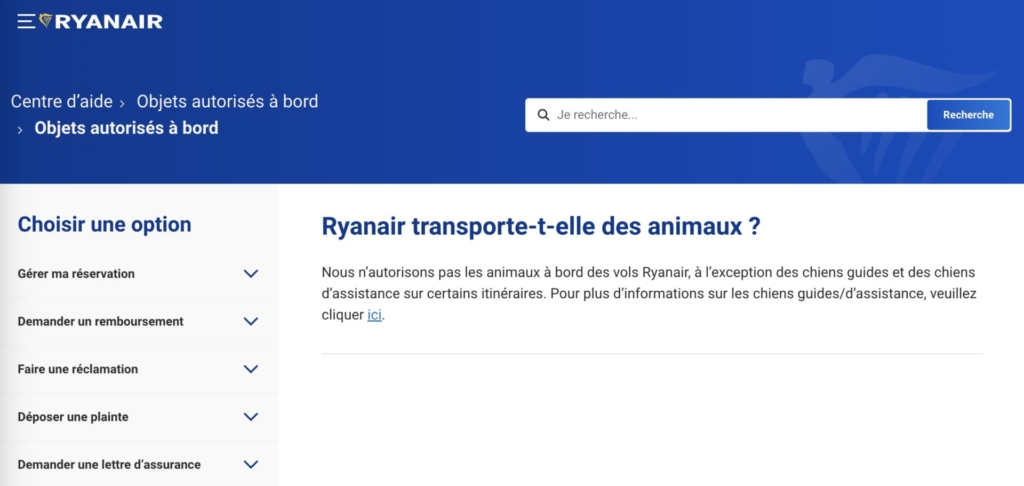
Ryanair pet policy guidelines for service dogs. Image: Ryanair
Emotional support and therapy dogs are not accepted as service animals by Ryanair and are therefore not allowed on board.
EasyJet permits service dogs to fly on specific routes, mainly within the European Union, though additional conditions apply for other destinations. Companion animals, including cats and dogs, are not allowed in the cabin.
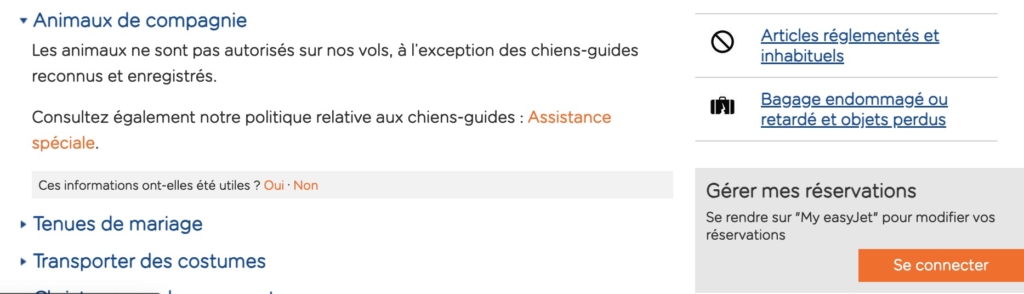
EasyJet pet policy restrictions. Image: EasyJet
Transavia is the exception among low-cost carriers: pets are permitted aboard most flights, but only within strict limits. Certain routes—primarily those operated through low-cost terminals—do not accept pets due to limited on-ground infrastructure. Many of these terminals lack the appropriate facilities to safely accommodate animals, resulting in pet travel restrictions on specific routes.
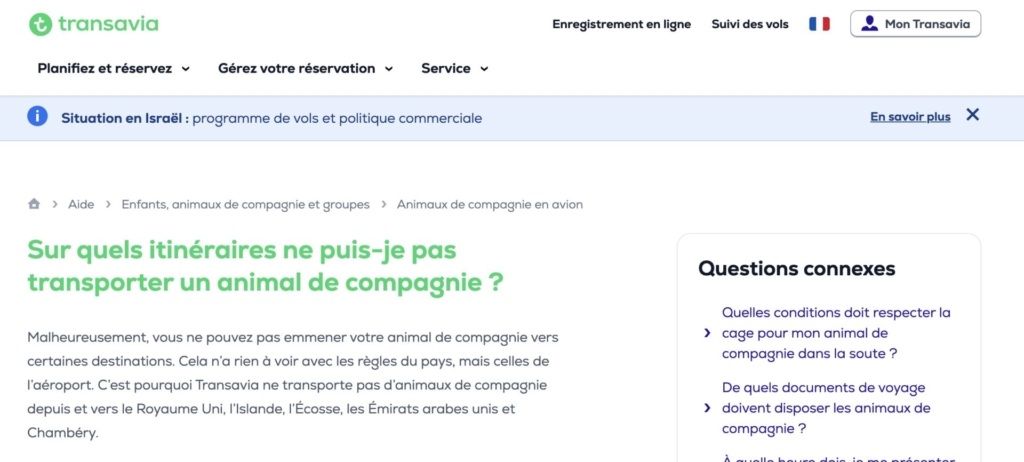
Transavia’s pet policy overview and restricted airports. Image: Transavia
Why Most Low-Cost Airlines Don’t Allow Pets Aboard
Low-cost carriers emphasize operational efficiency and punctuality. Allowing pets could introduce delays—and airlines are keen to avoid anything that might disrupt their tight schedules. Still, several other factors influence their decision not to carry animals.
Profitability and cabin space: Low-cost carriers focus on maximizing seating capacity and minimizing overheads. Carrying pets would require dedicated cabin space under seats to fit IATA-compliant travel crates—an expense most low-cost carriers are reluctant to incur.
Minimal ground time: These carriers operate with extremely tight turnarounds between flights. Adding a pet boarding process could extend ground time, undermining their business model of rapid turnovers.
Added operational complexity: Handling pet travel involves document checks, health screenings, staff training, and space allocation. For budget operators, simplifying operations means limiting variables—and that includes excluding pets.

As CEO of Visamundi, I am dedicated to simplifying international travel by assisting our clients in obtaining visas worldwide. By staying at the forefront of ever-changing regulations, I ensure our agency remains a trusted pillar in the visa services industry.
Get our visa news first in your Google results: add Visamundi to your preferred sources.
