EU Entry-Exit System (EES) to Launch October 12, 2025
The EU’s new Entry-Exit System (EES), which modernizes border management by digitizing checks for short-stay travelers, goes live October 12, 2025, replacing manual passport stamps with biometric verification.
·
The European Union will implement the Entry-Exit System (EES), a major step in modernizing the management of external borders within the Schengen Area. This system primarily affects third-country nationals entering for short stays, whether they require a visa or not. The new system, which has been in phased implementation since 2022, will finally launch on 12 October 2025.
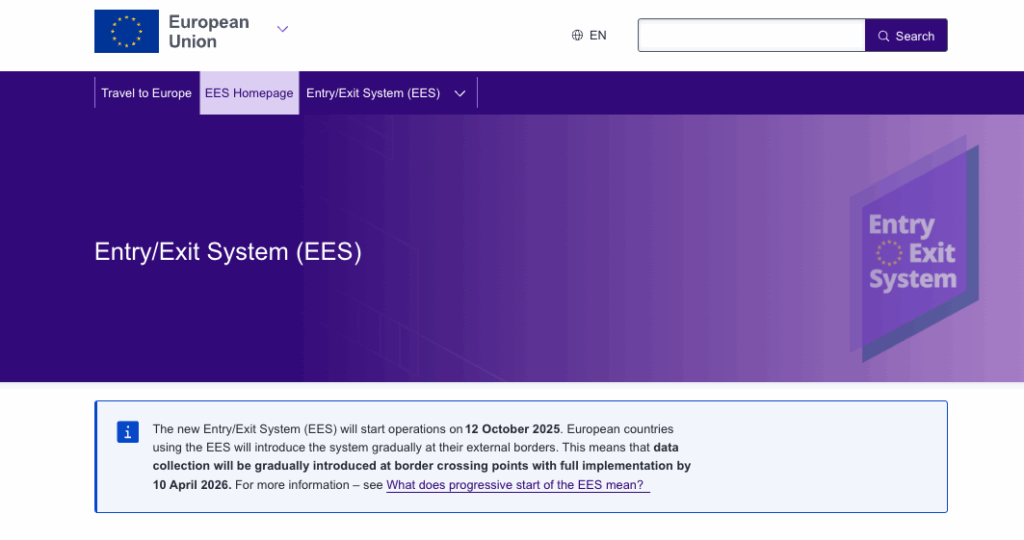
The EES will replace manual passport stamps with fully digital collection of traveler information: name, passport number, photo, fingerprints, plus entry and exit dates, times, and locations within the Schengen Area. Entry refusals will be recorded as well. This data will be stored for three years in a centralized database.
The EES’s main goal is to strengthen control over short-term stays, capped at 90 days within any 180-day period, enabling quick detection of overstays. An online tool will let travelers check their remaining Schengen days.
Phased rollout by Schengen states
This new system will be rolled out progressively at all external borders of participating Schengen member states. It will have no effect on EU citizens or legal residents, nor on holders of long-stay visas or special residence permits.
New entry process for travelers
For affected travelers, passports must now be scanned at dedicated kiosks at each external border crossing, followed by fingerprinting or photo capture, which will be matched against stored records. While the system may add wait times at borders, information and awareness campaigns are planned to ease the transition.
ETIAS expected in 2026
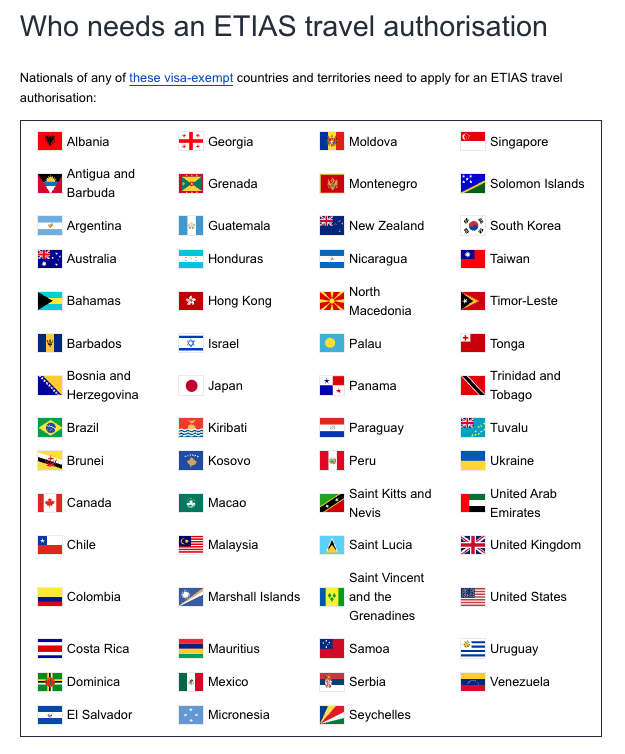
The ETIAS (European Travel Information and Authorisation System) will function as a required electronic travel authorization created by the European Union. It will apply to all visa-exempt nationalities entering the EU and become mandatory upon entry.
While launch is planned for late 2026, with a phased rollout, authorities have indicated it will be compulsory in 2027. A recent update to ETIAS fees has also been announced, with the fee rising from €7 to €20.
Nationals from 59 visa-exempt countries are expected to be eligible for the ETIAS authorization.

Get our visa news first in your Google results: add Visamundi to your preferred sources.
