Europe’s Entry/Exit System Turns Fully Operational This Week
As of Friday, 10 April 2026, the EU’s Entry/Exit System (EES) is now fully operational across 29 member states. Non-Schengen visitors face streamlined but mandatory biometric registration at major hubs such as CDG, AMS, FRA, and MUC.
·
As of this Friday, 10 April 2026, the European Union has officially upgraded its migration policy: the Entry/Exit System, or EES, is now fully operational in all 29 participating European countries. Major airports were the first to install self-service kiosks during the phased rollout that began in late 2025.
If you’re arriving from outside Europe, chances are you’ll land at Paris-Charles de Gaulle (CDG), Paris-Orly (ORY), Amsterdam Schiphol (AMS), Frankfurt (FRA), Munich (MUC) or Geneva (GVA).
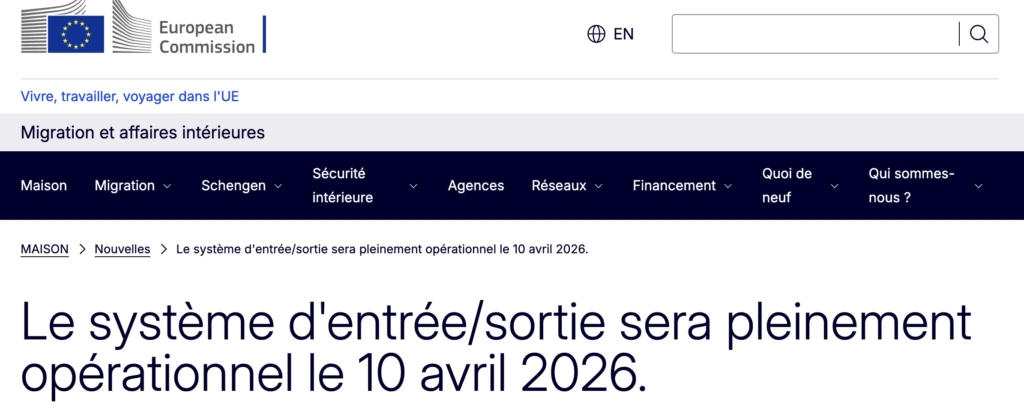
Official European Commission site
What is EES and What Changes Today?
The EES initiative, launched on 12 October 2025, has now reached full deployment. It marks the end of manual passport stamps for short-term visitors from non-EU countries (up to 90 days within any 180-day period). Instead of a customs officer stamping a date on an empty page, your entry and exit will be captured digitally.
All registration is now 100% digital. The system captures your facial image, fingerprints and instantly cross-checks your personal data against your travel document. Your biometric details are secured from the first scan onward, speeding up security while strengthening border protection in the long run.
What Travellers Need to Know Before Departure
The EES does not apply to everyone. You are exempt if:
You are a citizen of a European Union or Schengen Area country;
You hold a long-stay visa or any valid residence permit (e.g., student visa, talent passport, family reunification).
All other international visitors arriving from the Americas, Asia, the Middle East or Africa must prepare thoroughly. The digital system tolerates no ambiguity in documentation.
Check that your supporting papers—hotel bookings, return tickets and travel insurance—are consistent and ready on your phone or in hand.
Allow extra connection time. First-time enrolment (photo + prints) at an EES kiosk usually takes one to two minutes longer per passenger. Build this buffer into itineraries with connecting flights in Europe.
Strictly observe the 90/180 rule. The system now tracks your stay automatically. Any overstays trigger alerts, putting future travel to Europe at serious risk. No more illegible stamps—just real-time compliance.
Next Up: Do not confuse EES with ETIAS
We’re frequently asked: “Do I need to pay for EES?” The answer is no—EES is a free border-control technology.
It does, however, clear the way for the upcoming ETIAS (the EU’s answer to the US ESTA). Expected later, ETIAS will be a mandatory, paid authorization (€7) for visa-exempt travellers such as Americans, Canadians, Britons or Brazilians—required before boarding.

Get our visa news first in your Google results: add Visamundi to your preferred sources.
