India e-Visa Price Surge Catches Travelers Off Guard
India’s new e-visa pricing policy introduces steep hikes—especially for long-stay and business visas—revealing a targeted approach allegedly based on reciprocity and national passport rankings.
·
What felt like a travel win has turned into a reality check. While travelers celebrated the launch of a new system allowing advance applications up to four months ahead, an urgent review of fresh official tariff grids implemented on Tuesday, 23 December 2025, has uncovered a sharp sting in the tail: India’s e-visa costs have surged beyond all expectations.
Gone are the days when an Indian visa was a universally cheap ticket. Today, depending on citizenship and e-visa type, prices can differ by as much as five times. Business visas and five-year tourist visas—once expected newcomers to the budget travel world—now carry eye-watering price tags. A closer look at the new official schedules shows that travel budgets must now be recalibrated.
Redefining the e-Business Visa: a passport-linked tax
The steepest changes hit the e-Business Visa. Once a standard, predictable fee across applicants, the category now features aggressive, geography-based tiering—further evidence of India’s legendary procedural laboriousness.
New official fee tables disclose a baseline processing fee of around $80 USD for a one-year business entry in many "neutral" countries—think Tanzania, Switzerland or Portugal. But for major economic partners or high-income countries, India has applied a clear super-tax.
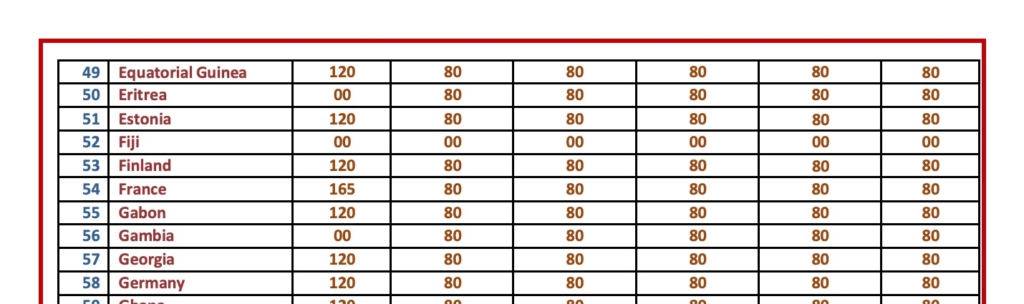
France pays $165 for the same e-Business Visa, more than double the Tanzanian tariff.
Spotlight on the new disparities for the e-Business Visa:
Standard tier: German, Spanish and Italian nationals pay $120 USD.
Premium tier: French passport holders face $165 USD. US citizens are billed $140 USD.
Top-tier: The UK’s fee has hit $242 USD, while the UAE now faces an eye-watering $415 USD surcharge.
For businesses that regularly deploy staff to India, the new tariff grid forces a complete revision of mobility budgets. Sending a UK consultant to India now triples the e-visa cost compared with dispatching a German colleague on the same trip.
Five-year tourist visas: comfort at a record premium
The revised fee schedule also lands squarely on long-term tourist visas. The highly prized five-year visitor visa, long the "holy grail" for India lovers for its five years of multiple-entry comfort, now commands a steep price for Western passport holders.
While a 30-day e-tourist visa remains affordable (typically $10–$25 USD depending on season and currency conversion), the flagship five-year visa has seen targeted inflation that swiftly erodes the former budget advantage.
A French traveler must now budget $200 USD (up from $40 USD for a single-year visa). To justify that increase, the traveler must visit India at least five consecutive years—no short-term gap years allowed.
Visitors from the UK fare even worse. The official five-year e-tourist tariff now stands at $448 USD, making annual visas start to look more attractive again—monetarily and logistically.
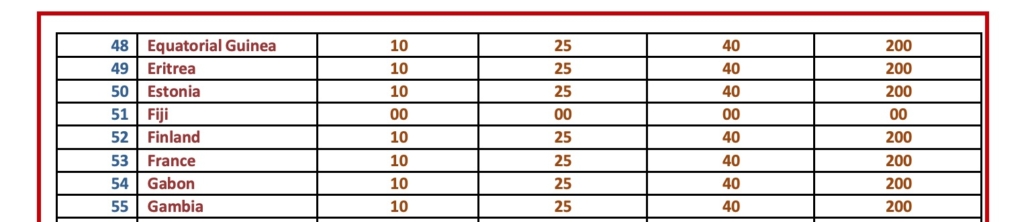
UK and French applicants face the steepest five-year visa prices to date.
Diplomatic reciprocity at play?
India appears to be applying a strict reciprocity policy. Countries that impose higher visa fees or complex application procedures on Indian citizens end up facing steeper tariffs for their own nationals traveling the other way.
Some countries still benefit from zero tourist-visa fees—Argentina, Indonesia and Jamaica among them—while the United States, United Kingdom and Canada now bear the highest costs for accessing India, whether for tourism or business.
Hidden surcharges and penalties for minor errors
Beyond headline prices, travelers must prepare for unavoidable extras. The official portal adds a mandatory 3% bank processing fee (officially confirmed at 3% on the December 2025 tariff sheets) on every e-visa application. That $7–$8 USD bump becomes significant when the base charge is already $242 USD for a UK business visa.
Crucially, all paid e-visa fees are strictly non-refundable. With single visa fees now reaching several hundred dollars, even a minor error proves costly. A mis-typed passport digit or an out-of-spec photo (incorrect white background, wrong dimensions) will trigger instant rejection—and the loss of the entire payment. For a $10 visa, that was frustrating but manageable. For a $415 business e-visa or a $448 five-year tourist visa, a rejection becomes a financial disaster. Against the new fee backdrop, using a professional visa agency is no longer a luxury; it is an economic safeguard. |

As CEO of Visamundi, I am dedicated to simplifying international travel by assisting our clients in obtaining visas worldwide. By staying at the forefront of ever-changing regulations, I ensure our agency remains a trusted pillar in the visa services industry.

Get our visa news first in your Google results: add Visamundi to your preferred sources.
