
Indonesia cracks down on influencers on tourist visas and imposes new C5A visa
Indonesia is deporting and blacklisting influencers who monetize content under tourist visas in Bali. The new C5A 'content creator' visa is now mandatory: requirements, duration, process explained.
Filming a sponsored vlog on a Canggu beach, tagging a brand from the rice terraces of Ubud, or posting a paid story from a favorite café in Seminyak: until recently, thousands of content creators did all this with little thought, armed only with a simple tourist visa. No more. Since spring 2026, Indonesian immigration has launched an unprecedented crackdown on Bali, and the official figures are staggering: thousands of interventions, over 2,000 expulsions and permit cancellations, and bans from re-entering the country for up to a decade. At the same time, Jakarta has rolled out a legal solution: the C5A visa, a category created specifically for foreign content creators. Here’s what you need to know.
The ‘Dharma Dewata’ patrol: Bali steps up enforcement
Since April 2026, Bali’s immigration services have deployed a coordinated operation codenamed the Dharma Dewata Patrol. Agents are focusing on the island’s busiest tourist hubs: Denpasar, Singaraja, Canggu, Ubud, Seminyak, Kerobokan and Uluwatu — precisely the areas where digital nomads, influencers and foreign remote workers cluster.
The update provided by Indonesia’s Directorate General of Immigration is telling: between 1 January and 5 May 2026, 6,779 enforcement actions were launched against foreign nationals nationwide. Of those, 2,026 cases ended in expulsion or permit cancellation, while 1,323 individuals were added to the immigration blacklist, barring them from re-entering Indonesia.
Officials have openly stated that social media surveillance is now a core part of detection. An Instagram post tagging a hotel partner, a TikTok video partnered with a brand, or a story publicizing a complimentary stay: any of these posts can serve as evidence to trigger a check and initiate removal proceedings.
What is now strictly forbidden on a tourist visa
The rule from Indonesian immigration is clear: creating or publishing online content for payment, sponsorship or commercial purposes breaches the terms of a tourist visa (visa on arrival, e-VOA or visa exemption).
Concretely, immigration has zeroed in on:
Sponsored posts and brand partnerships (including “in-kind” arrangements such as free hotel nights or meals);
Commercial shoots and productions, even if made for clients outside Indonesia;
Direct monetization of locally produced content (YouTube, TikTok, subscription platforms); and
any form of volunteering or undeclared work-like activities.
Sanctions are severe: fines, immediate visa cancellation, detention, deportation, re-entry bans of up to 10 years, and permanent blacklist placement for repeat or serious offenses.
An additional rule taking effect on 18 June 2026 can require creators earning income in Indonesia to register with the national business-licensing system — a further sign that Jakarta is tightening oversight of the creator economy.
The C5A visa: the legal gateway for content creators
Rather than slamming the door, Indonesia is offering creators a legal pathway. Enter the C5A visa ("Kunjungan Konten Kreator", or Content Creator Visit visa), officially listed in the Directorate General of Immigration’s visa catalogue (imigrasi.go.id). It is a category specifically for foreign content creators and influencers, separate from visas reserved for professional journalists and production crews.
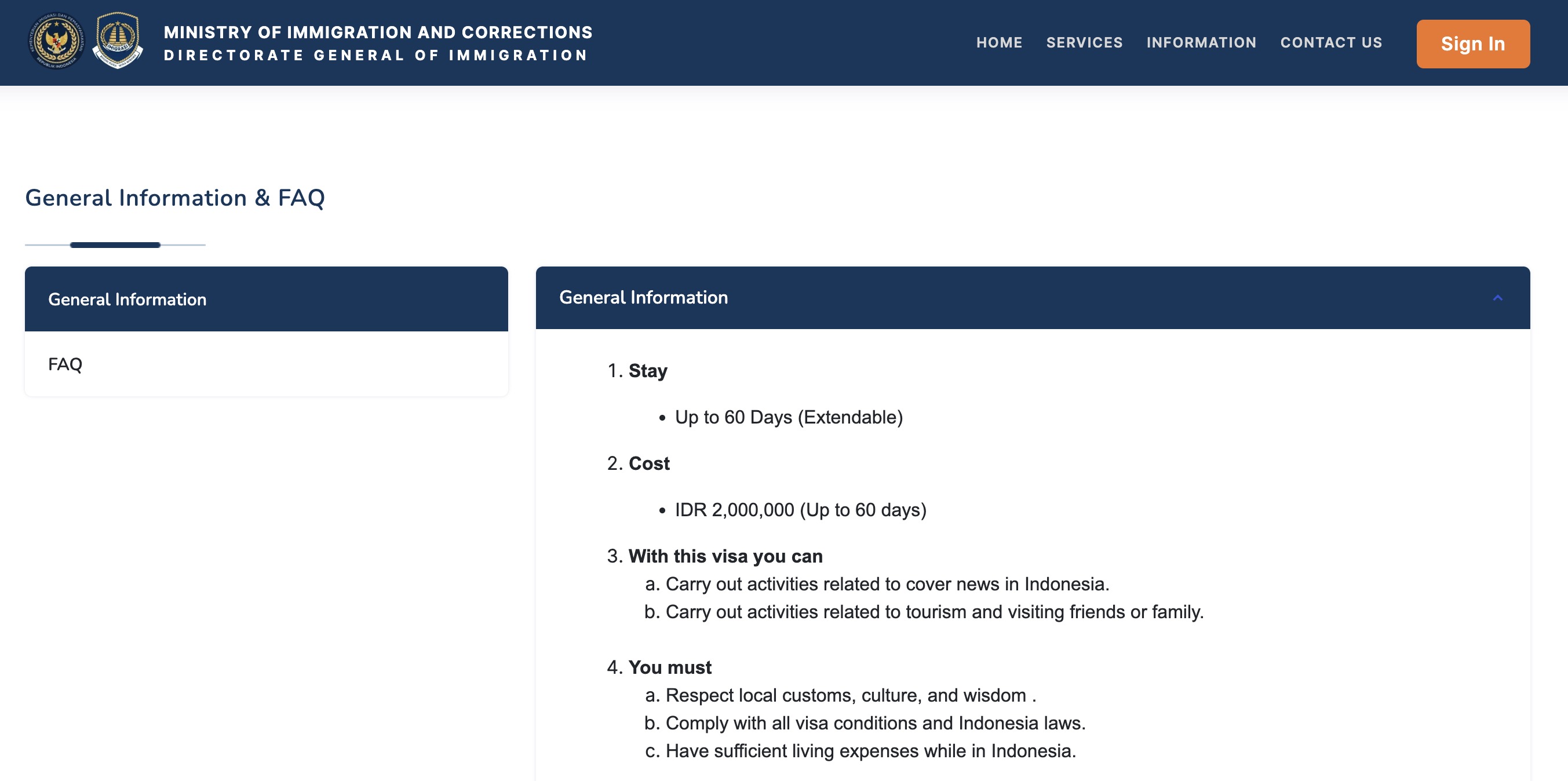
What is known about the C5A to date:
Type: single-entry e-visa applied for via the official portal evisa.imigrasi.go.id;
Duration: initial stay of 60 days, extendable twice for 60 days each, for a cumulative stay of up to 180 days without leaving the country;
Activation: must be used within 90 days of issuance;
Financial proof: a three-month bank statement showing a minimum balance of 2,000 USD in the applicant’s name.
One caveat: as of publication, the official C5A profile on the Directorate General of Immigration website still shows the placeholder “Data Belum Tersedia” (“Data not yet available”). Final fee schedules, the complete document checklist and the exact scope of permitted activities may be updated by Indonesian authorities in the coming weeks.
What all this means for you, in practical terms
Traveling to Bali as a tourist? Nothing changes: visa on arrival, e-VOA or exemption, as applicable by nationality, remain valid. Posting holiday photos without pay or partnerships is risk-free.
You’re a content creator, influencer, photographer or videographer whose trip has a commercial angle — even partially? Indonesian authorities are unequivocal: a tourist visa no longer covers the activity, and your own posts can be used as evidence against you. The C5A is now the legally recommended route.
Are you a digital nomad or freelancer working for clients outside Indonesia? Your status falls under other visa types (notably the E33G remote-worker visa), yet the line between that and monetized content creation is closely scrutinized; even a hint of ambiguity can trigger an inspection.
With Indonesia’s immigration now combing through social media, improvisation carries real risk. Plan ahead, secure the right visa before departure, and keep your documentation close at hand.

A specialist in regulatory monitoring and a content destination expert, she analyzes daily changes in entry formalities to turn complex administrative processes into practical guides. Her role blends ground-level expertise with technical precision to ensure the reliability of the information provided to travelers.

Get our visa news first in your Google results: add Visamundi to your preferred sources.
