South Africa: Differences Between an E-Visa and an ETA
Starting in 2025, South Africa is rolling out its Electronic Travel Authorization (ETA) system to simplify entry for foreign travelers. Learn how this new digital process compares to the existing e-visa requirements.
As of September 25, 2025, the South African government is rolling out its new digital ETA (Electronic Travel Authorization) system, with a phased rollout. This process is designed to simplify entry into the country for foreign travelers. Depending on your nationality, you may be exempt from visa requirements for a defined period, or you may need a visa (e-visa or standard visa) to travel to South Africa. In this article, we explain the upcoming changes and the key differences between an e-visa and an ETA.
Current Entry Requirements for Travel to South Africa
At present, the majority of nationalities are exempt from visa requirements, with permitted stays ranging from 90 to 30 days. European passport holders can visit without a visa for up to 90 days.
If your intended stay exceeds the visa-free allowance or your nationality does not qualify for exemption, an e-visa is required. Applications can be submitted online via the official government platform.
The following countries are eligible for an e-visa: Albania, Algeria, Belarus, Bulgaria, Cameroon, Comoros, Congo (Kinshasa), Congo (Brazzaville), Ivory Coast, Croatia, Cuba, Egypt, Ethiopia, France, Germany, Ghana, India, Indonesia, Iran, Japan, Kenya, Liberia, Lithuania, Mali, Mexico, Morocco, Niger, Nigeria, Oman, Pakistan, China, Philippines, Guinea, Romania, Saudi Arabia, Senegal, Slovakia, Uganda.
ETA: A Phased Introduction
South African authorities have launched a new platform for obtaining an ETA: eta.dha.gov.za. Over the coming years, the goal is to make the ETA available to all travelers currently required to apply for an e-visa.
To begin, create an account on the platform to access the ETA application form. Complete the steps by uploading a passport photo, a copy of your passport, and answering questions about your personal details and travel plans in South Africa. After paying the consular fees, submit your request and await the authorities’ response.
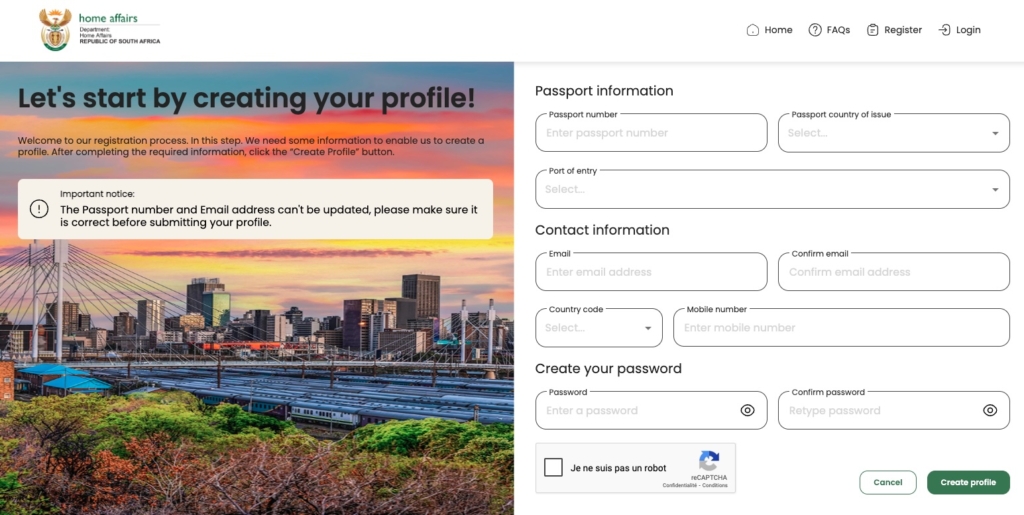
From November 22–23, 2025, ETA applications will be accepted only for G20 delegations from four countries that require a visa (China, India, Indonesia, Mexico) arriving at OR Tambo (Johannesburg) and Cape Town international airports. During November, all nationals of these countries will be able to apply for an ETA.
Authorities are expected to confirm which nationalities will be eligible for an ETA in the coming months and years.
Key Differences Between an E-Visa and an ETA
An e-visa is an electronic visa that replaces a traditional visa and often requires multiple supporting documents. Approval times may vary by immigration authority—some offer immediate decisions, while others require a defined processing period. An e-visa is always sent by email or, in rare cases, made available for download via an official portal (through your account or using your application reference number).
The ETA, or Electronic Travel Authorization, is similar to an ESTA. It serves as advance travel permission for visa-exempt travelers and is primarily used to screen travelers before they arrive. In short, an e-visa grants entry, whereas an ETA grants permission to travel to the country.
Planning a trip to a country that may require an e-visa or ETA? Explore our destination guides and check your eligibility at visamundi.co.