Thailand’s e-Visa goes global January 1, 2025: Apply online anywhere
Starting January 1, 2025, Thailand’s 94 diplomatic missions will offer the fully digital e-Visa, ending embassy queues and letting travelers apply 24/7 on www.thaievisa.go.th.
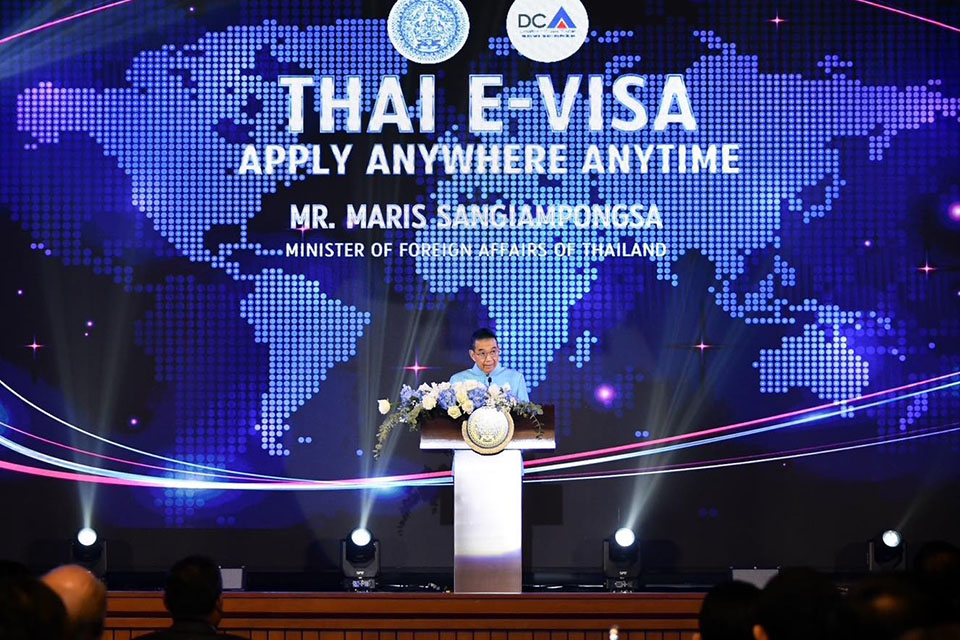
Effective 1 January 2025, Thailand’s electronic-visa (e-Visa) system will be rolled out across all 94 Thai embassies and consulates worldwide. The announcement, issued on 17 December by Foreign Minister Maris Sangiampongsa, marks a watershed in the kingdom’s visitor-welcome policy.
Bid farewell to hours spent in embassy queues with bulging dossiers: Worawoot Pongprapapant, Director-General of Consular Affairs, promises a complete overhaul of the visa application process. Travellers will soon be able to submit requests in minutes via the site www.thaievisa.go.th, day or night.
Instant relief for time-pressed globetrotters! Until now only a handful of missions have provided this “service,” with wait times stretching about a month.
https://twitter.com/BangkokPostNews/status/1869221114221846535
Who needs a Thai e-Visa?
While the e-Visa streamlines procedures, bear in mind that citizens of 93 countries can already enter for up to 60 days with a 30-day on-arrival extension—no visa required. That generous policy underscores the kingdom’s welcoming stance.
Nationals exempt from a visa are: Afghanistan, Albania, Andorra, Angola, Antigua and Barbuda, Argentina, Australia, Austria, Azerbaijan, Bahamas, Bahrain, Bangladesh, Barbados, Belgium, Belize, Bhutan, Bolivia, Bosnia and Herzegovina, Brazil, Brunei, Bulgaria, Cambodia, Canada, Cape Verde, Chile, China, Colombia, Comoros, Cook Islands, Costa Rica, Croatia, Cuba, Cyprus, Czech Republic, Denmark, Djibouti, Dominica, Dominican Republic, Ecuador, Egypt, El Salvador, Estonia, Eswatini, Ethiopia, Fiji, Finland, France, Gabon, Gambia, Georgia, Germany, Ghana, Greece, Grenada, Guatemala, Guinea, Guyana, Haiti, Honduras, Hungary, Iceland, India, Indonesia, Iran, Iraq, Ireland, Israel, Italy, Jamaica, Japan, Jordan, Kazakhstan, Kenya, Kiribati, Kosovo, Kuwait, Laos, Latvia, Lesotho, Liberia, Liechtenstein, Lithuania, Luxembourg, Malaysia, Maldives, Malta, Marshall Islands, Mauritania, Mauritius, Mexico, Micronesia, Monaco, Mongolia, Montenegro, Morocco, Mozambique, Myanmar, Namibia, Nauru, Nepal, Netherlands, New Zealand, Nicaragua, Niger, Nigeria, North Macedonia, Norway, Oman, Pakistan, Palau, Panama, Papua New Guinea, Paraguay, Peru, Philippines, Poland, Portugal, Qatar, Romania, Russia, Rwanda, Saint Kitts and Nevis, Samoa, San Marino, Sao Tome and Principe, Saudi Arabia, Senegal, Serbia, Seychelles, Singapore, Slovakia, Slovenia, Solomon Islands, South Africa, South Korea, Spain, Sri Lanka, Suriname, Sweden, Switzerland, Syria, Taiwan, Tajikistan, Tanzania, Thailand, Timor-Leste, Tonga, Trinidad and Tobago, Tunisia, Turkey, Turkmenistan, Tuvalu, Uganda, Ukraine, United Arab Emirates, United Kingdom, United States of America, Uruguay, Uzbekistan, Vanuatu, Vietnam, Yemen, Zambia, Zimbabwe.
With the e-Visa in mind, requests apply only if you are either (a) from a non-exempt nationality planning a stay of more than 60 days, or (b) from an exempt nationality wishing to remain beyond the 60-day visa-free window.
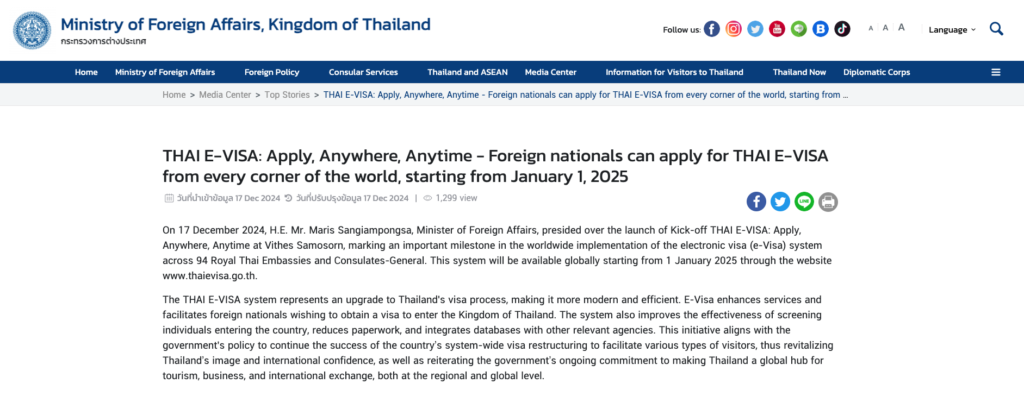
Announcement on the Thai Ministry of Foreign Affairs website
Electronic-visa timeline, from 2019 to 2025 |
e-VOA: 18 nationalities get visa on arrival
In parallel, Thailand’s electronic-visa-on-arrival (e-VOA) serves citizens of 18 other countries—including Saudi Arabia, China, India and Mexico. Eligible passengers arriving at designated international airports can clear immigration faster with a pre-approved entry permit.
And the Thailand ETA?
Forthcoming in 2025 for visa-exempt travellers, the electronic travel authorisation will add another layer of digital pre-screening for most visa-free visitors—a familiar hurdle already seen in the United States, New Zealand and Sri Lanka.
En tant que chargée de relation client, mes missions sont la gestion et le suivi des demandes de visas. Je reste informée des actualités concernant les nouvelles formalités de voyage ainsi que les spécificités des nouveaux visas.