White House Explains New $100,000 H-1B Visa Work Fee Hike
White House clarifies controversial $100,000 visa fee increase for H-1B work permits, sparking backlash from Indian tech sector and U.S. businesses over mobility and cost concerns.
·
On September 19, 2025, the White House issued clarifications regarding the new $100,000 fee imposed on the issuance of H-1B work visas, a move that has sparked significant concerns in India and across the global tech sector. The H-1B visa, widely sought after by engineers, computer scientists, and foreign researchers, allows highly skilled professionals to work in the U.S. for an initial period of three years, renewable up to six years. This proclamation was signed by President Donald Trump and aims to restrict the entry of international workers into the U.S. as non-immigrants for specialty occupations through the H-1B program.
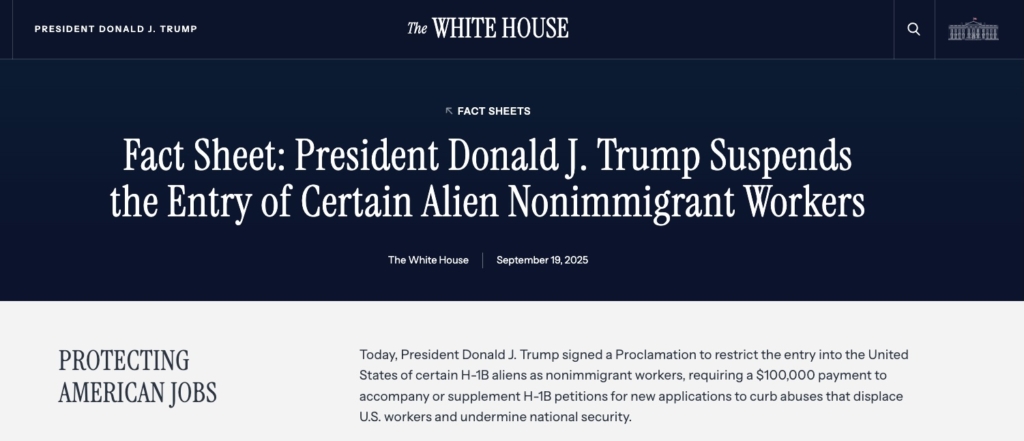
Sharp Fee Hike Targets New Visa Applicants
The newly signed regulation, issued by President Donald Trump, primarily affects new applications, not renewals or current visa holders outside the country. Indian nationals, who account for three-quarters of H-1B recipients, will be disproportionately impacted, prompting students and professionals to reconsider their mobility plans.
"The $100,000 fee is a one-time payment required only at the initial visa application."
— Karoline Leavitt, White House Spokesperson
Corporate and Worker Backlash Grows
The Indian government has expressed deep concern over the "human consequences" of the steep fee, highlighting potential disruptions for families and businesses reliant on talent mobility between the two nations. India’s premier tech industry association, Nasscom, has also warned of the uncertainty generated, citing risks to ongoing international tech projects. Multinational firms like JP Morgan have advised H-1B employees to restrict their overseas travel until further guidance is issued.
This policy aligns with a core objective of Donald Trump’s agenda: to curb the entry of foreign workers and prioritize U.S. employment. Commerce Secretary Howard Lutnick emphasized the deterrent nature of the measure, stating that "companies seeking to hire internationally will now face both elevated government fees and high foreign talent costs—draining the bottom line." The shift is raising alarms in Silicon Valley, where leaders including Elon Musk have warned of skill shortages amid an insufficient domestic talent pool to meet sector demand.
Last year, approximately 400,000 H-1B visas were issued, with two-thirds representing renewals.
On Friday, President Trump also announced the creation of a "golden" residency permit valued at one million dollars, akin to a "green card," enabling holders to live and work in the U.S.
Get our visa news first in your Google results: add Visamundi to your preferred sources.
