France halts visa issuance for students from three African countries
France suspends new student visas for nationals from Mali, Niger, and Burkina Faso amid consular service closures, while existing scholarships for current students remain unaffected. Discover the implications and context behind the decision.
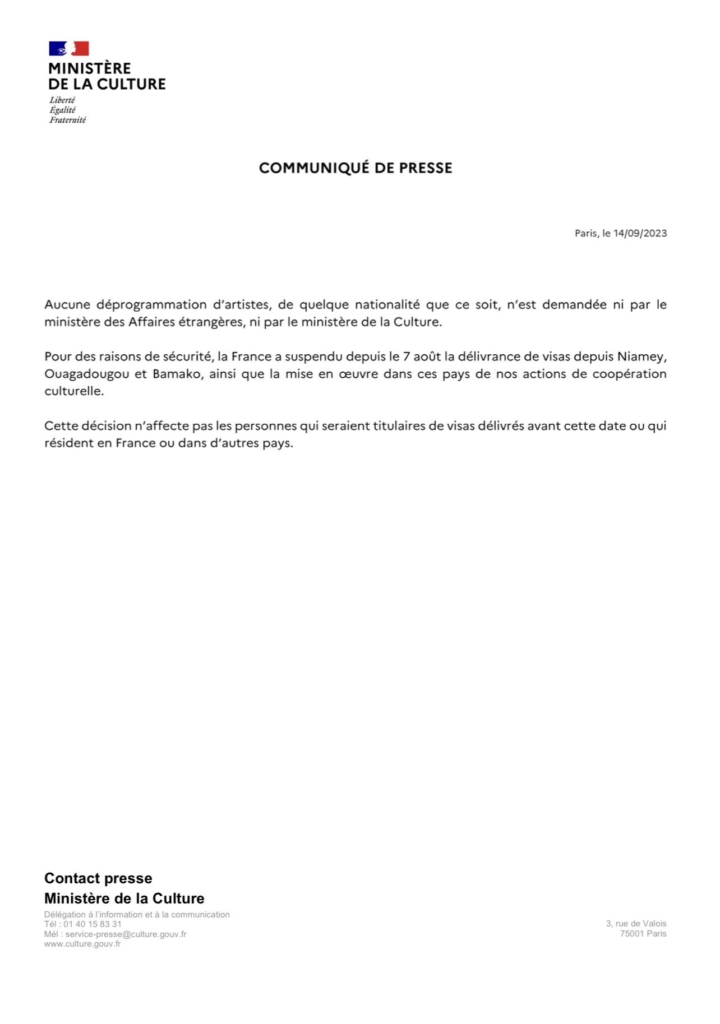
France’s Ministry of Foreign Affairs has announced the suspension of new visas for students originating from Mali, Niger, and Burkina Faso who had intended to pursue studies in the country. The move follows the closure of French consular services in these nations.
Existing scholarships unaffected
Campus France, the French agency responsible for promoting higher education in France and welcoming international students, clarified that scholarships already awarded to students from these three countries currently studying in France remain active. Approximately 3 000 Malian, 2 500 Burkinabe, and 1 200 Nigerian students are currently enrolled in French higher education institutions.
Cooperation with affected African partners
Cooperation with Niger and Burkina Faso was suspended on 29 July and 6 August respectively, shortly after the coup d’état in Niger. In November 2022, a similar decision had been implemented regarding Mali. Both Burkina Faso and Mali support the military leadership that seized power in Niger.
On Friday, the Ministry of Higher Education and Research informed AFP that it was “forced to suspend our visa services and civil cooperation for security reasons.” It stressed that this does not signal a permanent halt to ongoing academic and scientific collaborations with universities and research institutions in these countries.
Online reaction has been swift and significant, as reflected in the following response:
Impact on students from affected countries
For students from Mali, Niger, and Burkina Faso who had planned to study in France, the visa suspension raises serious concerns about their academic and professional futures. French higher education institutions are highly sought after by these students for the quality of their programs and the global networks accessible after graduation.
Mali: The number of Malian students in France has risen markedly in recent years, increasing from 1 815 in 2012 to over 3 000 today.
Niger: Academic exchanges between France and Niger are extensive, supported by recent host-country agreements spanning agriculture, hydrology, geophysics, and renewable energy sectors.
Burkina Faso: Burkinabe students also show strong interest in French higher education, with around 300 new scholarship recipients each year.
A specialist in regulatory monitoring and a content destination expert, she analyzes daily changes in entry formalities to turn complex administrative processes into practical guides. Her role blends ground-level expertise with technical precision to ensure the reliability of the information provided to travelers.