German Citizens Aged 17-45 Must Seek Approval for Extended Stays Abroad
A new German law requires men aged 17-45 to get Bundeswehr approval before leaving the country for over three months. Here's what travelers need to know.
·
You probably saw the panic flaring up on TikTok or X over Easter weekend: Germany was suddenly stopping its citizens from traveling freely. At Visamundi, where we process hundreds of visa applications daily for travelers around the world, rooting through obscure administrative reforms is our bread and butter. Amid the alarmist outcry, we decided to break down this new law for you.
Rest assured: there’s no need to scrap your Working Holiday Visa in Australia or your digital nomad visa in Asia. This affair is more a case of Kafkaesque paperwork than a nationwide mobilization.
What is the rumored '3-month rule' all about?
As of January 1, 2026, a barely-noticed clause tucked into the "modernization of national service" law came into effect. A single line in the Wehrpflichtgesetz § 3 Abs. 2—which went largely unreported until now—lays out a crystal-clear new requirement: German men aged 17 to 45 must obtain permission from the Bundeswehr (Germany’s armed forces) before leaving the country for more than three consecutive months.
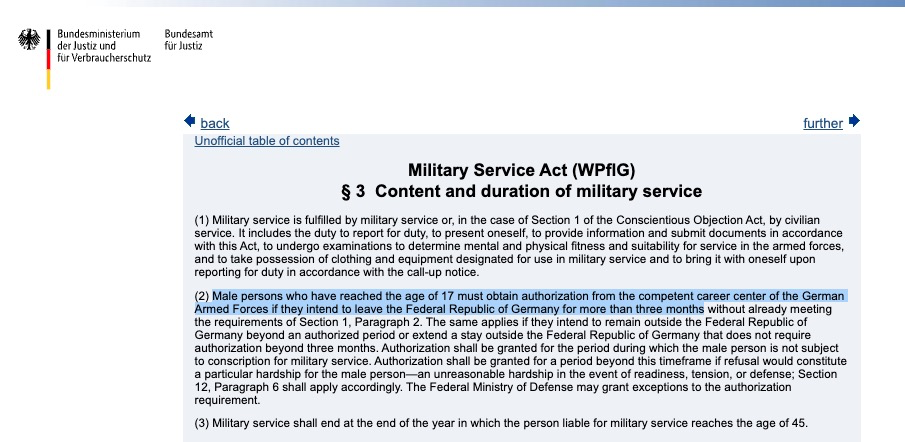
The rule applies no matter the reason—whether it’s a semester abroad, a job transfer, or a sun-seeking road trip to the opposite side of the planet.
The return of a Cold War ghost?
To see the military crop up in your visa paperwork during peacetime is eyebrow-raising, to say the least. Tracing the origins of the rule means hunting through historical records. The very same obligation has sat in German statute books since 1956, but historically it only kicked in when war or a major crisis loomed.
The major change in 2026 is that this exit authorization is now automatic—required regardless of any "state of tension."
The government’s goal isn’t to strand you at the airport. It’s pure logistics. As Berlin races to scale the Bundeswehr up to 260,000 soldiers by 2035, the state simply wants to keep close tabs on where its potential conscripts are located—just in case.
What this actually means for your travels
In practice, if you’re a German citizen in that age group and you’re compiling your long-stay visa dossier with our team, should you panic? Not at all. Caught in the media blaze, Germany’s Defence Ministry quickly clarified: since national service remains voluntary today, this departure permit is deemed granted by default.
The administration itself has hinted, almost sheepishly, that no penalties are foreseen even if you breeze through without this paperwork. Fearing they might swamp their own orientation centres with last-minute requests from gap-year students, authorities are already drafting exemptions designed to ease the bureaucratic burden.
As a seasoned visa team, we still urge one simple precaution: even though military green-lighting appears automatic on paper, the border is sovereign territory policed by immigration officers. Encountering an official inclined to read the rules to the letter isn’t unthinkable. Give yourself a stress-free margin by contacting your local Bundeswehr recruitment centre while we file your visa application. That small step can spare you a last-minute cold sweat before boarding.
We will, of course, stay laser-focused on any upcoming implementation decrees so we can adapt our assistance if this footnote ever balloons into a real migration hurdle.

As CEO of Visamundi, I am dedicated to simplifying international travel by assisting our clients in obtaining visas worldwide. By staying at the forefront of ever-changing regulations, I ensure our agency remains a trusted pillar in the visa services industry.

Get our visa news first in your Google results: add Visamundi to your preferred sources.
