South Korea reinstates K-ETA requirement from January 1, 2025
South Korea is set to reinstate the Korea Electronic Travel Authorization (K-ETA) for travelers from 67 previously exempt countries starting January 1, 2025. Find out who must apply, key deadlines, costs, and exemptions in this essential travel advisory.
South Korea will reinstate the requirement for the Korea Electronic Travel Authorization (K-ETA) for travelers from 67 countries and territories currently exempt from the process. The temporary exemption, introduced on April 1, 2023, as part of the Visit Korea Year 2023–2024 program, had been introduced to support South Korea’s post-pandemic tourism recovery.
The Basics of K-ETA
The K-ETA is an electronic travel authorization system launched by South Korea on September 1, 2021. It allows authorities to screen travelers before arrival, strengthen border security, and streamline immigration processing at entry points. The process is entirely digital, with approvals typically granted within 72 hours of submitting a complete application.
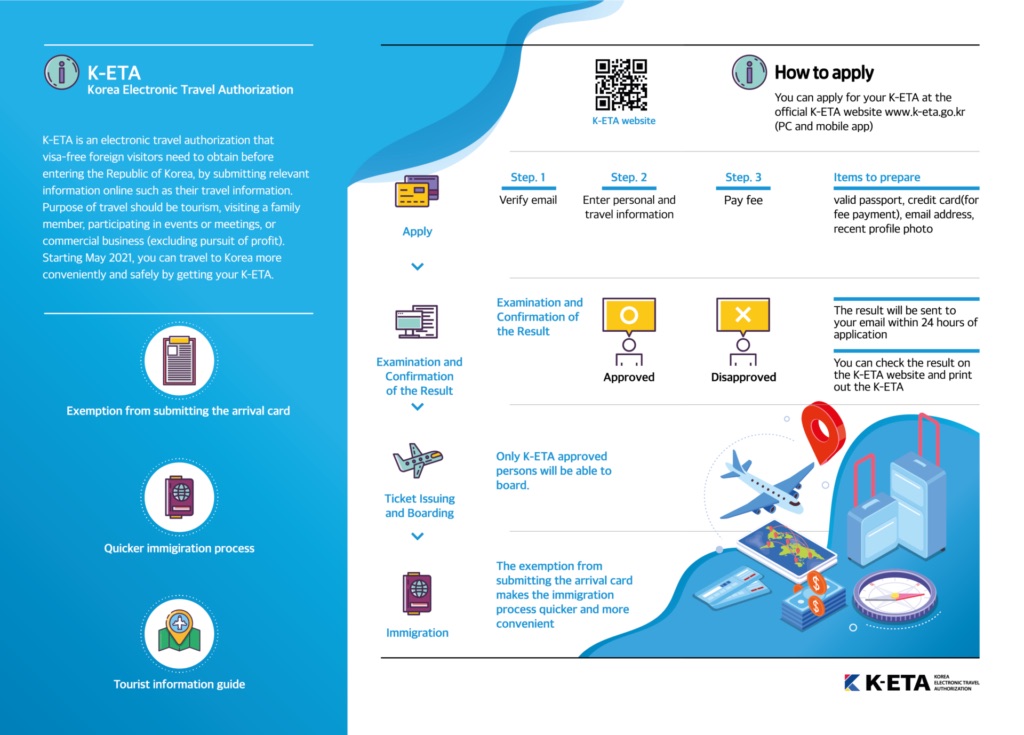
How to Apply
Applicants may submit an online application via the official government portal www.k-eta.go.kr or through the
Options for submission:
• Official government website
• Official K-ETA mobile app (iOS) or Google Play app (Android)
• Authorized visa agencies
Required details include travel email, passport data, phone number, purpose of visit, accommodation information, profession, and a passport-style photo. Processing is expected to take up to 72 hours; travelers should apply at least three full days before departure.
https://www.youtube.com/watch?v=uniP4VL3m6w
Fees and Validity
The K-ETA costs 10,300 KRW (approximately €5.87). Once approved, the authorization is valid for up to three years or until the passport’s expiration, whichever comes first. Travelers should carry the same passport used in the application for smooth immigration clearance.
Permitted stay lengths vary by nationality, typically ranging from 30 to 180 days. For instance, citizens of France and other EU member states may stay up to 90 days without a visa under K-ETA.
Who’s Exempt from K-ETA? Exempt groups: travelers aged 17 or younger; travelers aged 65 or older; holders of valid visas; holders of Korean residency permits; U.S. Forces Korea personnel; holders of diplomatic or official passports with prior exemption authorization. |
Affected Nationalities in 2025
The list of 112 countries and territories required to obtain a K-ETA as of January 1, 2025 spans Africa, the Americas, Asia, Europe, and Oceania. The full list includes:
🇿🇦 South Africa, 🇦🇱 Albania, 🇩🇪 Germany, 🇦🇩 Andorra, 🇦🇬 Antigua and Barbuda, 🇸🇦 Saudi Arabia, 🇦🇷 Argentina, 🇦🇺 Australia, 🇦🇹 Austria, 🇧🇸 Bahamas, 🇧🇭 Bahrain, 🇧🇧 Barbados, 🇧🇪 Belgium, 🇧🇦 Bosnia and Herzegovina, 🇧🇼 Botswana, 🇧🇷 Brazil, 🇧🇳 Brunei, 🇧🇬 Bulgaria, 🇨🇦 Canada, 🇨🇱 Chile, 🇨🇾 Cyprus, 🇨🇴 Colombia, 🇨🇷 Costa Rica, 🇭🇷 Croatia, 🇩🇰 Denmark, 🇩🇲 Dominica, 🇦🇪 United Arab Emirates, 🇪🇨 Ecuador, 🇪🇸 Spain, 🇪🇪 Estonia, 🇸🇿 Eswatini, 🇺🇸 United States, 🇫🇯 Fiji, 🇫🇮 Finland, 🇫🇷 France, 🇬🇪 Georgia, 🇩🇪 Germany, 🇬🇷 Greece, 🇬🇩 Grenada, 🇬🇺 Guam, 🇬🇹 Guatemala, 🇬🇾 Guyana, 🇭🇹 Haiti, 🇭🇳 Honduras, 🇭🇰 Hong Kong SAR, 🇭🇺 Hungary, 🇮🇪 Ireland, 🇮🇸 Iceland, 🇮🇱 Israel, 🇮🇹 Italy, 🇯🇲 Jamaica, 🇯🇵 Japan, 🇰🇿 Kazakhstan, 🇰🇮 Kiribati, 🇰🇼 Kuwait, 🇱🇻 Latvia, 🇱🇮 Liechtenstein, 🇱🇹 Lithuania, 🇱🇺 Luxembourg, 🇲🇴 Macao SAR, 🇲🇾 Malaysia, 🇲🇹 Malta, 🇲🇦 Morocco, 🇲🇽 Mexico, 🇫🇲 Micronesia, 🇲🇨 Monaco, 🇲🇪 Montenegro, 🇲🇦 Mauritius, 🇳🇷 Nauru, 🇳🇮 Nicaragua, 🇳🇴 Norway, 🇳🇨 New Caledonia, 🇳🇿 New Zealand, 🇴🇲 Oman, 🇵🇦 Panama, 🇵🇼 Palau, 🇵🇾 Paraguay, 🇵🇪 Peru, 🇳🇱 Netherlands, 🇵🇱 Poland, 🇵🇹 Portugal, 🇶🇦 Qatar, 🇨🇿 Czech Republic, 🇩🇴 Dominican Republic, 🇷🇴 Romania, 🇷🇺 Russia, 🇰🇷 Korea (Republic), 🇱🇨 Saint Lucia, 🇻🇨 Saint Vincent & the Grenadines, 🇸🇲 San Marino, 🇸🇹 Samoa, 🇸🇦 El Salvador, 🇸🇷 Seychelles, 🇸🇬 Singapore, 🇸🇰 Slovakia, 🇸🇮 Slovenia, 🇸🇪 Sweden, 🇨🇭 Switzerland, 🇸🇷 Suriname, 🇹🇭 Thailand, 🇹🇱 Taiwan, 🇹🇴 Tonga, 🇹🇳 Tunisia, 🇹🇷 Turkey, 🇹🇻 Tuvalu, 🇬🇧 United Kingdom, 🇺🇾 Uruguay, 🇻🇦 Holy See (Vatican), 🇻🇪 Venezuela
Airlines will deny boarding to any traveler seeking to enter South Korea after December 31, 2024, without an approved K-ETA or valid visa. Applying well in advance is strongly advised to prevent travel disruptions.
Permitted Travel Purposes
The K-ETA covers permitted travel purposes such as individual or group tourism, family or friend visits, business activities, medical treatment, conferences, sports events, and trade fairs. A new visa-free travel category took effect in March 2024: inbound incentive tourism, supporting employee-reward trips paid for by foreign companies.
En tant que chargée de relation client, mes missions sont la gestion et le suivi des demandes de visas. Je reste informée des actualités concernant les nouvelles formalités de voyage ainsi que les spécificités des nouveaux visas.