Can’t Pay Your Vietnam E-Visa? Try This Quick Fix
Struggling to pay for your Vietnam e-visa? Discover the simple VPN workaround that’s helping travelers bypass payment blocks and secure their travel documents hassle-free.
·
You’ve been dreaming of exploring Vietnam’s wonders, but the e-visa process has you breaking out in cold sweats? Don’t panic. The solution to your Vietnam e-visa payment woes is far simpler than you think. Let’s navigate the administrative maze together and set you on the path to a stress-free visa application.
Getting to Vietnam with the click of a button… or so you thought
A few years ago, Vietnam introduced an electronic visa system to streamline travel for international visitors. While intended to simplify the process, travelers have often found the opposite to be true: what was supposed to be a straightforward online form can quickly turn into a tech support nightmare.
Many travelers have run into a major roadblock at the payment stage—the official website often rejects transactions outright, leaving hopeful visitors stuck in limbo. Frustrating, isn’t it? But don’t despair: determined globetrotters have cracked the code.
The game-changing workaround
The issue seems to stem from IP restrictions. Certain addresses—especially French ones—appear to be blocked by Vietnam’s payment system. The fix is as simple as it is effective: use a VPN. By connecting through a server in another country—say, the United States, Germany, or even certain Asian nations—you can bypass the block and complete your payment without a hitch.
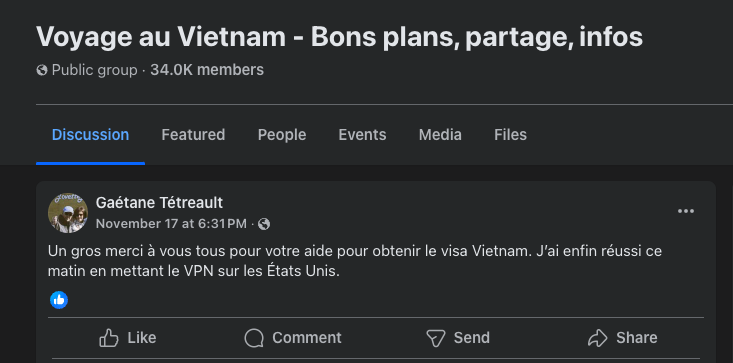
Traveler forums and Facebook groups were among the first to highlight this simple workaround.
If you’re looking for a reliable VPN, we often recommend Proton VPN (unaffiliated link), a no-cost service founded by the creators of ProtonMail that prioritizes user privacy.
Step-by-step guide to a smooth e-visa application
Choose a trusted VPN service (Proton VPN is a top suggestion, but alternatives are available)
Connect to a server in an “unrestricted” country
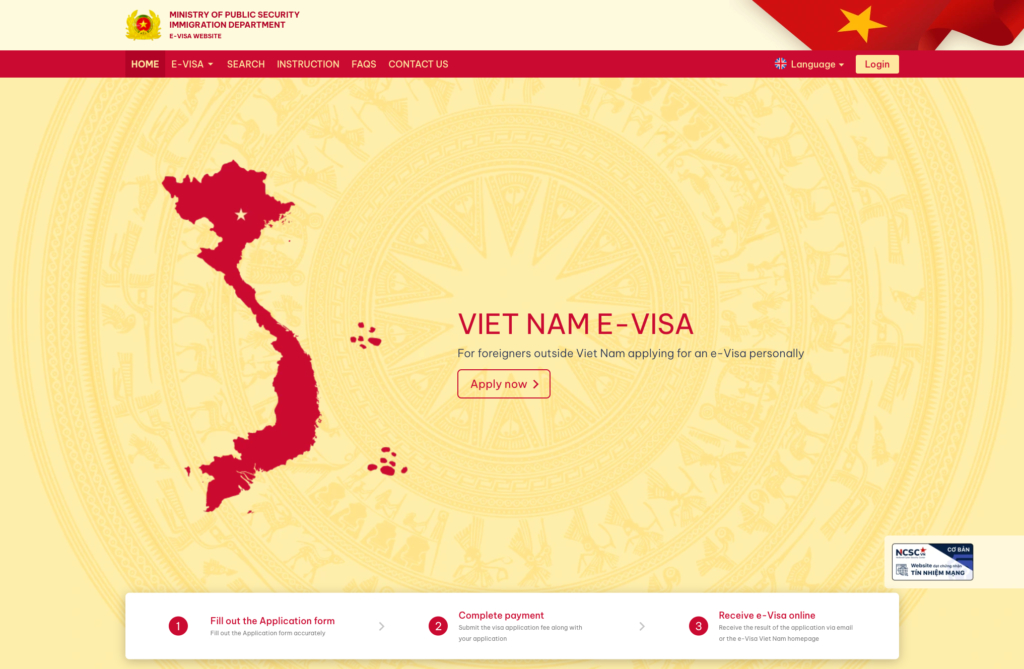
Visit one of the official e-visa request sites—there are now three:
• https://thithucdientu.gov.vn/
• https://evisa.xuatnhapcanh.gov.vn/
• https://evisa.gov.vn/ (English-friendly as a bonus)Complete your application form with your personal details—exactly as they appear on your passport
Proceed to payment, which should now go through without issue
The devil’s in the details
Mind the small print: spell your first and last name exactly as they appear on your passport. Even minor errors can delay your application by weeks.
Key features of Vietnam’s e-Visa
Since 15 August 2023, Vietnam’s e-visa has been available to travelers from every country and territory, marking a major shift in the nation’s welcoming policy.
Nationality | Visa-Free Stay Duration |
|---|---|
France | 45 days |
Germany | 45 days |
Italy | 45 days |
Spain | 45 days |
United Kingdom | 45 days |
Sweden | 45 days |
Denmark | 45 days |
Finland | 45 days |
Norway | 45 days |
Japan | 45 days |
South Korea | 45 days |
Russia | 45 days |
Belarus | 45 days |
Indonesia | 30 days |
Cambodia | 30 days |
Laos | 30 days |
Malaysia | 30 days |
Singapore | 30 days |
Thailand | 30 days |
Philippines | 21 days |
Brunei | 14 days |
Myanmar | 14 days |
Overseas Vietnamese | 5 years |
Foreigners of Vietnamese origin | 5 years |
Spouses/children of Vietnamese or foreign citizens of Vietnamese origin | 5 years |
Holders of ordinary biometric Chinese passports must exchange their e-visa for a physical visa on arrival at no cost due to a territorial dispute map present in those passports.
The e-visa covers a wide range of travel purposes:
Tourism
Business
Family visits
Short-term study
Duration and flexibility
The e-visa offers two options:
Single entry: valid for up to 90 days
Multiple entries: also valid for up to 90 days
This flexibility lets travelers arrange longer stays or frequent trips without extra paperwork. Processing typically takes 3 to 5 business days.
Reasonable cost
E-visa fees are set as follows:
25 USD for a single entry
50 USD for multiple entries
Widely accepted entry points
Vietnam has dramatically expanded the list of entry points accepting e-visas. This includes:
International airports
Noi Bai (Hanoi)
Tan Son Nhat (Ho Chi Minh City)
Da Nang
Cam Ranh
Phu Quoc
Plus eight more, for a total of 13 airports
Land border crossings
Vietnam now welcomes visitors via 16 land border crossings, including:
Mong Cai (China border)
Lao Cai (China border)
Moc Bai (Cambodia border)
Lao Bao (Laos border)
Seaports
Thirteen seaports also accept e-visa holders:
Hai Phong
Da Nang
Nha Trang
Ho Chi Minh City

As CEO of Visamundi, I am dedicated to simplifying international travel by assisting our clients in obtaining visas worldwide. By staying at the forefront of ever-changing regulations, I ensure our agency remains a trusted pillar in the visa services industry.

Get our visa news first in your Google results: add Visamundi to your preferred sources.
