
Thailand ETA vs e-Visa: What’s the Difference When Traveling?
Thailand’s new digital entry systems—e-Visa for visa-required travelers and ETA for visa-exempt nationalities—offer streamlined entry options, with rollout phases and future benefits for tourists and digital nomads alike.
·
The Land of Smiles is no stranger to innovation, especially when it comes to modernizing entry requirements. Between e-Visas and Electronic Travel Authorizations (ETAs), the process is getting faster and paper-free—just like swapping your airport chaos for simpler clicks from the comfort of your sofa. But what’s the real difference between these two? And how will they shape your next trip to Thailand?
Who Needs an e-Visa?
e-Visas are designed for travelers who still require a traditional visa to enter Thailand. Think of it as the fast-pass version of the old embassy queues: you can now apply online from virtually anywhere—whether it’s your kitchen at 7 a.m. in Montreal or midnight in Sydney.
Thailand has made the service available through 59 embassies and consulates worldwide, meaning no more last-minute passport drops at courier desks or extended time off work. Simply upload documents, pay online, and process your request without disrupting your daily routine. It’s as seamless as online shopping for a houseplant, except this order comes with both a stamp and a stamp of approval.
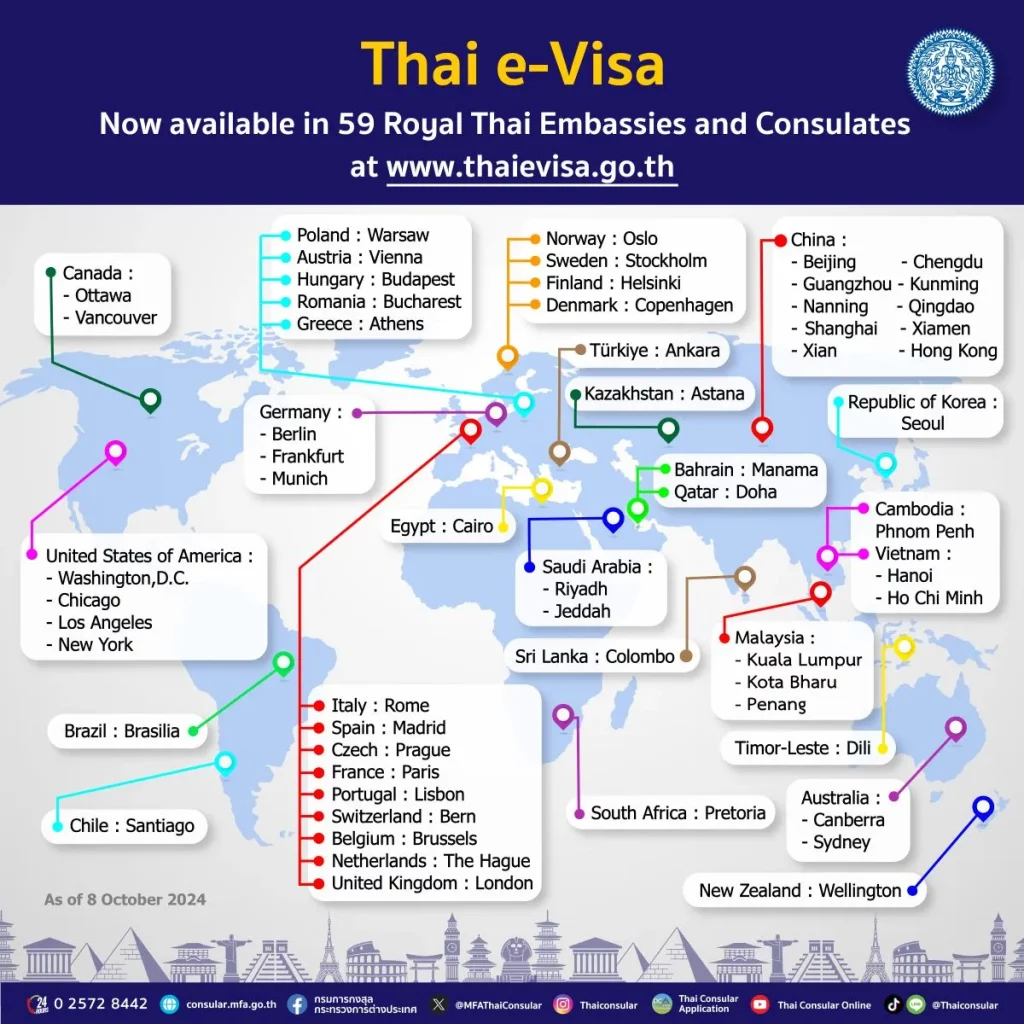
For those curious about time or cost savings, the e-Visa eliminates the need for dedicated leave days or courier fees. It’s one less thing to stress about before you land in Bangkok, ready for your elephant sanctuary tour or Bangkok night market crawl.
The Future ETA: For Visa-Exempt Travelers
Now meet the Electronic Travel Authorization (ETA)—the country’s future silver ticket for nearly every traveler from a visa-exempt country. While not yet live (launch expected in 2025), it will feel like upgrading from economy to business class at the immigration desk.
Instead of queuing for 30 minutes or more with jet-lagged tourists from the 14-hour red-eye, imagine breezing through dedicated ETA lanes at Bangkok’s Suvarnabhumi Airport. You’ll present your online approval instantaneously—almost like they’ve been expecting you for months.
Just remember: don’t confuse e-Visa with ETA. The first is for travelers needing legal documentation; the second is a convenient heads-up for countries that already enjoy visa-free access.
Rest easy: Thailand’s soul remains unchanged. Floating markets won’t transform into sanitized malls, and elephants won’t start tweeting. These digital upgrades aim to get you*from airplane to adventure faster, not to alter the country’s vibrant culture.
DTV: The Long-Stay Option for Digital Nomads
And there’s more. Thailand hasn’t just digitized entry; it’s also expanded access by opening borders to travelers from 93 countries under the Destination Thailand Visa (DTV) relaxation—allowing stays from 14 to 90 days depending on nationality. Citizens of Argentina, Brazil, Chile, South Korea, and Peru can stay up to 90 days, while ASEAN member states, EU nations, Canada, the U.S., and Japan, among others, can stay up to 60 days. China, Hong Kong (30 days), Mongolia (30 days), and Russia (30 days), among others, also benefit from the relaxed policy.†
The cherry on top? Digital nomads can now apply for a special DTV to legally work and live for up to six months—perfect for professionals blending laptop work with beachside margaritas. (Yes, paradise perpetually accepts remote workers.)

As CEO of Visamundi, I am dedicated to simplifying international travel by assisting our clients in obtaining visas worldwide. By staying at the forefront of ever-changing regulations, I ensure our agency remains a trusted pillar in the visa services industry.
Get our visa news first in your Google results: add Visamundi to your preferred sources.
