
In the U.S., customs stops routinely stamping passports upon arrival
On October 1, 2026, U.S. Customs and Border Protection (CBP) announced it would stop routinely stamping passports during primary inspection at arrival counters. Proof of admission and authorized duration of stay can now be found online via the I-94 website or CBP Link mobile app.
Proof of admission and authorized duration of stay can now be accessed online through the I-94 website or the CBP Link mobile application. Stamping will still be possible in specific cases.
What CBP announced
The announcement appears in a Carrier Liaison Program bulletin dated October 1, 2026, a program through which CBP communicates with airlines. The bulletin is titled "U.S. Admission Stamp Elimination During Primary Processing" and indicates that CBP will "stop the routine use of admission stamps" during primary inspection, which takes place at the arrival counter.
The reasoning provided is operational: removing this step reduces processing times at primary inspection and operating costs. The bulletin situates the change within a series of modernization efforts, including the digitization of forms, mobile tools, and biometric facial recognition.
The bulletin does not specify a separate implementation date from its publication date.
Cases where a stamp may still be applied
The bulletin outlines three scenarios in which stamp use may continue, "when appropriate":
secondary screening — when a traveler is directed to additional inspection at the border;
primary inspection during the processing of an immigrant visa;
at the traveler’s explicit request.
The last case warrants careful attention. The bulletin states "when appropriate", meaning an agent is not obligated to stamp the passport under any circumstances. A traveler who wishes to have a physical record of entry may request it, but there is no guarantee it will be provided.
Where to find proof of admission
According to the bulletin, travelers can retrieve proof of admission, authorized duration of stay, and up to five years of arrival records from the I-94 official website or the CBP Link mobile app. In cases of difficulty accessing the I-94 via these two channels, travelers are directed to a local CBP entry port.
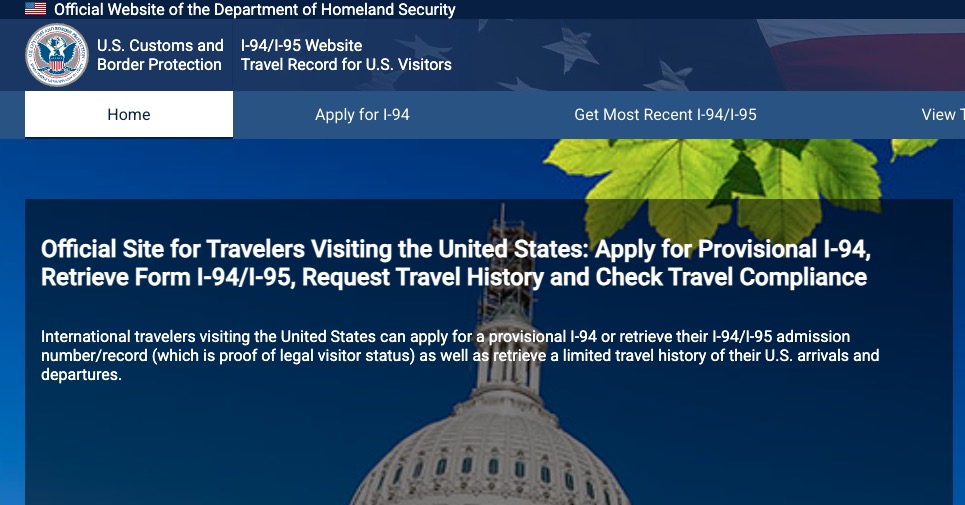
The bulletin emphasizes that travelers rely on this documentation for various tasks, from banking and schooling to employment. The electronic record, not the stamped page in a passport, now serves as the reference document.
The I-94 page of CBP describes the current state of the system: arrival and departure information is automatically collected from electronic travel records, and at land borders travelers receive an electronic I-94 rather than a paper receipt. A paper receipt can be requested during inspection, but CBP notes this will be processed during secondary inspection. Travelers arriving by air or sea and departing by land may find their departure recorded inaccurately.
The bulletin is primarily addressed to carriers, and this is where the most practical implication for travelers arriving by air lies. APIS data, sent by the airline before arrival, directly feeds the I-94 portal. Errors or delays in this transmission can therefore affect a traveler’s admission record, with potential consequences for tasks relying on this proof. Because of this, travelers are advised to review their electronic I-94 record after arrival to check accuracy, as the information is based on what the carrier provided, not what was written in the passport. |
What stays the same in the bulletin
The text does not change entry requirements, authorized duration of stay, or prior authorizations. It only alters the format of proof: in most cases, an electronic record replaces ink stamping on a passport page. For more information about passport stamps, see our guide on passport stamps.

As CEO of Visamundi, I am dedicated to simplifying international travel by assisting our clients in obtaining visas worldwide. By staying at the forefront of ever-changing regulations, I ensure our agency remains a trusted pillar in the visa services industry.

Get our visa news first in your Google results: add Visamundi to your preferred sources.
