
iKat form required for entry and exit in Haiti
Since October 1, 2026, all travelers entering or leaving Haiti, including Haitians and foreigners, must complete the electronic iKat form, even at land border crossings.
Since October 1, 2026, all travelers entering or leaving Haiti—including Haitians and foreigners, minors, infants, and children alike—must fill out the electronic iKat form at airports, seaports, and land border crossings. The measure applies equally to those bound for or arriving from abroad.
A mandate introduced by a September 22 circular
The Haitian Ministry of the Interior and Territorial Communities (MICT) issued a circular directive on September 22, 2026, making iKat obligatory for travelers “coming from or going to a foreign country” starting October 1. The same document explicitly states that the obligation kicks in both at departure and arrival. The directive was published on September 25, just six days before the measure took effect.
The circular assigns the Department of Immigration and Emigration (DIE) to “ensure strict compliance” with the new rule. It also maintains that the e-form can be accessed via airline platforms, the DIE’s official websites, and the ministry’s portals.
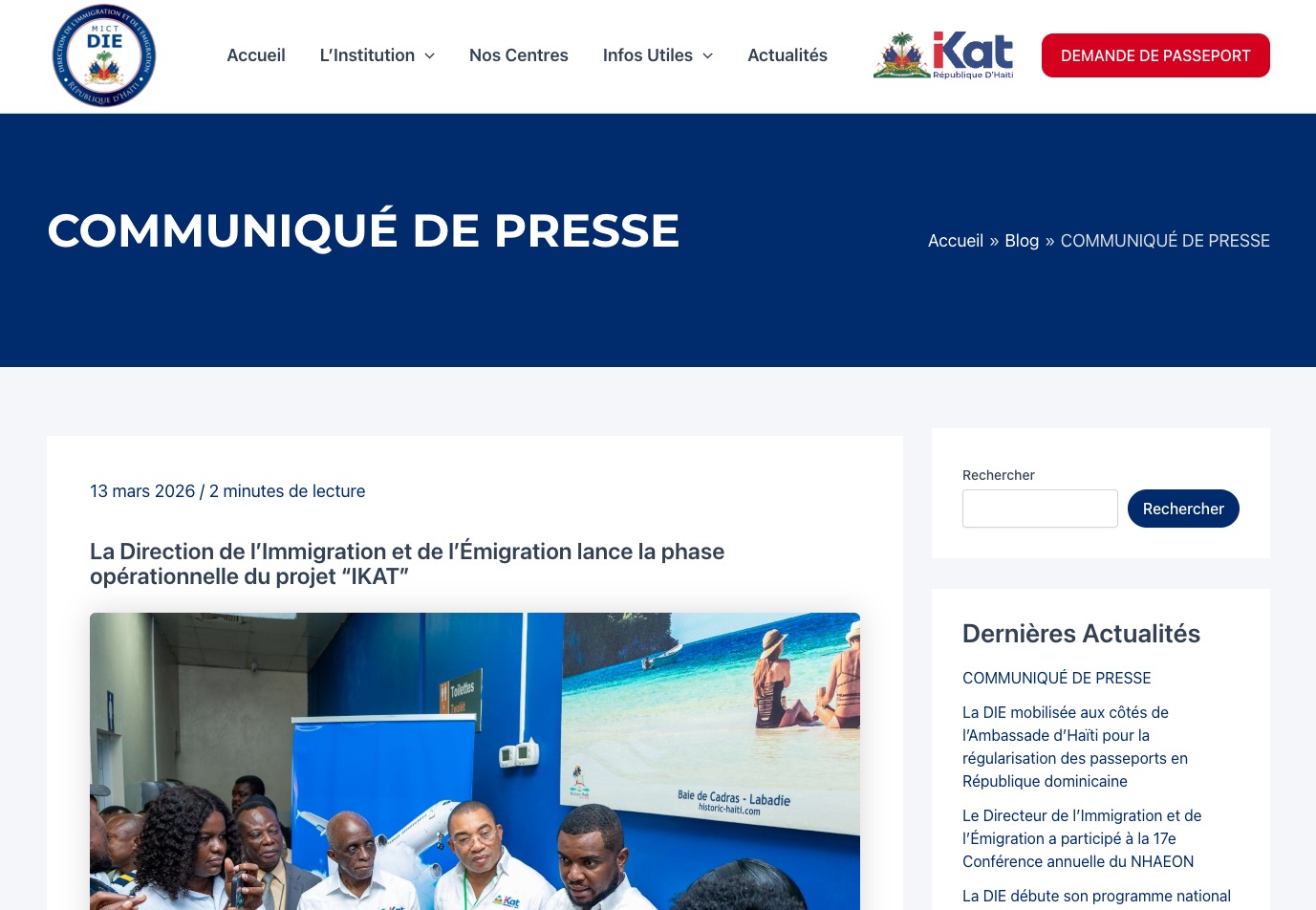
The system isn’t new. On March 13, 2026, the DIE had announced the launch of the iKat digital embarkation and disembarkation form, slated to replace physical entry and exit cards in a phased rollout across airports and ports. That rollout culminated in the October 1, 2026 implementation, aligning with the digital transition adopted by other Caribbean countries, such as Trinidad and Tobago, which also switched to an online entry form in March 2026 with the same 72-hour window.
Who must complete the iKat form
According to Haitian authorities, there are no exceptions: the e-form applies to “all travelers, Haitian and foreign, who wish to enter or leave Haiti”. Haitian deportees returning from Miami, Montreal, or Santiago are just as subject to the rule as any incoming traveler.
Each individual must complete their own form. Families are required to submit a separate application per traveler; minors each have their own. Passengers must complete a new form before each trip, so those already on file do not carry over to subsequent journeys.
The system isn’t limited to air travel. The DIE portal explicitly covers airports, seaports, and land border checkpoints. This includes trips originating in the Dominican Republic or elsewhere.
Visit https://x.com/MInterieurHaiti/status/2104614313482756411
Travelers have 72 hours to submit the iKat form
Ministry circulars and the official portal both state that the form “must be completed at least 72 hours before the scheduled time of travel”. The FAQ page on the portal still cites some 48-hour periods, but the ministry’s directives and the submission portal both adhere to the 72-hour requirement.
What happens if you arrive at a checkpoint without the form? According to Haitian authorities, you will be required to complete it on-site “which will significantly delay your travel”. While there isn’t an explicit refusal of boarding mentioned, travelers are encouraged to comply before arriving to avoid complications.
What information does the iKat form request
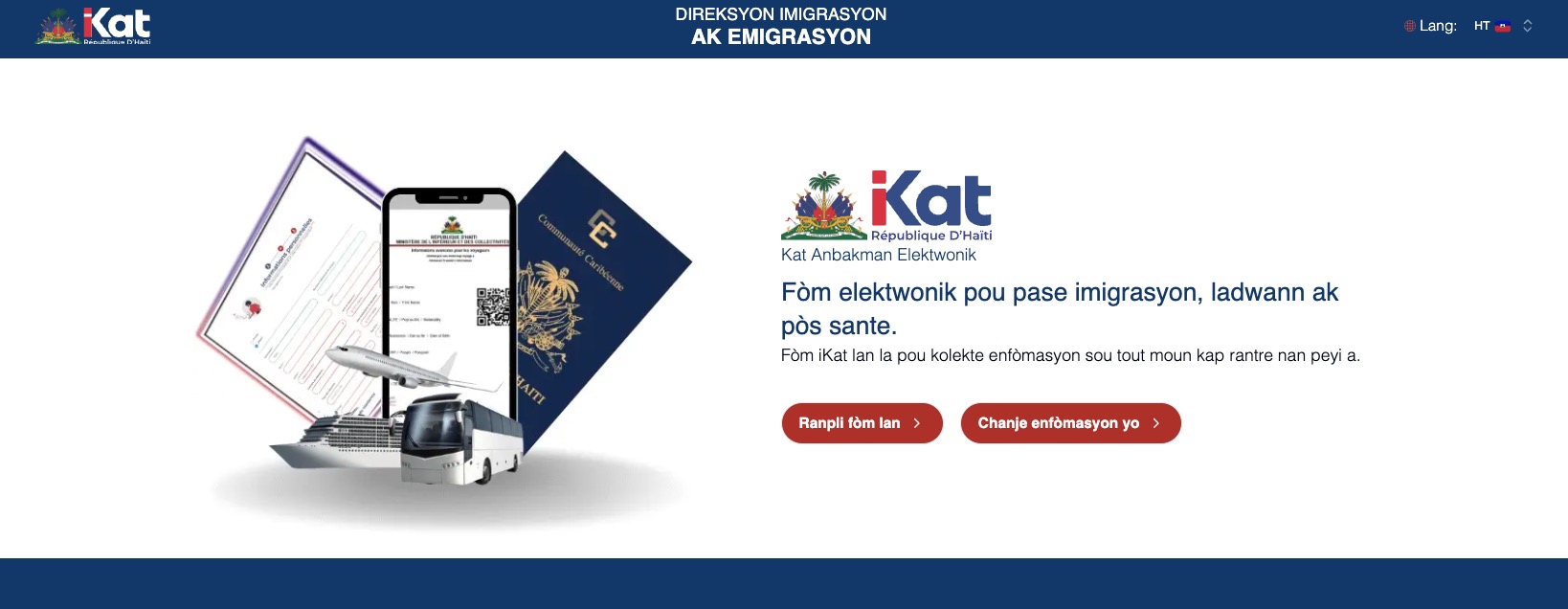
Travelers complete the iKat form in four stages on the Haitian government portal:
https://delidoc.gouv.ht/ikat/fr
Personal information: nationality, first and last name, gender, and date of birth; data on country of departure, place of residence, email address, and contact phone number.
Passport details: passport number and expiration date.
Travel information: entry and exit dates, flight number(s), airline name, and type of accommodation in Haiti (rental home, hotel, Airbnb, etc.).
Customs and immigration declarations, including health affidavits.
Subsequent sections request travel itinerary details, the airline or ground transportation used, and customs declaration. Haitian travelers may also enter their unique national identification number (NIU), which is optional.
The new iKat system consolidates what were traditionally separate cards—personal details, travel and customs declarations, and health affidavits—into a single digital document. Haitian authorities confirm that no additional documentation is required upon arrival.
There are currently no fees associated with the form.

As CEO of Visamundi, I am dedicated to simplifying international travel by assisting our clients in obtaining visas worldwide. By staying at the forefront of ever-changing regulations, I ensure our agency remains a trusted pillar in the visa services industry.
Get our visa news first in your Google results: add Visamundi to your preferred sources.
