
Visamundi unveils its 2027 trends report on travel formalities
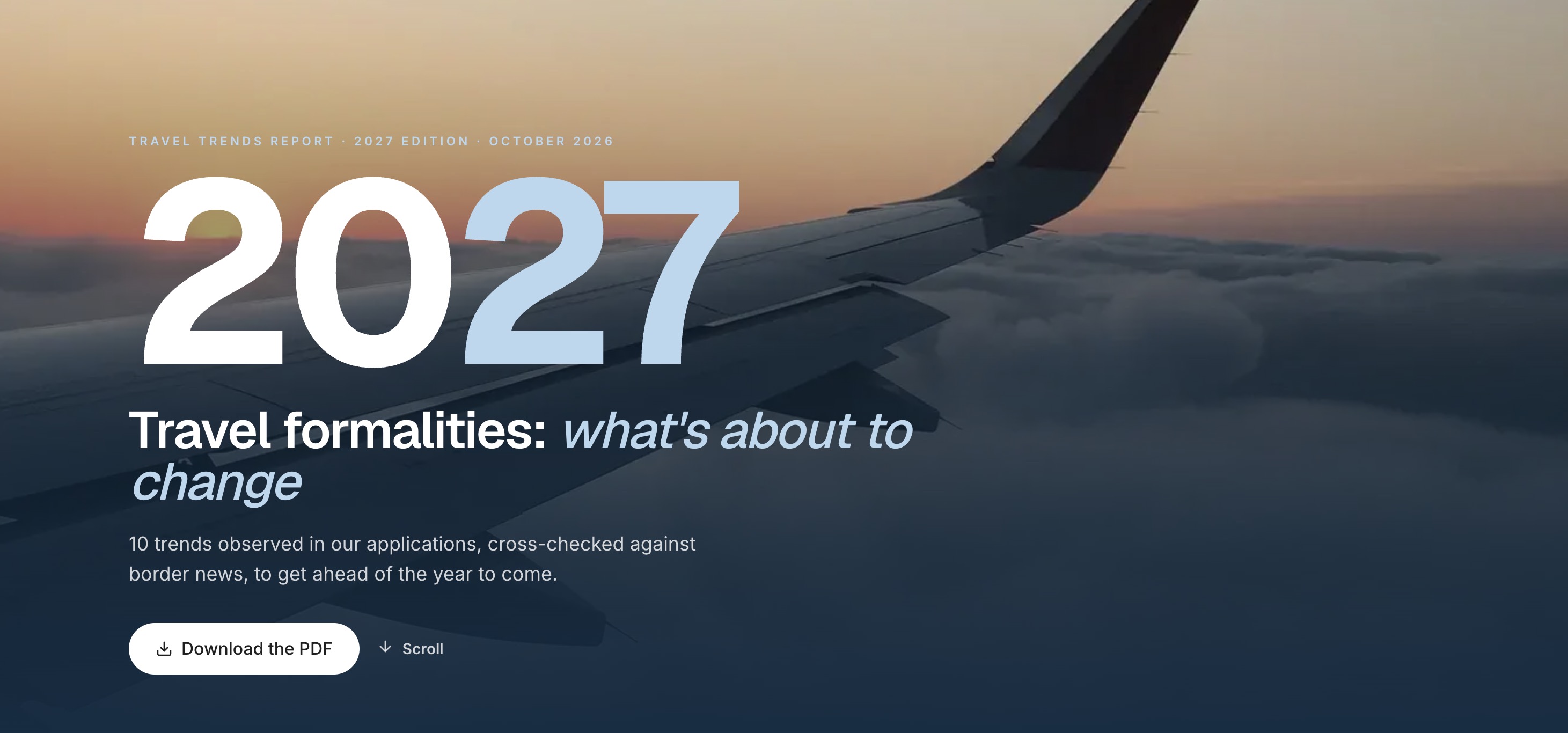
ETIAS, rising fees, arrival cards, official apps, last-minute travel: we're publishing our 2027 Travel Trends Report, ten trends observed in our applications to get ahead of the year to come.
In 2026, seven out of ten applications we handled were for travellers who didn't need a visa. They still had a formality to complete, a form to fill in, a fee to pay. That finding is the starting point of our 2027 Travel Trends Report, published today: ten trends observed in our applications, cross-checked against border news, to anticipate what will change next year.
This report is not futurology. Each trend starts from a dated public fact, compares it with what we measure in our own applications, then offers a cautious projection for 2027 and a practical tip for travellers.
“Visa-free” has become a formality
This is the common thread of the report. Since February 2026, the UK has denied boarding to visa-exempt travellers without an ETA. Europe's ETIAS is expected in 2027, Japan's JESTA in 2028. By then, almost every major destination for Western travellers will require a prior authorisation.
The main risk in 2027 won't be a refused authorisation, but being denied boarding out of ignorance, and confusing look-alike acronyms: the EES at the border, ETIAS before departure, the ETA for the UK.
Three shifts, ten trends
We grouped the trends into three shifts.
More formalities, higher fees
The UK ETA went up to £20 in April 2026, the US ESTA from $21 to $40. Electronic authorisations have become a revenue line, and governments align with one another. Some go further and tune the price of entry to steer tourist flows: India with a cheaper e-Visa from April to June, Japan by tripling its departure tax.
More control, more digital
The traveller's file keeps growing (the ESTA proposal asks for five years of social media history), a single destination can require several formalities (e-Visa, arrival card and health declaration for India), and the smartphone is becoming the border desk, with passport chip reading and selfies. The more automated the processing, the less forgiving it is: in 2026, 8% of the passports we checked expired less than six months after upload.
A less stable environment
The unified Gulf tourist visa could launch in stages, entry rules increasingly follow diplomatic news, and travellers apply later and later: the share of our applications filed less than three days before arrival rose from 6% to 16% between April and October 2026.
“Issued in minutes”? Not everywhere
The report also publishes the real processing times measured on our 2026 applications, from submission to the authorities to issuance. A UK ETA comes through in 42 minutes on average, a Saudi e-Visa in 2.6 hours. But a Korean K-ETA takes almost four days, and a Tanzanian e-Visa 8.6 days. For a last-minute trip, that gap makes all the difference.
Read and download the report
The key ideas behind all ten trends, with their charts, are on our Travel Trends Report page. You can also flip through the report online, page by page, and download the full 24-page PDF, with sourced facts, our projections and the methodology, for free.
Journalists: for additional data or an interview, email presse@visamundi.co.
The projections in this report are Visamundi's own, a private travel-formalities agency, and are not official announcements. Entry rules change fast: always check the requirements in force before you travel.

As CEO of Visamundi, I am dedicated to simplifying international travel by assisting our clients in obtaining visas worldwide. By staying at the forefront of ever-changing regulations, I ensure our agency remains a trusted pillar in the visa services industry.
Get our visa news first in your Google results: add Visamundi to your preferred sources.
