

An Indian e-visa can now be transferred to a new passport
India's official e-visa portal has introduced an online service allowing travelers to transfer their existing e-Visa or ETA to a new passport without reapplying.
A new tab on the official portal
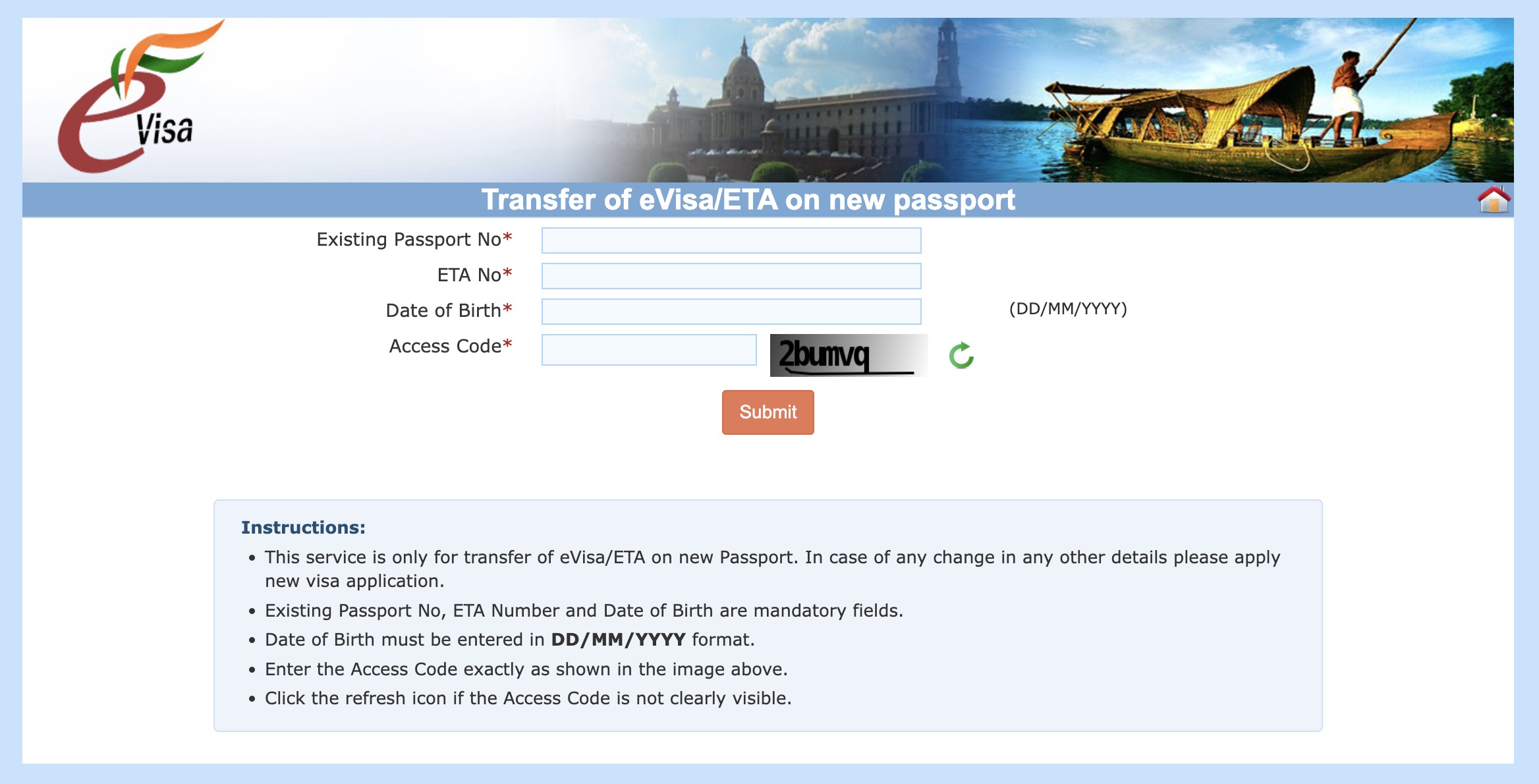
India's e-visa portal, Indian Visa Online, now features a dedicated section called « Transfer of eVisa/ETA on New Passport » in its list of procedures. No explanatory notice has been published alongside its launch, so the information comes directly from the form itself.
The service addresses travelers holding long-term authorizations. The one-year and five-year e-Tourist Visas, as well as the one-year e-Business Visa, are multiple-entry permits. Over their validity period, passports can expire, be lost or stolen.
Previously, the portal did not offer any online process to link an existing permit to a new passport.
How to request the transfer
The form consists of two stages. The first step is to retrieve the existing authorization by entering details such as the old passport number, ETA number, date of birth (DD/MM/YYYY format), and a security code displayed on screen.
The second step concerns the new passport. Enter the new passport number, issue and expiry dates, select a reason for the change from a dropdown list, then upload a copy as a PDF file. The portal prevents duplicate submissions: if the same new passport number is entered again, an error message « A request already raised » appears immediately.
What the form clarifies is that this online service is strictly for transferring an e-Visa to a new passport. Any other modifications (change of name, nationality, travel purpose, etc.) require submitting a fresh e-Visa application.
The instructions also mention payment: updating the permit status can take up to two hours, and the portal advises waiting before paying again. However, no fee amount is displayed. The service may be chargeable, but the exact cost remains undisclosed.
Eligible authorizations: what’s still unclear
No official scope document has been released. Early testing suggests the portal only accepts one-year and five-year visas, including the e-Business Visa, while rejecting short-term e-Visas. Reported reasons for transfer include loss, theft or non-return of the old passport, though no government page confirms this.
It remains uncertain whether the 30-day e-Tourist Visa is eligible. The portal describes it as « non-extendable and non-convertible », valid from first arrival in India. As it’s a multiple-entry permit, a passport change during its validity is unlikely but theoretically possible.
Another unknown is the form of the authorization after transfer. The portal does not indicate whether a new ETA with a new number is issued or if the original expiry date is preserved.
If you still have your old passport, transferring isn’t necessary Existing rules remain valid: question 22 of the portal’s FAQ states that a traveler with a valid ETA issued on an old passport may be admitted to India using their new passport, provided they present both passports. General instructions on the portal are more direct: entry will be authorized on the new passport as long as the old one—carrying the ETA—is also carried. |
The new online transfer service is primarily useful when the old passport is no longer in the traveler’s possession—due to loss, theft or expiration—and cannot be presented at border control.
OCI card holders: separate procedure
This new service covers only e-Visas and ETAs, available to foreign nationals of eligible countries as per the portal FAQ. Indian citizens do not require an e-Visa, and Overseas Citizen of India (OCI) card holders must follow a distinct process.
As outlined by the Indian Consulate in San Francisco, OCI cardholders must upload a copy of the new passport and a recent photo (less than 30 days old) onto the OCI portal within three months of receiving the passport. This update is free of charge. An exception applies: card reissuance is required if a new passport is obtained after turning 20.
We detailed the digital OCI card (e-OCI) rollout in our July article on obtaining OCI cards.

As CEO of Visamundi, I am dedicated to simplifying international travel by assisting our clients in obtaining visas worldwide. By staying at the forefront of ever-changing regulations, I ensure our agency remains a trusted pillar in the visa services industry.

Get our visa news first in your Google results: add Visamundi to your preferred sources.
