
South Africa's ETA replaces the eVisa: what if your application is still pending?
South Africa’s eVisa system will close in favour of the new ETA, an electronic travel authorisation now open to citizens of 53 countries.
The former eVisa portal is scheduled to shut down on December 1, 2026, according to South Africa’s Tourism Office, though no official announcement has yet been made by the Ministry of Home Affairs. If you currently have an eVisa application in progress or an approved eVisa still valid, neither the official portal will allow you to apply for an ETA.
The ETA is now open to 53 countries
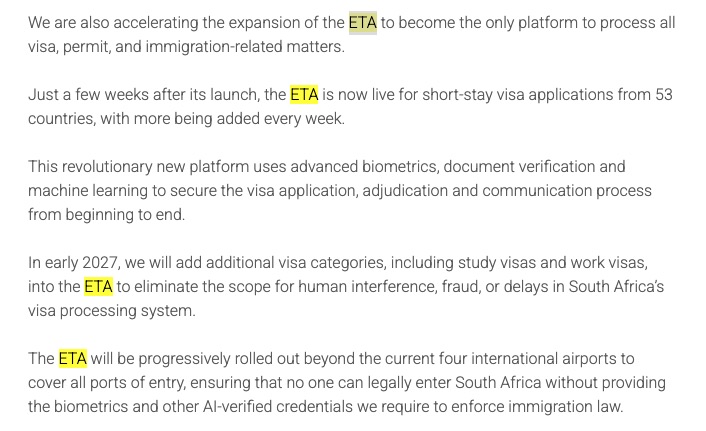
On October 1, 2026, South Africa’s Ministry of Home Affairs Minister Leon Schreiber announced that the ETA was now in service for visa applications for short stays from citizens of 53 countries, « with new countries to be added weekly ». The system had officially launched on August 12, initially offering the eVisa to Chinese, Indian, Indonesian, and Mexican travellers during a pilot phase.
Ministry has not released an official list of the 53 countries. When the ETA launched, the minister said embassies from the affected countries would be informed as the countries were added. To check if your nationality is included, contact your country’s South African representation or the official portal.
While the ETA is primarily aimed at short-term trips, the ministry’s stated goal is to make it the single platform for all visa and stay-related procedures. The new electronic application system will absorb traditional visa applications for tourism, short-term work, studies and other stays. The transition is set to continue throughout early 2027, when the new visa processing is expected to fully replace the current system.
ETA vs visa: what you actually receive
The terminology can be confusing, since the ETA covers two different scenarios. According to the FAQ from the official South African government portal, travellers whose countries currently require a visa will receive a visa on arrival instead; typically a visa entry stamp for Section 10(a) of the immigration act. Travellers from visa-exempt countries such as mexico—they receive an ETA now, but an entry stamp had previously been sufficient—will continue to be visa exempt. A new ETA process will apply, making an electronic travel authority optional for them: it will provide access to a dedicated arrival queue and simplified extension of stay.
In both cases, the ETA or visa grants stays of up to 90 days for tourism, short-term work, or short-term study. The document remains valid for up to six months and allows multiple entries, as long as each visit is less than 90 days. Note that your passport must remain valid for at least seven months after your intended arrival date, or you risk automatic refusal.
Applicants typically receive a response by email within 24 hours, and the approval can be stored in their phone’s digital wallet.
Official statistics show that it costs 500 rands €27.18 to process the ETA since the August 17, 2026 revision to South Africa’s Official Gazette #55209. The same document states travel visas cost 425 rands €23.1. It is unclear whether costs are cumulative for travellers subject to a visa.
When we first reported South Africa’s ETA fee update in July, the final version kept the fee at 500 rands. The portal also notes that all payments are non-refundable, regardless of the outcome of the application.
What if your eVisa application is still pending?
This is the trickiest part of the transition. The ETA portal blocks new applications in two cases, displaying these messages:
« You have an open eVisa application. While it remains active, you cannot apply for an ETA or a visa on arrival. »
« You have a valid eVisa. While this document is valid, you cannot apply for an ETA or a visa on arrival. »
If you already have a valid eVisa the document remains valid until expiration. There is no need to—and you cannot—apply for an ETA at the same time. If you currently have a pending eVisa application at the time of the ETA portal’s launch, the system will reject any attempt to apply for an ETA.
According to South Africa’s Tourism Office, pending applications from the former eVisa portal must be transferred to the ETA when it closes. The Ministry of Home Affairs has yet to detail how these existing applications will be processed on that date. The ETA portal currently only accepts one application at a time; travellers must wait for their application to be resolved before submitting a new one.
If your application is rejected by the ETA, the portal FAQ directs you to two other options: contact South Africa’s representation in your country, or « the eVisa system, where available ».
Children and ports of entry: an incomplete rollout
Information for minors remains inconsistent with official statements. The portal’s FAQ confirms children do require an ETA, but applications « will open in a later phase ». The portal already includes parent or legal guardian consent screens and confirmation by the South Africa-based adult welcoming the child.
As for arrival procedures, the ETA currently applies only at four international airports: OR Tambo International Airport (Johannesburg), Cape Town, King Shaka International Airport (Durban), and Lanseria International Airport. The minister announced it will expand progressively to all ports of entry, including land and sea, though no timeline has been provided.

As CEO of Visamundi, I am dedicated to simplifying international travel by assisting our clients in obtaining visas worldwide. By staying at the forefront of ever-changing regulations, I ensure our agency remains a trusted pillar in the visa services industry.

Get our visa news first in your Google results: add Visamundi to your preferred sources.
