Available travel documents
Choose the visa that fits your trip. Fully online process, real-time tracking.
Business e-Visa (multiple entries)
Visamundi service: €39 incl. VAT
Consular fee: ≈ €70(75 USD)
Electronic visaBusiness e-Visa (single entry)
Visamundi service: €39 incl. VAT
Consular fee: ≈ €70(75 USD)
Electronic visaTourism e-Visa (multiple entries)
Visamundi service: €39 incl. VAT
Consular fee: ≈ €70(75 USD)
Electronic visaTourism e-Visa (single entry)
Visamundi service: €39 incl. VAT
Consular fee: ≈ €70(75 USD)
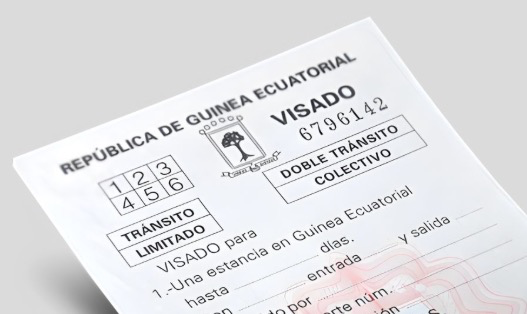
Electronic visaThe only Spanish-speaking country in Africa, Equatorial Guinea opened its territory to international tourism in 2023 by launching an electronic visa system — a genuine e-Visa that must be obtained before departure without exception. For French, Belgian, Swiss and Canadian nationals, the process is now entirely online: no trip to an embassy required. The procedure is recent and technical, however, and rigorous document checking is the key to avoiding rejection.
01 · The essentials
A mandatory e-Visa before any departure
The entire process is carried out online — no visit to an embassy or consulate is required.
Your passport must be valid for at least 6 months after your planned entry date and have at least 2 blank pages.
The international yellow fever vaccination booklet is required at entry by customs authorities.
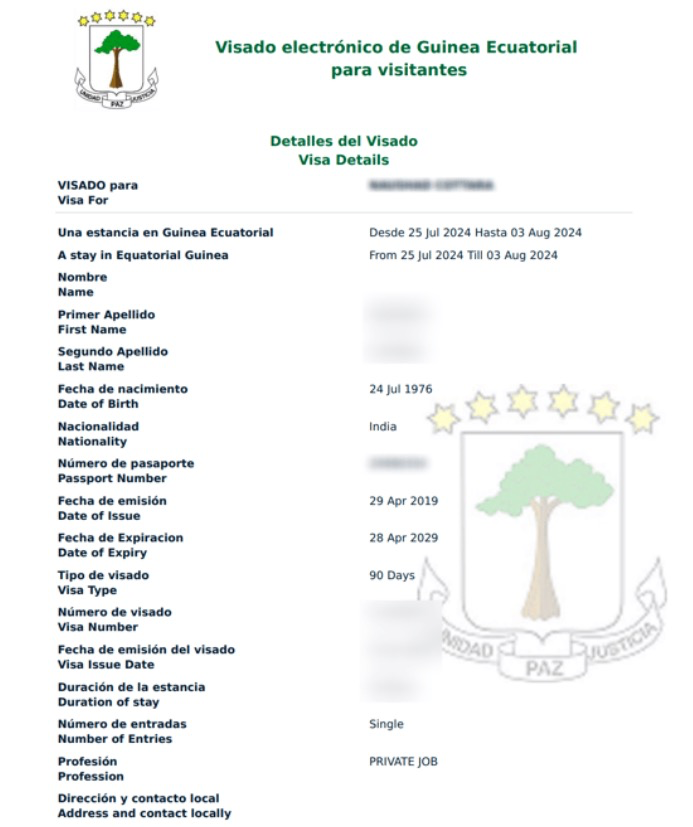
A visa is required for the vast majority of nationalities wishing to enter Equatorial Guinea, including French, Belgian, Swiss, Canadian nationals and those of the great majority of European countries, regardless of the purpose of the stay. Since 1 July 2023, no visa is issued on arrival: travellers who arrive without an e-Visa at Malabo airport are systematically refused entry.
American nationals, who historically benefited from an exemption, must also obtain an e-Visa before travelling, in accordance with the new Equatoguinean legislation. The only remaining exemption applies to neighbouring CEMAC countries and a few other specific nationalities detailed below.
- Document type
- e-Visa (electronic visa) — genuine visa, not a simple travel authorisation
- Maximum length of stay
- 90 days
- Entry options
- Single entry or multiple entries (your choice)
- Processing time
- 24 to 72 working hours after complete submission
- Government fees
- 75 USD €66.62 (50 USD consular fees + 25 USD VFS Global)
- Main entry point
- Malabo International Airport (Bioko Island)
- Passport required
- Valid for at least 6 months after the entry date, with a minimum of 2 blank pages
- Extension
- Not possible online — in-country procedure only
The Equatorial Guinea e-Visa is managed through VFS Global, the technical provider accredited by the Equatoguinean authorities. The portal is relatively new: response times can fluctuate depending on the period, online payments can be temperamental, and certain file formats are strictly imposed at upload. A preliminary check of the application by an experienced team prevents most rejections.
02 · Eligibility
Who needs an e-Visa, and who is exempt?
The general rule is straightforward: any nationality not listed in the exemption list must obtain an e-Visa before travelling to Equatorial Guinea. The visa exemption for short tourist stays applies only to a limited number of countries, mainly CEMAC (Central African Economic and Monetary Community) members and a few states linked to Equatorial Guinea by bilateral agreements. If you are unsure about your situation, the safe rule is simple: apply for an e-Visa. It is open to every nationality, whereas a misunderstood exemption ends in denied boarding or denied entry.
Cameroon, Central African Republic, Chad, Congo-Brazzaville, Gabon — members of the Central African economic zone. Entry is with a national identity card or a biometric passport.
Barbados, Tunisia (30 days), Turkey (90 days) and the United Arab Emirates (90 days). No other nationality is exempt from the visa requirement for a tourist stay.
These two countries are sometimes listed as exempt, but no official source confirms it — the Democratic Republic of the Congo is not a CEMAC member, unlike Congo-Brazzaville. Without written confirmation from an Equatorial Guinean diplomatic mission, their nationals must apply for an e-Visa before departure.
Visa mandatory, without exception. The former American exemption was abolished when the e-Visa system was introduced in 2023.
All travellers, including children and infants, must have their own e-Visa in their name.
In addition to the e-Visa, you must have a passport valid for at least 6 months after the planned entry date, with at least two blank pages for the entry stamp. A passport with insufficient validity results in immediate rejection of the application, or even denial of boarding by the airline.
03 · The application file
Documents required for your e-Visa
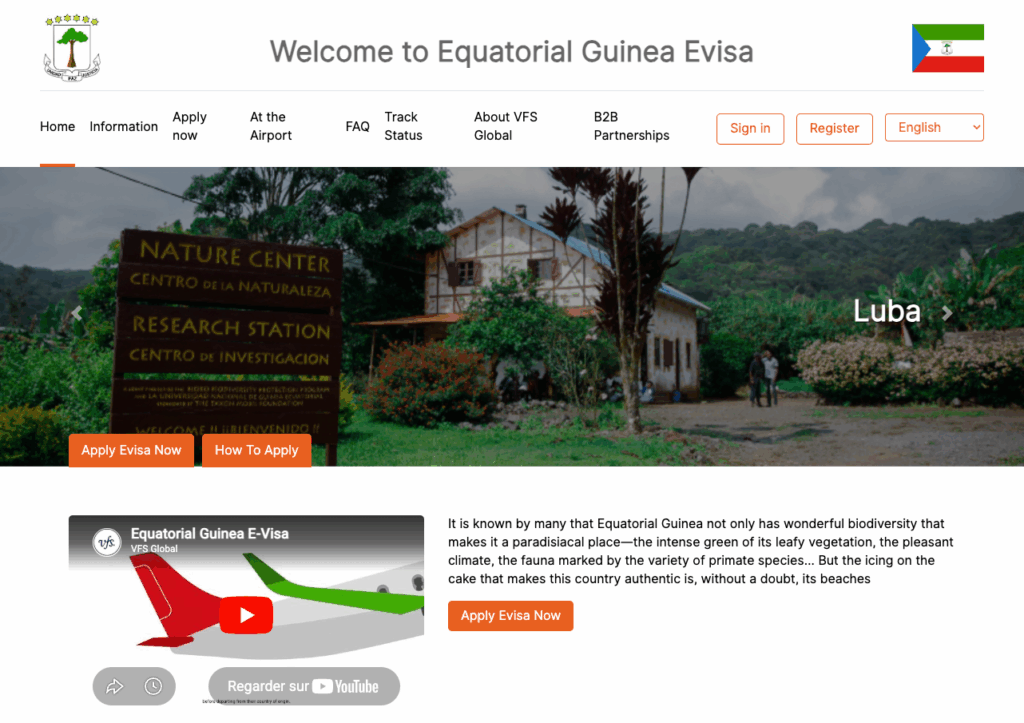
The application is made entirely online: no visit to an embassy or consulate is necessary. All documents are submitted in digital format via the official portal. The quality and compliance of each document directly determines the outcome of the application: an out-of-spec photo or an illegible scan is enough to cause a refusal.
Before any submission to the authorities, a preliminary check of each document — photo format, passport legibility, consistency of dates with airline tickets — greatly reduces the risk of rejection.
- Colour scan of passport (identity page)Sharpness required, no reflections or angle — passport valid for at least 6 months after entry date
- Recent passport-standard identity photoColour, white or very light background, no glasses, neutral expression
- Hotel reservation covering the entire stayOr a legalised invitation letter if staying with an Equatoguinean resident
- Confirmed return air ticketsProving your departure from the territory before the visa expires
- Travel insurance certificate covering the stayRequired for the full duration of the stay
- International yellow fever vaccination bookletThe yellow booklet is required at entry by customs, even if not systematically checked during the online application
For a Business e-Visa, add to your application an invitation letter or a document detailing the purpose of the business trip, written on the headed paper of the inviting Equatoguinean company or your employer. This document must state your contact details, the nature of the assignment and the intended dates of the stay.
04 · The procedure
From application to receipt of your e-Visa
- 1Gather your documents
Valid passport, standard photo, hotel reservation, return air tickets, insurance certificate and yellow fever vaccination booklet. For a professional purpose, add the invitation letter on headed paper.
- 2Submit your application file
Send all documents via the online form. Each document is verified: photo format, passport legibility, consistency of dates. This preliminary step prevents rejections due to formal errors.
- 3Submission to the official portal
The verified file is submitted to VFS Global, the accredited technical provider, which processes it on behalf of the Equatoguinean authorities. Payments are made online at this stage.
- 4Processing by the authorities
The official processing time is 24 to 72 working hours after complete submission. The authorities may request additional documents, which extends this period.
- 5Receipt of the e-Visa
The e-Visa is sent to you by email. It is strongly recommended to print several copies and keep them with your passport throughout the stay.
- 6Presentation at the border
Present your printed e-Visa and passport at the checkpoint at Malabo airport (or any other entry point that may have been activated). Make absolutely sure the officer stamps your passport and registers your visa: travellers have been delayed, and even threatened with detention, because their passport was not properly processed on arrival. Police and military checks are then frequent on the roads: keep a copy with you at all times.
before departure to initiate your application and absorb any administrative delays
05 · Fees & entry points
Costs, entry options and access to the territory
The government fees amount to 75 USD €66.62 for all types of e-Visa, whether tourist or business, single or multiple entry. This breaks down into 50 USD in consular fees paid to the Equatoguinean authorities and 25 USD in processing fees charged by VFS Global.
In addition to these government fees, service fees for document verification, portal submission and follow-up until issuance are applicable. The applicable rate is communicated when your file is opened, after review of the documents.
Regarding entry points, Malabo International Airport (Bioko Island) is the confirmed entry point for e-Visa holders. The opening of other points — Bata (the economic capital on the mainland), Corisco and the land border posts with Gabon and Cameroon — is announced by the authorities but remains gradual and is not guaranteed at this stage. Check with the authorities or VFS Global before booking a flight to any entry point other than Malabo.
The Equatorial Guinea e-Visa is available in two entry options, at the same government fee of 75 USD €66.62:
- Single entry — for a single stay, valid for up to 90 days. A new application is required for any new entry.
- Multiple entries — a more flexible option, particularly useful for business travellers who make regular round trips to Equatorial Guinea.
The e-Visa cannot be extended online. If you wish to stay beyond the authorised period, an extension application must be filed directly with the Equatoguinean immigration services in the country, before the visa expires. For a long-term stay (residence visa, work permit), the procedure falls under the Equatorial Guinea embassies.
Unlike other countries where the e-Visa can be shown on a smartphone, Equatorial Guinea strongly recommends printing on paper. Keep several copies with your passport: police and military checks are frequent on Equatoguinean roads, including in urban areas, and you may be asked to present your e-Visa at any time.
06 · Before you leave
Equatorial Guinea: practical tips for preparing your stay
Equatorial Guinea is a country still rarely visited by international tourists, making it a discreet destination for travellers seeking authenticity. Dense jungle of the Congo Basin, volcanoes, black sand beaches, protected wildlife and Spanish colonial heritage: the country holds real surprises for those who take the time to discover it.
The capital Malabo is located on Bioko Island, accessible only by air from Europe. The continental part of the country — Río Muni — is home to Monte Alén National Park and the city of Bata. Even more remote, Corisco Island offers an unspoilt beach destination.
Hot and humid equatorial climate year-round (≈ 26 °C). Dry season in Bioko (Malabo) from November to March; on the mainland, June–August or December–February are preferable.
Spanish is the main official language. French and Portuguese are also official, which facilitates exchanges for Francophone travellers. Local languages: Fang (mainland) and Bubi (Bioko).
Central African CFA franc (XAF). The economy runs largely on cash; Visa cards are accepted in major hotels and restaurants in Malabo and Bata, but bring cash for the interior.
The country is generally safe for tourists, with a low crime rate. Police and military checks on the roads are frequent: always keep a copy of your passport and e-Visa with you.
You must have your passport (or residence permit) on you at all times. Being unable to show identification during a check can lead to arrest and detention.
Photographing government or military buildings, and airports, is illegal and can lead to arrest and detention. If you are involved in a commercial dispute, the authorities may also prevent you from leaving the country.
What to see. On Bioko Island: Santa Isabel Cathedral in Malabo, the ascent of Pico Basilé volcano, the black sand beaches of Ureka and sea turtles (November to February). On the Río Muni mainland: Monte Alén National Park and its gorillas, the coastal city of Bata, the new capital Ciudad de la Paz (Djibloho) under construction. And offshore: the paradise island of Corisco, for lovers of unspoilt beaches.
- e-Visa received, printed in several copiesTo be kept with the passport throughout the stay
- Passport valid 6 months after entry date, with at least 2 blank pages
- Yellow fever vaccination booklet (yellow booklet) up to dateRequired at entry by Equatoguinean customs
- Travel insurance valid for the entire duration of the stay
- Accommodation reservation confirmed for all nightsTo be kept as supporting evidence in case of a check
- Confirmed return air ticketsProof of departure from the territory before the visa expires
- CFA francs (XAF) available in cashFor travel outside major hotels and main urban areas
- Emergency numbers and embassy contacts notedFrench Embassy in Malabo (or relevant embassy for your nationality)
The Equatorial Guinea e-Visa is a genuine electronic visa — not a simple authorisation — mandatory for the vast majority of foreign nationals since 1 July 2023. The procedure is entirely online, with no embassy visit required, but it remains technical: a recent portal, strict file formats, and sometimes unstable online payments. Start your application at least 15 days before departure, print your e-Visa in several copies, and make sure your yellow fever vaccination booklet is up to date: it is a document required at entry into the territory, just like the visa itself.
Safety
Travel advisories for Equatorial Guinea
The vigilance level recommended by five foreign ministries, on a shared scale.
Average level
Crime, health risks, arbitrary enforcement of local laws, and commercial disputes that can affect travellers.
- Read the advice

US Department of StateAdvice dated October 7, 2025
Increased caution · Equatorial Guinea - Level 2: Exercise Increased Caution
- Read the advice

Global Affairs CanadaAdvice dated September 24, 2026
Increased caution · Equatorial Guinea — Exercise a high degree of caution
- Read the advice

German Federal Foreign OfficeAdvice dated September 5, 2025
Normal precautions · Equatorial Guinea: Travel and Security Advice
- Read the advice

UK Foreign Office (FCDO)Advice dated January 8, 2026
Normal precautions · Equatorial Guinea travel advice
- Read the advice

France DiplomatieAdvice dated September 15, 2026
Increased caution · Equatorial Guinea: Travel Advice
Levels published by the ministries cited, reproduced unchanged. Visamundi is a private agency with no ties to these administrations.
FAQ
Frequently asked questions
