
Thailand: tourism tax evolves but is still not implemented
The proposal has not yet passed the national tourism policy committee and the Council of Ministers, nor has it been published in the royal gazette: no collection date has been set yet.
The Thai Ministry of Tourism and Sports is pushing ahead with its tourism tax proposal, now set at a flat fee of 450 THB per foreign visitor regardless of arrival method—by air, road, or sea. On October 6, 2026, the ministry reported the results of a public consultation, which showed 80.5% approval.
Uniform flat fee replaces previous 300/150 baht differential
Until now, the long-debated proposal had included two separate fees: 300 baht for those arriving by air, 150 baht for those entering by land or sea. This system, which we previously covered here in English, was never implemented.
The new policy unifies the fee at 450 baht per person, no matter their point of entry. Tourism Minister Surasak Phancharoenworakul announced the plan on August 17, 2026 as relayed by the Public Relations Department. Revenue will go into the tourism promotion fund, supporting two goals: providing insurance for visitors who have paid the fee, and maintaining or developing tourist sites without relying solely on the state budget.
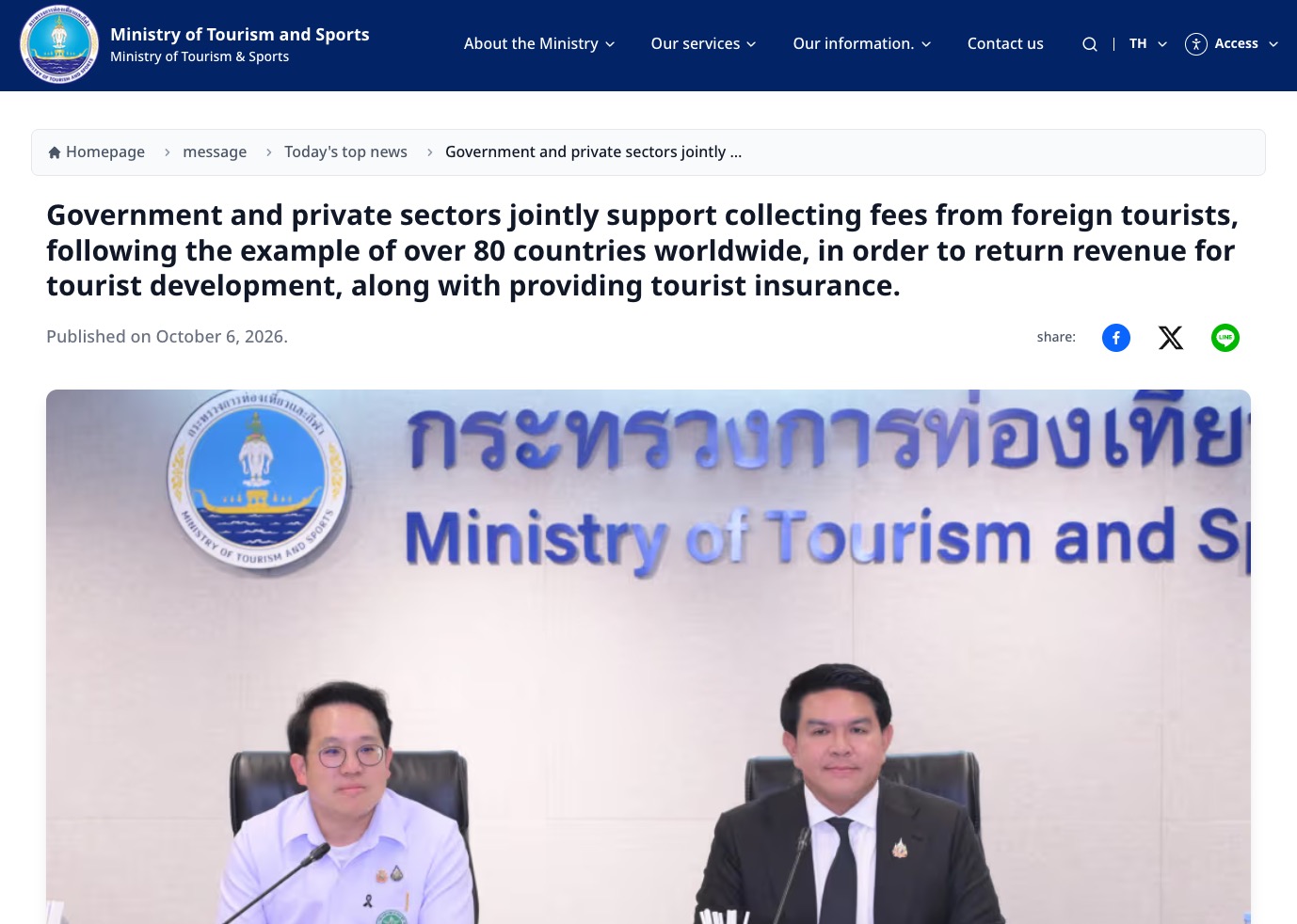
Thai Tourism and Sports Ministry officials estimate these revenues at 8 billion baht per year once collection fees and insurance costs are deducted. As a reference, the same ministry reports that Thailand welcomed over 22 million foreign visitors between January and September 2026.
Public consultation feedback
The draft decree was open for online public consultation from August 24 to September 28, 2026 on the government's legislative portal and the ministry's website. According to the ministry press release dated october 6, 2026, 5,954 people responded:
80.5% approve the draft decree;
78.3% approve the flat fee of 450 baht per person;
36.26%, the largest share, prefer to have the fee collected with the airfare to avoid delays at immigration.
The main issue remains the uniform implementation of the fee for air, land, or sea arrivals. On the same day in Bangkok, the ministry convened a meeting with the health minister, hotel representatives, tourism operators, border trade officials, international airlines, and a ride-hailing platform. Industry stakeholders requested that the collection process not add delays at border checkpoints and called for exemptions for cross-border workers and regular border crossers.
Who pays and who is exempt
The fee applies to all foreign visitors, regardless of nationality. The draft decree lists several exemptions:
official guests of the Thai royal family or government;
diplomatic passport holders and government officials on official visits;
foreigners holding a Thai work permit;
holders of a border pass (Thailand-Malaysia joint border pass or similar);
transit passengers;
crew members;
children under two years old;
This list is not final. On october 6 the ministry stated that it would work with airlines and the immigration bureau to finalize exemptions and collection methods together.
The 450 baht fee covers multiple entries: the draft decree states this fee would allow visitors to enter or exit thailand for 30 days without incurring additional payments.
Insurance included but coverage terms still under discussion
Part of the tourism tax will be used to purchase insurance for each foreign visitor who pays the fee. The ministry states coverage will include death and medical expenses, with the details of the policy still being finalized. The goal is to reduce the burden on Thai public hospitals for unpaid medical fees.
The level of coverage, policy caps, and claims process have not yet been published. Industry stakeholders have called on the ministry to make the insurance policy details clear before implementation.
Collection timeline split into two phases
The tourism tax has not yet been published in the royal gazette, and it’s this publication that will set the countdown. According to the government’s timeline announced in august 2026, fees will be collected in two phases:
Phase | Arrival method | Collection start |
|---|---|---|
1 | Air travel | 180 days after publication in the royal gazette |
2 | Land and sea arrivals | Approximately one year after phase 1 |
This phased approach aims to prevent congestion at land border checkpoints, especially at the Malaysia border. While some Thai press outlets suggest that phase 1 could begin in early 2027 for air arrivals, the ministry has not announced a date. Due to the 180-day delay, no travelers will pay the fee in the six months following the gazette’s publication.
How fees will be paid
The draft decree outlines five payment channels for the tourism fee: integration into airfare prices, an official website, a mobile application, self-service kiosks at entry points, and other methods approved by the Thailand Tourism Board’s fund committee. The final choice will be decided jointly with air carriers and border immigration.
Should airfare integration be selected—which appears favored by the largest share of respondents—then travelers arriving by air will not need to take any action: the tax will already be included in their ticket price. Until the decree is published in the royal gazette, no tourism tax is collected at thai border points, no matter how you enter.

A specialist in regulatory monitoring and a content destination expert, she analyzes daily changes in entry formalities to turn complex administrative processes into practical guides. Her role blends ground-level expertise with technical precision to ensure the reliability of the information provided to travelers.
Get our visa news first in your Google results: add Visamundi to your preferred sources.
