
Why Versailles may ask for a visa at the entrance?
Visitors to Château de Versailles may now need a visa or residence permit upon entry, as ticket prices vary by nationality and place of residence.
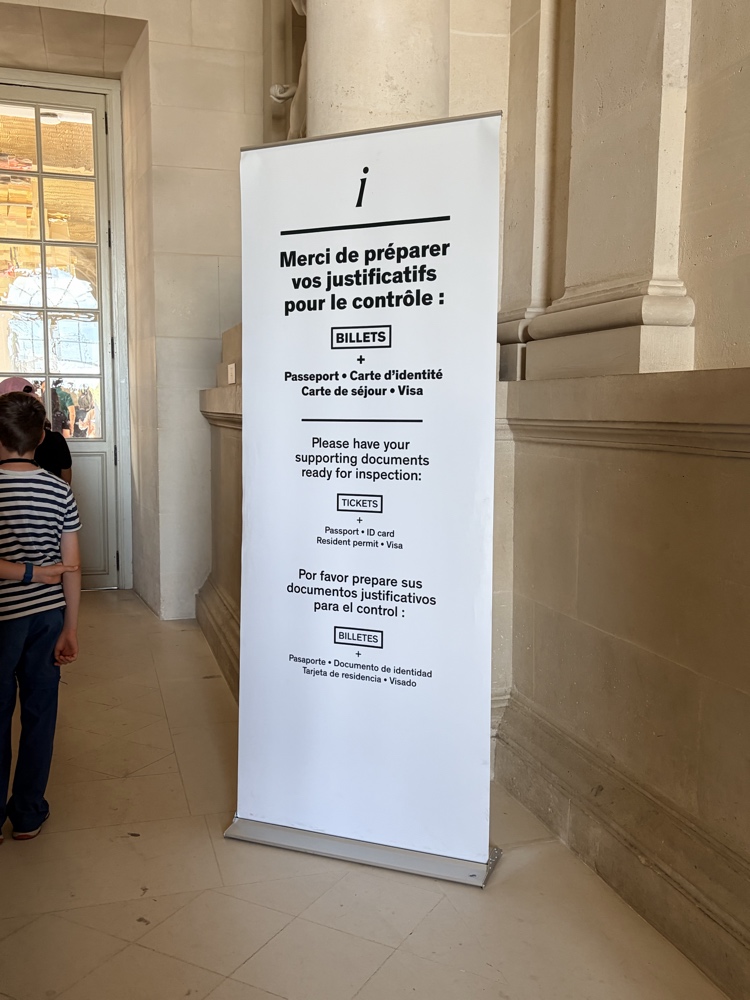
Earlier today, during a visit to the Château de Versailles, one detail surprised me: the need to show a visa to enter one of France’s most-visited monuments. I investigated.
Since 14 January 2026, EEA nationals and residents pay €3 less than other visitors, and staff now check proof of status on arrival at the gates.
A single ticket, two prices since 14 January 2026
The estate introduced differentiated pricing on 14 January 2026: visitors who are nationals or residents of any of the European Economic Area’s 30 member states receive a €3 discount on main-entry tickets, provided they can show valid supporting documents. The EEA comprises the 27 EU countries plus Iceland, Liechtenstein and Norway; Switzerland is not a member, so a Swiss passport without EEA residency triggers the standard rate.
Seasonal pricing also applies:
Ticket | Standard rate | EEA rate |
|---|---|---|
Passport ticket, peak season (1 Apr–31 Oct) | €35 | €32 |
Passport ticket, off-season (1 Nov–31 Mar) | €25 | €22 |
Trianon Estate | €15 | €12 |
The Passport ticket gives full access to the entire estate (castle, gardens, Trianon). The discount remains a flat €3 per ticket year-round, and is applied only if supporting documents are presented on arrival.
What the guard is really checking at the gate
The official page lists accepted documents: a current ID, passport, long-stay visa or residence permit. Checks can occur at the Château’s Gate A (Pavillon Dufour), the Trianon estate, and the gardens on the days their access is paid.
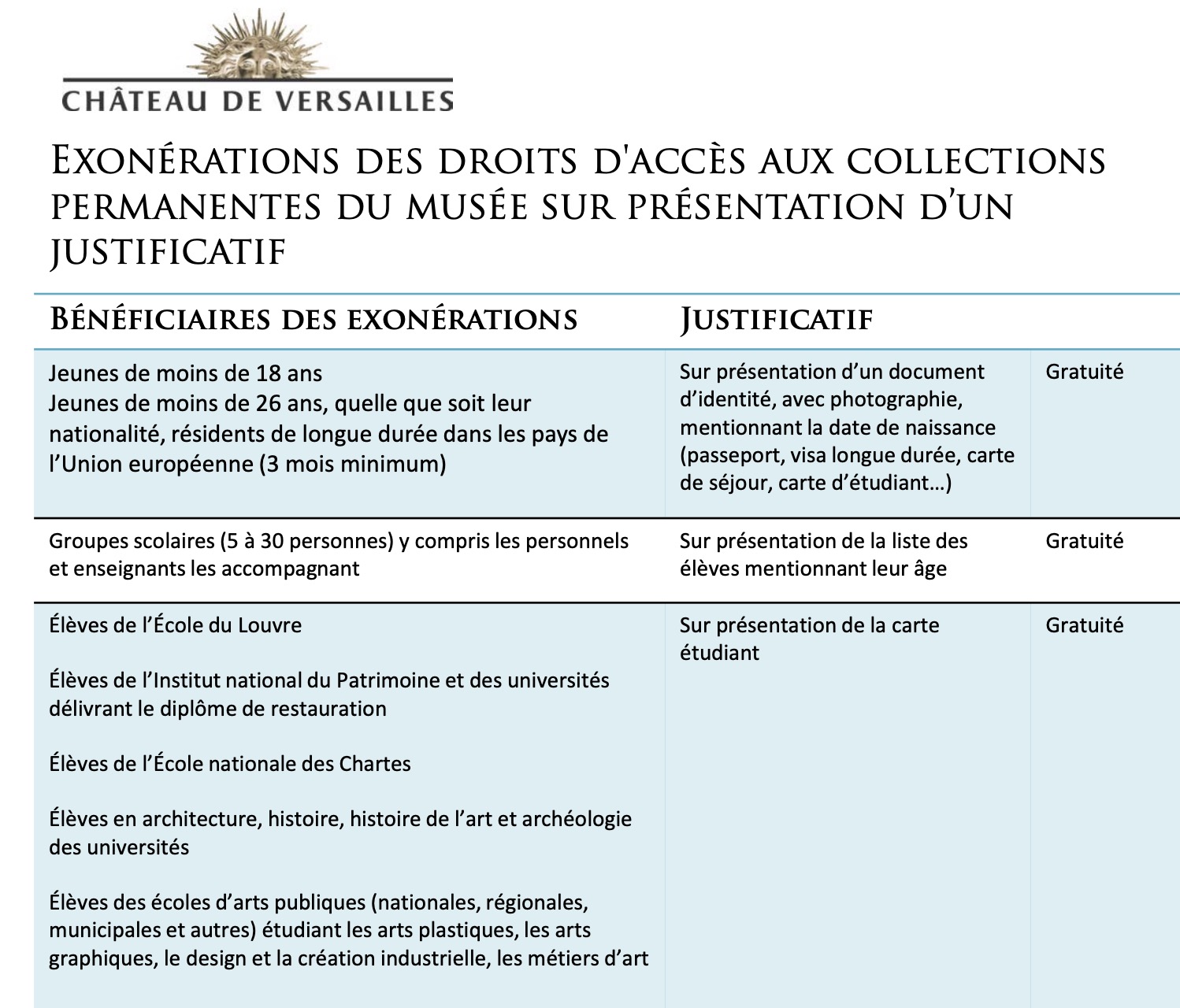
The rule is straightforward: the document must prove either nationality in an EEA country or residence status there. A German passport or Portuguese ID is enough. For non‑EU nationals living in the EEA, it’s the long-stay visa or residence permit that counts; a Moroccan student or a Brazilian employee in France with a long-stay French visa pays the EEA rate too.
Conversely, a short-stay visitor does not reside in the EEA and therefore pays the standard tariff even if they entered the Schengen area with a short-stay visa or visa‑free. A Schengen tourism visa in the passport is therefore not sufficient to claim the reduction, because it proves neither nationality nor residency in Europe.
Under‑26s: the long-stay visa unlocks free entry
The same supporting document unlocks an even better benefit for younger visitors. The estate grants free admission to anyone under 26 who is a national or legal resident of an EEA member state. Official exemption guidelines note that the waiver applies regardless of nationality to long-term residents; accepted proofs include the passport, long-stay visa, residence permit or student card.
A concrete example: a 22-year-old university student from Senegal or Vietnam on an exchange programme in France, Belgium or Italy simply brings the long-stay visa (or residence permit) plus any form of ID; entry is free once an advance, timed free ticket has been reserved online. Visits are through Gate A or the Trianon estate entry on the chosen day. All under-18s enter for free regardless of their situation. |
Versailles isn’t alone
The château follows the same policy already in use at the musée du Louvre, where admission costs €32 for visitors outside the EEA and €22 for EEA nationals or residents—provided supporting ID or residency proof is shown. Press reports suggest the scheme may be extended to other national monuments in 2027, though no official announcement has been made. Either way, for every visitor the takeaway is identical: the passport alone no longer determines price; what matters is the combination of nationality plus residency, and the document that proves it.
What to bring depending on your status
When you book and again when you line up at Versailles, come prepared with the following:
EEA nationals: ID card or passport (no other document required).
Non‑EU nationals living in the EEA: valid long-stay visa or residence permit (plus passport).
Short-stay tourists (Schengen visa or exempt): no supporting proof needed; the standard 35 € Passport ticket applies in peak season.
Under‑26s resident in the EEA: a pre-booked free timed ticket plus proof of residency and a piece of photo ID. (All under-18s go free regardless.)
Purchase the correct ticket online from the start: the EEA discount and the under‑26 free entry are both granted only after supporting documents are inspected on site. Peak season runs until 31 October 2026; from 1 November the Passport ticket reverts to €25 standard / €22 EEA.

As CEO of Visamundi, I am dedicated to simplifying international travel by assisting our clients in obtaining visas worldwide. By staying at the forefront of ever-changing regulations, I ensure our agency remains a trusted pillar in the visa services industry.

Get our visa news first in your Google results: add Visamundi to your preferred sources.
