Choose the visa that fits your trip. Fully online process, real-time tracking.
Visamundi service: €39 incl. VAT
Consular fee: ≈ €50(374 CNY)
Electronic visaSince 1 January 2021, Russia has allowed nationals of 64 countries to obtain an official electronic visa — the "unified visa" — to visit the entire Russian territory. The process is entirely paperless, with no embassy visit and no local sponsorship required. However, please note: Russia is classified as a complex destination due to a lengthy application form and strict documentary requirements. Most Western governments strongly advise against this journey.
01 · The essentials
The entire process takes place on the internet: no mail to send, no visit to an embassy or consulate required.
The passport must be valid for at least 6 months from the date the application is submitted, regardless of the purpose of the stay.
Russia is classified as a difficult destination: long form and strict documentary requirements according to official criteria.
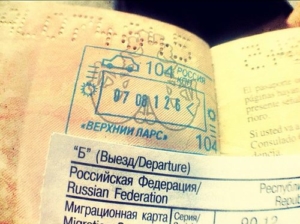
The Russia e-Visa is a full electronic visa, officially called the "unified visa". It is not a travel authorisation of the ETA or ESTA type — it is a genuine visa issued by the Russian authorities, obtained entirely online, intended for nationals of 64 eligible countries wishing to travel to Russia for tourism, business, private (visiting relatives) or humanitarian purposes.
Once approved, the e-Visa is sent in PDF format by email. It must be printed in colour and presented to immigration officers on arrival in Russia, and at check-in in certain cases. The document must be accompanied by the passport used to apply for it and the original travel insurance certificate.
The entire procedure is paperless: no postal mail, no visit to an embassy or consulate. However, you must be outside Russia when submitting your application.
Almost all Western governments, including France, strongly advise against travel to Russia. Drone and missile strikes are regularly reported over Moscow and border regions. Before taking any steps, consult the travel advice pages published by your country's Ministry of Foreign Affairs. Initiating the e-Visa process does not constitute approval of the trip by consular authorities.
02 · Eligibility
The Russian e-Visa is open to nationals of 64 countries worldwide. Before starting any application, check that your passport is among the eligible nationalities. If your country is not on the list, you must go through the Russian embassy or consulate in your country of residence to obtain a conventional visa.
Nationals of the following countries may apply for the e-Visa, among others: Germany, Austria, Belgium, Bulgaria, Cyprus, Croatia, Denmark, Spain, Estonia, Finland, France, Greece, Hungary, Ireland, Iceland, Italy, Latvia, Liechtenstein, Lithuania, Luxembourg, North Macedonia, Malta, Monaco, Norway, Netherlands, Poland, Portugal, Romania, San Marino, Slovakia, Slovenia, Sweden, Switzerland, Czech Republic, Vatican.
The following are also eligible: Saudi Arabia, Bahrain, Barbados, Bhutan, Cambodia, China (including Taiwan), North Korea, Eswatini, India, Indonesia, Iran, Japan, Jordan, Kenya, Kuwait, Malaysia, Mexico, Myanmar, Oman, Papua New Guinea, Philippines, Saint Lucia, Singapore, Tonga, Trinidad and Tobago, Turkmenistan, Turkey, Vietnam, Zimbabwe.
Nationals of the following countries cannot apply for the Russian e-Visa and must contact the Russian embassy for a conventional visa: United States, Canada, Australia, New Zealand, United Kingdom.
If you are not covered by the e-Visa or if your stay requires a visa type other than tourist, business, private or humanitarian (for example a work visa), contact the Russian embassy or consulate within the 3 months preceding your departure. A conventional visa cannot be combined with an e-Visa to extend the length of stay.
The majority of European Union countries, as well as several countries in Asia, Africa and Latin America, are on the list. Always check your passport before starting the application.
The Russian e-Visa only authorises one entry into the territory. If you leave Russia during your stay, you will not be able to return with the same document.
Unlike the conventional visa, the e-Visa requires neither an invitation letter, nor a local contact, nor a Russian "sponsor". You must however have a hotel reservation and an exit ticket.
The e-Visa applies to all travellers, including minors. Each person must have their own passport and their own application. Consular fees are waived for children under 6 accompanied by a parent, but the application remains mandatory.
03 · The process
The Russian e-Visa application is completed entirely online. You must fill in a comprehensive form (Russia is known for the length and detail of this form), submit scanned supporting documents, and pay the consular fees online. Nothing needs to be sent by post and no visit is required.
The three essential documents to compile the application are:
Without these three documents, the application cannot be processed. Check that each document is legible and meets the required criteria before submitting your application.
Confirm that your nationality is among the 64 countries eligible for the Russian e-Visa. Also ensure that your passport is valid for at least 6 months from the date the application is submitted — not from the date of departure.
Gather your valid passport, a recent passport photo in colour, and a travel insurance certificate covering repatriation and medical expenses for the entire duration of your stay. Also prepare your accommodation details in Russia (hotel reservation or name of host if staying with a private individual) and your exit ticket.
Carefully complete the e-Visa application form. It is long and detailed: purpose of travel, arrival and departure dates, itinerary, identity and passport information. Any error or inconsistency may result in rejection. Indicate the exact purpose from the available options: tourism, business, visiting relatives or humanitarian.
Send scanned copies of your documents (passport, photo, insurance) once the form is completed. These documents are used to verify and validate the data entered before submission to the Russian authorities.
The official consular fees are set by the Russian authorities. Children under 6 accompanied by a parent are exempt, but the application remains mandatory for them.
Processing takes 3 to 4 days on average. To avoid any last-minute issues, it is strongly recommended to submit the application at least 10 days before your planned arrival in Russia. The minimum regulatory deadline for submission is 4 days before departure.
Once the application is approved by the Russian authorities, you will receive your e-Visa in PDF format by email. You must print it in colour. This document must be presented at check-in and on arrival in Russia, together with your passport and the original of your travel insurance certificate.
If you lose the printed copy of your e-Visa before the start of the trip, a free replacement copy can be resent. For stays with a private individual (family, friends), provide the full name of your host in the online application — no official hotel voucher or invitation letter is required for the e-Visa, unlike for the conventional visa.
The Russian e-Visa is not extendable. If you need to stay more than 30 days, you will have to leave the territory and submit a new application from abroad. Any overstay exposes the traveller to criminal proceedings and a 5-year ban on entering Russia.
04 · Fees & processing times
The consular fees for the Russian e-Visa are set by the Russian authorities and apply to each traveller. Children under 6 accompanied by a parent are exempt from consular fees, but an individual application remains mandatory for each of them. Service fees may be added depending on the channel used to submit the application.
The e-Visa application can be made at the earliest several weeks before the planned arrival date. If your trip is planned more than a month away, the application can be submitted right now — the e-Visa will be sent as soon as it is available from the Russian authorities. To avoid any last-minute blockage, it is recommended to plan the application at least 10 business days in advance.
Once issued, the e-Visa is valid for 120 days from its date of issue: you therefore have a considerable window to choose your entry date. However, once you have entered Russian territory, the permitted length of stay is a maximum of 30 days — and cannot be extended under any circumstances. The expiry date shown on the e-Visa is definitive.
If your application is refused by the Russian authorities, all fees related to the application will be refunded. The e-Visa, once obtained, does not automatically guarantee entry into the territory: the immigration officer at the border remains the sole decision-maker at the time of arrival.
Any overstay beyond the initial 30 days granted by the Russian e-Visa exposes the traveller to criminal proceedings and a 5-year ban on staying in Russia. There is no procedure to extend the e-Visa in place. In the event of an imperative need to stay longer, the traveller must leave the territory before expiry and submit a new application from abroad.
05 · Entry points
The Russian e-Visa is recognised at a very large number of entry points spread across the entire territory. Since 1 January 2021 — the date the unified visa was introduced — the entire Russian territory is accessible to e-Visa holders, with no geographical restriction on cities or regions to visit. This was a major limitation of the old regional electronic visa system, now abolished.
Russia has around a hundred land border posts accepting the e-Visa, including the pedestrian entry point at Ivangorod and the mixed entry point at Blagoveshchensk (river crossing in summer, road crossing in winter).
All Moscow airports (Sheremetyevo, Domodedovo, Vnukovo) are among the eligible air entry points, along with around fifty other airports spread across the entire territory.
About ten sea ports allow entry into Russia with the e-Visa, particularly for travellers arriving by sea or on a cruise.
Railway entry points and one river entry point (Khabarovsk) complete the network of authorised crossings for the Russian e-Visa.
On arrival in Russia, you must present simultaneously your e-Visa printed in colour, your passport (the one used to apply for the e-Visa) and the original of your travel insurance certificate. These three documents are inseparable: the absence of any one of them may result in refusal of entry at the border.
If you wish to verify that your e-Visa is valid before travelling, check the authorisation dates shown on the PDF document received by email. These dates specify the permitted entry window and the maximum length of stay.
Since 1 December 2024, Russia has collected biometric data from every foreign national crossing its border: a facial photograph and fingerprints. Launched at Moscow's airports and the Mashtakovo crossing, the scheme was extended to all border crossing points on 30 June 2025, then rolled out on 1 December 2025 to every technically equipped post. The programme has been extended until 31 December 2027.
Enrolment takes place on arrival, before passport control: allow extra time, particularly at peak hours. Belarusian citizens, holders of a diplomatic or service passport or visa, and children under 6 are exempt. Refusing enrolment results in refusal of entry.
Two formalities come on top of the visa check and apply to every traveller, e-Visa holders included.
The migration card is handed to you at the border: you must complete it, have it stamped by the border guards, keep it for the whole stay and hand it back on departure. If it is lost or damaged, report it within 3 days to the Ministry of the Interior (MVD) — the duplicate is free.
Migration registration of your place of stay is compulsory. In a hotel, hostel or licensed tourist accommodation the establishment does it automatically within 1 working day: keep the slip you are given. If you stay with a private host, it is up to them to notify your presence within 7 working days. Failure to register carries a fine of 2,000 to 5,000 roubles, and deportation with an entry ban in case of repeat offences.
06 · Before you leave
Russia is considered a complex destination in terms of entry formalities: long form, strict documentary requirements, and a particular geopolitical context. Here are the key points to check before departure, based on official entry conditions and information available from institutional sources.
Russia is subject to formal travel advisories against travel from almost all Western governments, including France, Belgium and Switzerland. Drone and missile strikes are regularly reported over Moscow and border regions. Obtaining a valid e-Visa does not constitute approval from your country's authorities for making this trip. Consult the official travel recommendation pages without fail before making any decision.
The Russia e-Visa is an official electronic visa (not an ETA authorisation) open to 64 nationalities for tourist, business, private or humanitarian stays. It authorises a single entry of up to 30 days, is valid for 120 days after issuance, and cannot be extended. The process is entirely online with no consular visit, but the form is lengthy and documentary requirements are strict — notably the travel insurance with a specific coverage threshold. Any overstay results in a 5-year ban from the territory. Finally, the destination is on the red list for almost all Western governments: inform yourself thoroughly before making any commitment.
The Russian visa application is strict about the ID photo, and a non-compliant shot gets the file rejected.
The standards: 3.5 × 4.5 cm, in colour, on a light, plain background (white or grey), recent (under six months), face forward filling roughly 70–80% of the frame, neutral expression, eyes open and visible. No tinted glasses and no headwear, except for permanent religious reasons and without hiding the oval of the face. One photo glued to the form is usually enough, but bring two. Avoid selfies and poor home prints: use a photographer or a compliant booth. A compliant photo from the start avoids a refusal and a second trip to the visa centre.
Safety
The vigilance level recommended by five foreign ministries, on a shared scale.
Average level
Terrorism, unrest, risk of wrongful detention and drone incursions; fuel shortages reported.

US Department of StateAdvice dated December 29, 2025
Do not travel · Russia - Level 4: Do Not Travel

Global Affairs CanadaAdvice dated September 9, 2026
Do not travel · Russia — Avoid all travel

German Federal Foreign OfficeAdvice dated June 30, 2026
Do not travel · Russian Federation: Travel and Safety Information

UK Foreign Office (FCDO)Advice dated July 3, 2026
Do not travel · Russia travel advice

France DiplomatieAdvice dated June 30, 2026
Do not travel · Russia: Travel Advice
A destination under advisory still issues its visas and authorisations. Before applying, check that your travel insurance covers it.
Levels published by the ministries cited, reproduced unchanged. Visamundi is a private agency with no ties to these administrations.
FAQ