

The Federal Government of Somalia (GFS) has embarked on a reform of its immigration policy, marked by the imminent transition of its e-Visa system to a Electronic Travel Authorization (eTA), which is due to take full effect from November 27.
This initiative comes against a backdrop of serious concerns about digital security and the categorical rejection of this policy by neighboring factions, notably Somaliland.
End of Visa on Arrival (VoA) and rise of eTAS
Although the Visa-On-Arrival (VOA) rule has been in effect since September for most travelers, the change in the November 27 does not concern the visa policy itself, but the system used to process these travel authorizations.
From this date, Somalia will switch entirely from the e-Visa system to an eTAS system (Electronic Travel Authorization Somalia). Federal officials describe the new system as follows stricter than the previous e-visa platform.
Since September 21, the Somali eTA can be requested on the website https://etas.gov.so
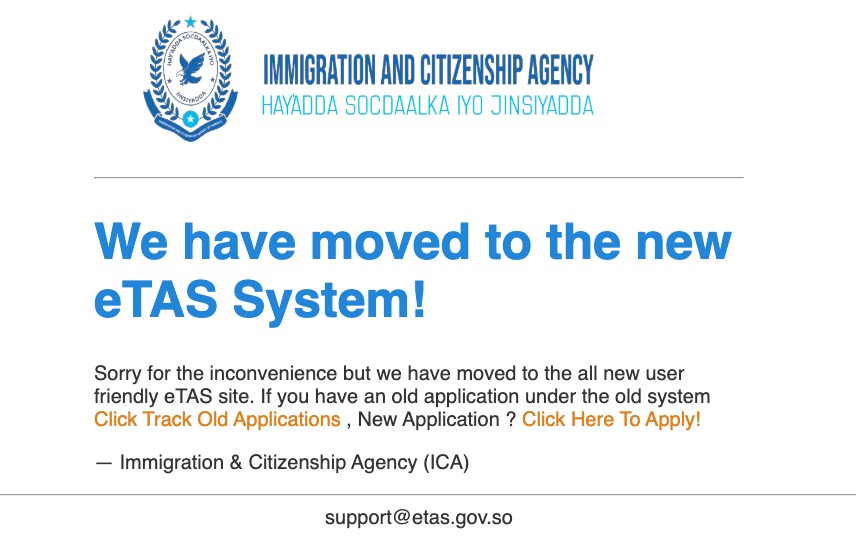
All passengers bound for Somalia will require federal authorization before boarding. The eTA platform will be directly linked to the airlines' data systems (including the API - Advance Passenger Information - and the NRP - Passenger Name Records).
Airlines will not be able to issue boarding passes to travelers who have not obtained the eTA. This gives the Mogadishu authorities access to personal and travel details even before passengers depart, reinforcing federal control over immigration.
Massive data leak from the old e-Visa system
This transition to eTA is directly preceded by a digital security scandal. The original e-visa system, which the eTA is supposed to replace, has suffered a major leak of personal information. Thousands of sensitive user data (over 35,000) registered on Somalia's official e-Visa platform have been compromised.
This flaw has raised serious questions about safety and reliability of the digital system set up by the Somali government. Users expressed concern about the security of their personal data, noting that the site appeared not to be working properly and reporting research indicating that the site may have been hacked.
Non-recognition de facto by its neighbors
The GFS's attempt to centralize and strengthen eTA's control of the borders is being fiercely resisted by the autonomous regional entities.
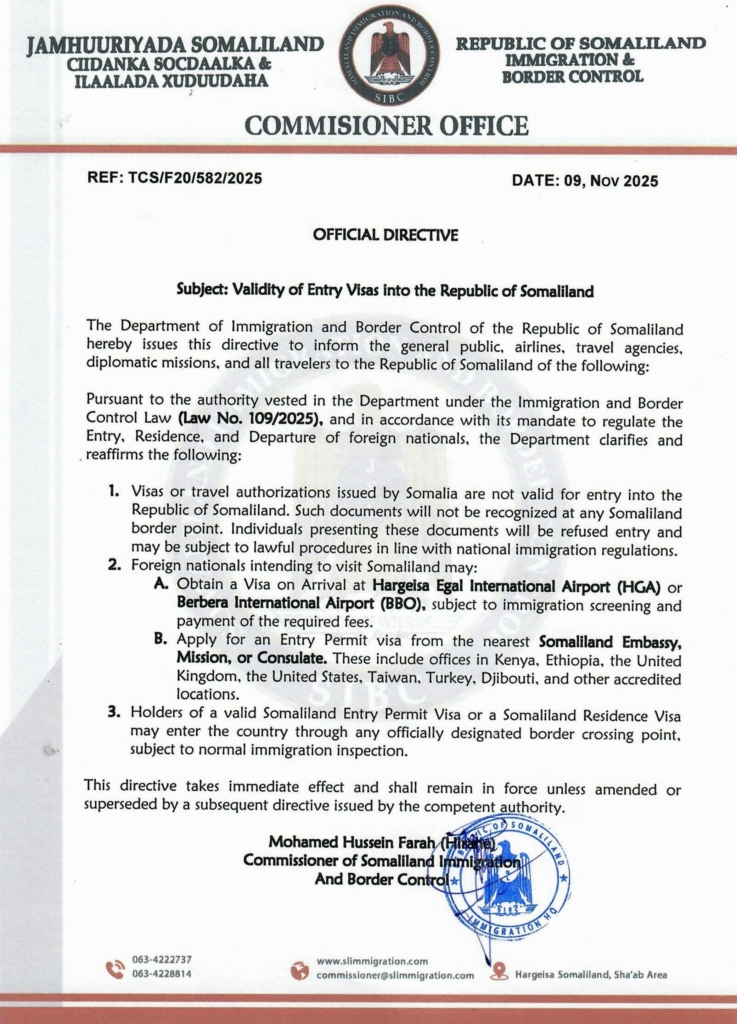
The government of Somaliland, which asserts its independence, formally announced the November 9, 2025 that it would no longer recognize the e-visa issued by the federal government of Somalia.
Somaliland has banned entry to its territory by land, air or sea using a Somali e-visa. Travelers must obtain a visa specifically issued by the Somaliland authorities, sometimes on arrival.
“Visas or travel documents issued by Somalia are not valid for entry into the Republic of Somaliland. Travelers to Somaliland can obtain a visa on arrival at Hargeisa Egal International Airport (HGA) or Berbera International Airport (BBO), or apply for an entry permit at the nearest Somaliland embassy, mission or consulate.“
Somaliland's Minister of Aviation, Fuad Ahmed Nuh, said that orders had come into force on November 10, 2025, prohibiting any aircraft without approval from the Somaliland aviation authority from crossing its airspace. Airlines refusing to comply will be diverted.
The timetable for the rejection of Somaliland, shortly after the disclosure of the data leak, This was a way of legitimizing its decision and asserting its sovereignty in the face of the risks associated with the Somali system.
It is also mentioned that the e-visa platform (predating eTA) had already been rejected by “the two regions”, referring to Somaliland and potentially Puntland, underlining the federal government's difficulty in imposing its authority over immigration throughout Somalia.

 English
  Français
  Deutsch
  Italiano
  Español