
e-Visa India

Tourism / Business / Medical / Conference / NGO
Since 2015, India has implemented an electronic visa issuance system, initially called the «e-Tourist Visa» and later renamed the «e-Visa,» which is available for several reasons for travel and is operational in dozens of countries. ports, airports, and land checkpoints in India. In 2019, e-Visas have become even more flexible, allowing stays of up to 90 days (Tourism) or 180 days (Business) in India.
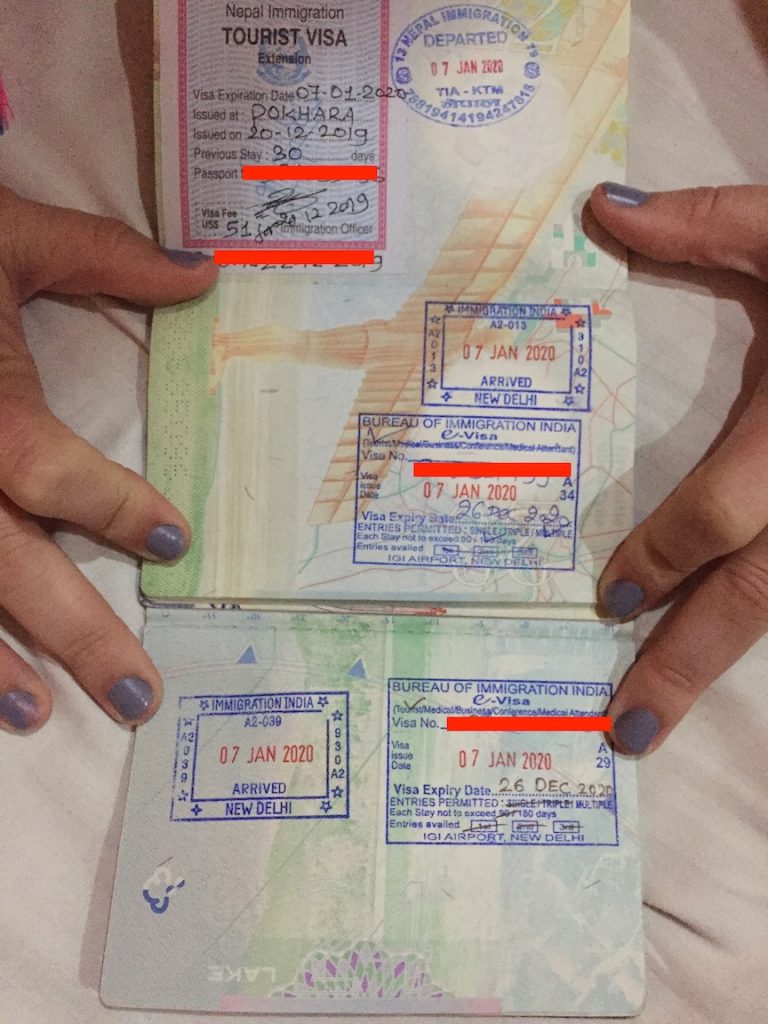
It is also commonly referred to as a "visa on arrival," even though the e-Visa must be requested before traveling to India and no e-Visas are issued on site for most travelers. Everything is done entirely online, so you don't have to send anything by post, and you don't have to go anywhere. Photocopies of the passport and a passport photo must be sent once the application has been completed and paid for. You will then receive a PDF travel authorization form, which you will need to print out and present at the airport of arrival, in order to have the final visa affixed to your passport and fingerprints taken.
The e-Visa is valid for applicants holding a passport valid for one year. valid for at least 6 months from the date of arrival for each stay in India. No FRRO (Foreigners Regional Registration Office) registration is required for these e-Visas. Please note that India significantly increased its tariffs in December 2025.
Single fare of 39,00 € per traveler Excluding consular fees, if applicable
All French nationals wishing to travel outside the European Union must obtain a visa, in order to enter the desired territory legally. The visa, whether electronic or more traditional, is issued by the competent authorities of the country you wish to visit, and constitutes proof of authorization to visit that same country for a fixed period, generally set at 90 days.
If you're planning to visit India, you'll need to obtain an electronic visa before you even arrive.. An electronic visa issuance system was introduced in 2015 for India, to facilitate people's access to Indian territory via multiple entry points (ports and airports, and now a land point from Nepal in 2025: Raxaul).
As of March 2019, e-Visas for India have gained in flexibility and now allow travelers to visit India for single or multiple entry stays and to stay for up to 90 days at a time for tourism, and up to 180 days if on business. If you would like to apply for an e-Visa for India, Visamundi can help you with your application, thanks to its expertise in handling visa applications for professionals and individuals. By completing the e-Visa India form available on our website, you can easily obtain your e-Visa for travel to India through our services.
| Since October 1, 2025, India requests the completion of the electronic arrival card for foreigners. More information on our dedicated article. |
What are the eligibility criteria for obtaining an e-Visa India?
All Western nationalities are affected by the India e-Visa. Only citizens of Nepal and Bhutan are required to obtain a visa known as a " traditional "This is a paper-based system. If you're a French national, you'll have the same easy access to e-Visa India as any other national from any other continent, with the exception of travellers of Pakistani origin, who may encounter difficulties in obtaining an e-Visa from the Indian authorities..
The e-Visa India is mainly issued for stays of tourism and business travelbut also for travel medical or to attend a conference as a researcher. The India e-Visa is available in several formulas, e-Visa Tourist, e-Visa Business, e-Medical Visaand finally e-Visa Conference.
- L'e-Visa Tourist allows single-entry stays and is valid for 30 days to 5 years from the date of entry, and you must enter India within 120 days of its issuance.
- L'e-Visa Business allows travelers to enjoy multiple stays for up to 180 days within one year from the date of issue of the electronic visa.
- L'e-Medical Visa allows patients and accompanying persons to benefit from up to 3 entries for a maximum of 60 days of cumulative stays. From the date of issue of the electronic visa, you will have 120 days to enter India.
- L'e-Visa Conference allows a single entry into India for a maximum of 30 days. You will also have 120 days to enter India from the date of issue.
- 🆕 The’e-Visa Transit allows up to 30 days in India and is very similar to the e-Tourist Visa
- 🆕 The’e-Visa Mountaineering allows you to go mountain climbing and trekking
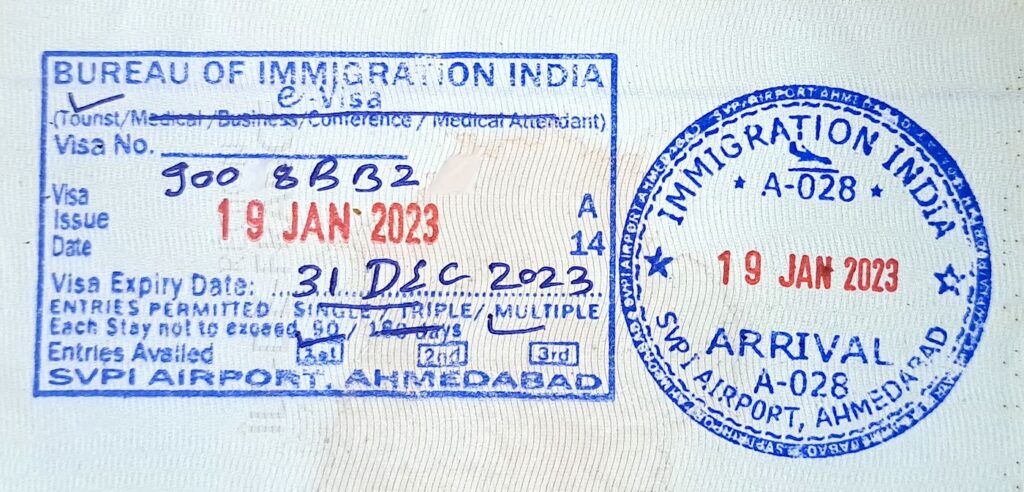
To be eligible for an e-Visa for India, you must have a passport from an authorized country with a validity of valid for at least 6 months from your date of arrival for each stay in India. No FRRO (Foreigners Regional Registration Office) registration is required to obtain an e-Visa for India.. Your fingerprints will be taken directly on arrival by the relevant authorities, after the final visa has been affixed to your passport.
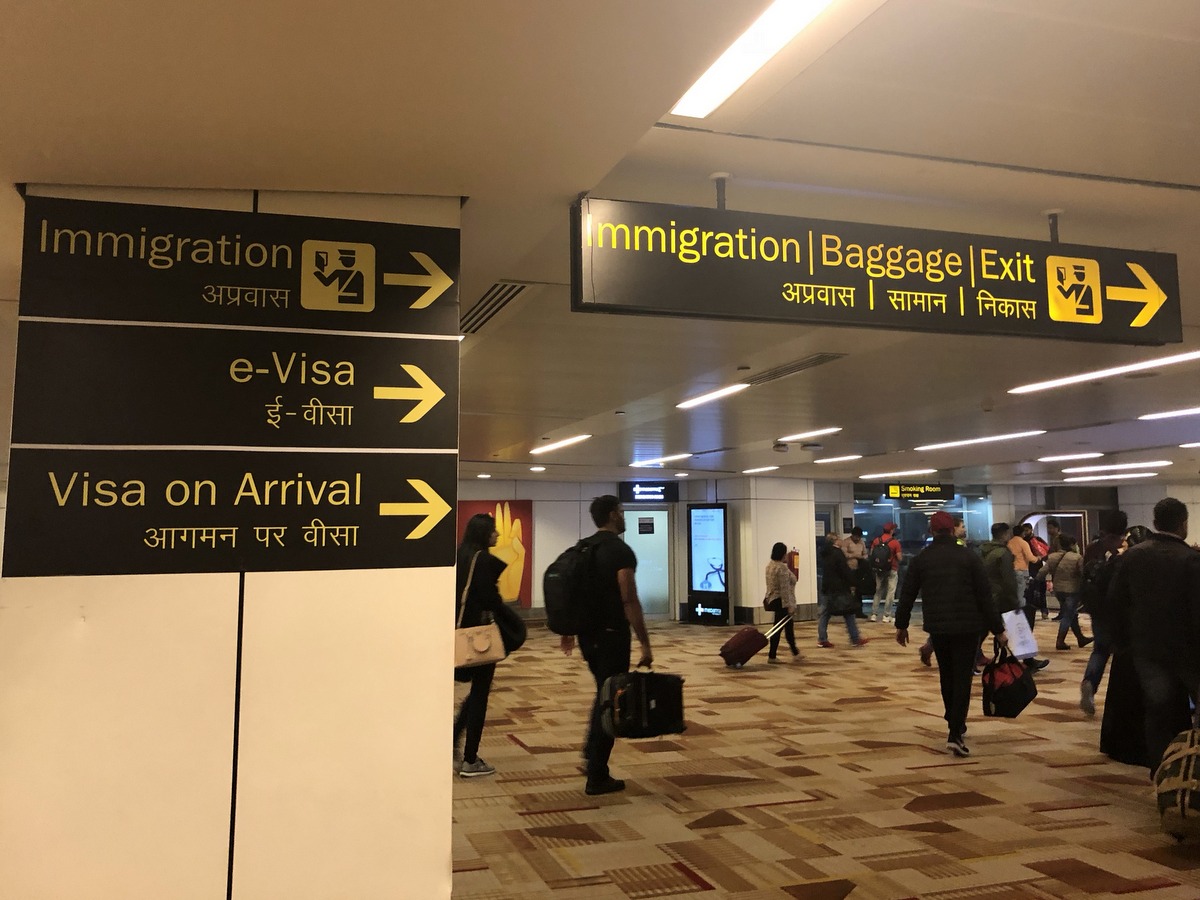
If you come from abroad, you will clear immigration at your first Indian airport, even if this is not your final destination in India. This is the one you will need to indicate on the application. Visas are not checked on domestic flights, and you can even use your e-Visa to travel anywhere in India (even to a non-eligible airport!) once you have made your first entry at an eligible airport.
Please note that you will be asked for your e-Visa when boarding your flight to India! You won't be able to get it on arrival. This is also where most travelers are rejected due to errors in their passport numbers... #truestory
How do I obtain an e-Visa India on Visamundi?
 Compared to a traditional visa, an India e-Visa offers many advantages that make the visa application process easier. With our form, you can complete the entire process online, without having to make a trip to the’Embassy of India the nearest one to finalize your file.
To obtain your e-Visa for India, we suggest you fill in a complete and intuitive application form on our website, which will make it much easier for you to complete your project. A photocopy of your passport and a passport photo need only be sent once the visa application has been completed and paid for. Once the Indian authorities have given their approval, we'll send you a travel authorization in electronic format (PDF), which you'll then need to print out and present on arrival at one of the possible entry points (port or airport).
Although the time taken to obtain an e-Visa for India is fairly short, you will only be able to apply for an e-Visa if your trip takes place more than 5 days after your application. We remind you that the validity period of the e-Visa for India only starts from the date of your arrival on Indian soil, and not from the date of issue of the e-Visa.
| Tip Visamundi Normally, the official website does not allow applications to be submitted less than 4 days before arrival in India. Contact our support team, we have the solution! |
All the documents to be supplied To complete your application for an e-visa for India, you will need to upload your documents directly to your account, without having to send anything by post. Once you have completed the form, simply send us your documents so that we can check them before forwarding them to the Indian authorities.
The documents concerned are a photocopy of your passport valid for at least 6 months after your arrival in India, as well as a passport photo. For an e-Visa Business, you will need to send us a business cardand for a Medical e-Visa a hospital invitation where you need to be cared for.
How much does an e-Visa for India cost?
You will find a clear and detailed price list on our India e-Visa application form, which will give you a transparent overview of the prices of the different e-Visa options available for entering India. The price of an e-Visa for India will depend on the option you choose, including the Tourist e-Visa, Business e-Visa, Medical e-Visa, and Conference, Transit, or Mountaineering e-Visa. The prices listed in our price list include consular fees charged by the Indian authorities, as well as our service fees for the assistance we provide.
From April to the end of June, consular fees drop slightly (-15 USD) for the 30-day e-Visa only.. As a reminder, prices now vary greatly depending on nationality...
What documents do I need to apply for an e-Visa for India?
To apply for an e-Visa for India, you must provide the following documents:
- Photocopy of passport valid for at least 6 months after arrival
- Photo identity
- Business: business card
- Medical: hospital invitation
- Conference: political clearance
Other documents may be required depending on the reason for your trip to India.
Can an e-Visa for India be extended?
The tourist e-Visa is not extendable, nor modifiable into other types of visa. This is indicated on the document. You will then need to contact the local immigration office to apply for a standard visa.
To apply for a new e-Visa, you will need to be outside India. It requires activation at authorized immigration posts.
Do I have to register with the FRRO on arrival in India?
There is no no need to register with FRRO (Foreigners Regional Registration Office) for these e-Visas, and fingerprints will be taken on arrival.
How much does a visa for India cost?
The cost of a 30-day tourist visa for India is approximately 25$ in consular fees. This fee can be reduced by 15$ during the low season, between April and June. There are different rates for different e-visas: tourism, business, medical, transit, or mountaineering.
For those who wish to apply for a visa themselves, please note that any error on the visa application forms or incorrect completion of the form may result in the visa being refused or issued as an invalid visa. The Indian authorities do not reimburse never their consular fees, even in the event of refusal.
Can I visit the whole country with an Indian e-visa?
It's an enduring legend: yes you can travel anywhere in India with an e-Visa.
Just.., some zones require additional registrationto be carried out locally or online (e-FRRO). This is also the case for a classic visa. Moderate additional fees apply. These areas include Sikkim, the Pakistani border, Leh, or the Andaman & Nicobar Islands..
Are there any areas that cannot be visited with an e-Visa?
Travelers wishing to visit so-called "protected" or "restricted" areas must obtain additional permits, issued solely by the local authorities. These areas are located, in whole or in part, in the Andaman & Nicobar Islands, Arunachal Pradesh, Himachal Pradesh, Kashmir, Lakshadweep Islands, Manipur, Mizoram, Nagaland, Rajasthan, Sikkim or Uttaranchal. To consult the details of these zones and request a special permit (30$), click here.
Contrary to popular belief, the e-Visa does not limit areas to visit in India, compared with a conventional visa. In most cases, tour operators take these restrictions into account, so you don't need to obtain a special permit in addition to your e-Visa.In Ladakh/Leh, for example, group travel is tolerated without a permit.
How many days can I stay in India on a visa?
In general, the most common length-of-stay options for the India Tourist e-Visa are as follows:
- 30-day double-entry e-Visa You can stay in India for 30 days from the date of entry, with one or more authorized entries.
- 1-year multiple-entry e-Visa You can stay in India for 365 days from the date of issue, with one or more authorized entries.
- 5-year multiple-entry e-Visa You can stay in India for 5 years from the date of issue, with one or more authorized entries.
It is important to note that the duration of validity of the e-Visa India does not mean the total duration of your stay in India. The actual length of stay will depend on the purpose of your trip and any other conditions attached to your visa.
How long does it take to obtain an Indian visa?
Currently, the average time to obtain an electronic visa is approximately 5 days. Travelers are advised to apply relatively early, especially during Indian holidays and the high season.
The exit date indicated on my India visa is not correct. What should I do?
There is no "release date"This is indicated on e-Visas for India. It indicates a "expiration date"which corresponds to the date by which you must enter India to activate your e-visa.
If you have taken out a 30-day electronic visa, these 30 days start from the moment you pass through Indian immigration. A 30-day e-Visa can only be issued within 120 days prior to arrival in India.
Which nationalities are exempt from the India visa requirement?
There are 3 nationalities exempted India visa: Bhutan, Nepal and Maldives. Pakistanis are strongly advised not to apply for an e-visa.
The e-Visa is free of charge (no consular fees only) for nationals of the following countries: Argentina, Cook Islands, Fiji, Indonesia, Jamaica, Kiribati, Marshall Islands, Mauritius, Micronesia, Myanmar, Nauru, Niue, Palau, Papua New Guinea, Samoa, Seychelles, Solomon Islands, South Africa, Tonga, Tuvalu, Uruguay and Vanuatu..
Japanese, South Koreans and Emiratis can apply for a visa on arrival.
What types of stay are eligible for e-Visa India?
The India e-Visa is available to foreign travellers wishing to enter India for the following reasons:
- Tourism For vacations, family visits or leisure activities, trekking, yoga, ayurveda, cruises and more.
- Business for business meetings, conferences, trade delegations, e-commerce activities, etc.
- Medical for medical care, treatment, consultations, etc.
- Humanitarian work and volunteering for charitable activities, humanitarian missions, volunteer work, etc.
- Transit : with immigration clearance
- Mountaineering : trekking or high peaks
What are the authorized entry and exit points?
The entry and exit points allowed for the Indian e-Visa depend on the type of visa you have applied for. Authorized points of entry generally include international airports and major seaports..
For entry points
✈ Ahmedabad Sardar Vallabhbhai Patel international airport
✈ Amritsar Raja Sansi International Airport
✈ Bagdogra Bagdogra airport
✈ Bengaluru Kempegowda International Airport (Bangalore)
✈ Bhubaneswar Biju Patnaik International Airport
✈ Calicut Kozhikode International Airport (Calicut)
✈ Cannanore Kannur International Airport
✈ Chandigarh Chandigarh International Airport
✈ Chennai Chennai International Airport (Madras)
⚓️ Chennai Chennai seaport (Madras)
✈ Coimbatore Coimbatore International Airport
✈ Delhi Indira Gandhi International Airport (New Delhi)
👣 Darranga Border from Bhutan
✈ Gaya Gaya airport
✈ Goa Dabolim International Airport
⚓️ Goa Mormugao seaport
✈ Guwahati Lokpriya Gopinath Bordoloi Borjhar International Airport
✈ Hyderabad Rajiv Gandhi International Airport
✈ Indore Devi Ahilyabai Holkar International Airport
✈ Jaipur Jaipur Airport
👣 Jogbani Nepal-India land border
✈ Kochi Cochin International Airport
⚓️ Kochi Cochin seaport
✈ Kolkata Netaji-Subhash-Chandra-Bose International Airport (Calcutta)
⚓️ Kollam Port of Quilon
✈ Lucknow Chaudhary Charan Singh Airport
✈ Madurai Madurai Airport
✈ Mangaluru Mangalore International Airport
⚓️ Mangaluru New Mangalore seaport
✈ Mopa Manohar International Airport (Mopa)
✈ Mumbai Chhatrapati-Shivaji International Airport (Bombay)
⚓️ Mumbai Mumbai seaport (Bombay)
✈ Nagpur Dr. Babasaheb Ambedkar International Airport
✈ Port Blair Veer Savarkar International Airport (Andaman Islands)
✈ Pune Pune Airport
👣 Raxaul Nepal-India border
✈ Surate Surate Airport
✈ Thiruvananthapuram Trivandrum International Airport
✈ Tiruchi Tiruchirappalli International Airport
✈ Varanasi Lal Bahadur Shastri airport (Benares)
✈ Visakhapatnam Visakhapatnam airport
⚓️ Vizhinjam Vizhinjam International Port
For output points
Airports : Ahmedabad, Amritsar, Bagdogra, Bengaluru, Bhubaneshwar, Calicut, Chandigarh, Chennai, Cochin, Coimbatore, Delhi, Gaya, Goa, Guwahati, Hyderabad, Jaipur, Kannur, Kolkata, Lucknow, Madurai, Mangalore, Mumbai, Nagpur, Patna, PortBlair, Pune, Srinagar, Surat, Tiruchirapalli, Tirupati, Trivandrum, Varanasi, Vijaiwada, Vishakhapatnam.
Land borders : Attari, Akhaura, Banbasa, Changrabandha, Dalu, Dawki, Dhalaighat, Gauriphanta, Ghojadanga, Haridaspur, Hili, Jaigaon, Jogbani, Kailashahar, Karimgang, Khowal, Lalgolaghat, Mahadipur, Mankachar, Moreh, Muhurighat, Radhikapur, Ragna, Ranigunj, Raxaul, Rupaidiha, Sabroom, Sonouli, Srimantapur, Sutarkandi, Phulbari, Kawarpuchia, Zorinpuri, Zokhawthar.
Ports : Alang, Bedi Bunder, Bhavnagar, Calicut, Chennai, Cochin, ,Cuddalore, Kakinada, Kandla, Kolkata, Mandvi, Mormagoa, Mumbai, Nagapattinum, Nhava Sheva, Paradeep, Porbandar, Port Blair, Tuticorin, Vishakapatnam, New Mangalore, Vizhinjam, Agati and Minicoy Island Lakshdwip UT, Vallarpadam, Mundra, Krishnapatnam, Dhubri, Pandu, Nagaon, Karimganj, Kattupalli.
Railway stations Munabao Rail Check Post, Attari Rail Check Post, Gede Rail and Road Check Post, Haridaspur Rail Check Post, Chitpur Rail Check Post
How do I get an India visa photo up to standard?
Here are the visa photo requirements for India:
- Size The photo must measure 2 inches x 2 inches (51 mm x 51 mm).
- Quality The photo must be clear and sharp, free of blemishes, scratches, shadows or other defects.
- Background The background must be white or light and uniform.
- Expression Your expression should be neutral, with your mouth closed and eyes open. Don't smile or make faces.
- Position Your head should be centered and tilted slightly forward. There should be a clear space around your head and shoulders.
- Pixels The photo must be in color and in high resolution. The minimum pixel requirement is 600 x 600.
Do I need to print my e-Visa for India?
Airlines and shipping companies require a printed document in order to verify data and board the plane. Once in India, immigration officials will use the printed barcode to confuse travelers' data.
If you have completed the process on the official website, please go to https://indianvisaonline.gov.in/evisa/StatusEnquiry to download it.
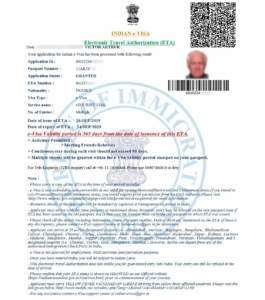
Deciphering a visa for India
 Application Id Visa application number
- Passport number Your passport number. Must respect what is written on the passport page containing the photo. This is what transport companies check.
- Application status The status of the request. Must be GRANTED
- ETA number Electronic visa number
- Nationality Your nationality
- Visa type : Always e-Visa
- Service name The visa category, which usually includes many sub-categories that are not displayed.
- No. of entries Number of authorized "inbound" immigration crossings
- Date of issue of ETA Document edition date
- Date of expiry of ETA Date until which you can enter India to "activate" your e-Visa
- Activities permitted Authorized activities in India. Please note that the agent will undoubtedly ask you questions to confirm your reason for travel.
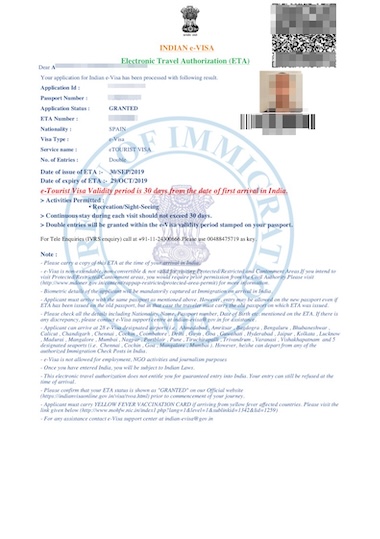 Application Id Visa application number
The appearance of the e-Visa has changed recently, but the information remains the same.
What is the address of the official Indian e-visa website?
The official e-Visa India website is https://indianvisaonline.gov.in/evisa/tvoa.html
Beware, it's only in English and may seem a bit "messy" at times.
Indian Embassy in France, Belgium or Switzerland
The Indian embassy in France is located in Paris, in the 17th arrondissement, at 15, rue Alfred Dehodencq, 75016 Paris. The telephone number is (+33) 1 40 50 70 70 and the fax number is 01 40 50 09 96. The embassy has a consular wing at the following address 20 Rue Albéric Magnard, 75016 Paris. India has a consulate in Lyon, at the following address 2 Rue Cavenne.
The Indian Embassy in Switzerland is at 9, Rue de Valais 1202 Geneva Its telephone number is (+41) 22-906 8686 and fax - (+41) 22-906 8696. It is open from 8:00 am to 4:00 pm every day.
The Indian Embassy in Belgium is located at Chaussee de Vleurgat 217, 1050 Brussels. The telephone number is (+32) 2-640 9140 (+32) 2-645 1850 and the e-mail address is info@indembassy.be.

Inde: mandatory and recommended vaccines
Mandatory vaccinations
-
Yellow fever
Anyone (except infants up to 9 months old) arriving by air or sea from an area at risk of yellow fever transmission without proof of yellow fever vaccination is placed in isolation for up to 6 days. -
Poliomyelitis
Proof of oral polio vaccination at least 4 weeks prior to departure is required for domestic resident travelers from polio-endemic countries (Afghanistan, Nigeria, Pakistan) and countries where poliovirus is circulating after importation (Democratic Republic of Congo, Ethiopia, Kenya, Somalia, Syrian Arab Republic).
Recommended vaccines
-
Malaria
Year-round transmission throughout the country in regions less than 2,000 m above sea level. - The states most at risk are those in the northeast, Andaman and Nicobar Islands, Chhattisgarh, Gujarat, Jharkhand, Karnataka (excluding the city of Bangalore), Madhya Pradesh, Maharasthra (excluding the cities of Mumbai, Nagpur, Nasik and Pune), Orissa and West Bengal (excluding the city of Calcutta).- No risk in Jammu and Kashmir, Himachal Pradesh and Sikkim, and low transmission in the rest of the country. -
Hepatitis A
-
Hepatitis B
For long or repeated stays. -
Rage
In case of prolonged stay in isolation (children: as soon as they walk). -
Typhoid fever
In case of prolonged stay or in precarious hygienic conditions (children: from age 2) -
Japanese encephalitis
From the age of 2 months, for expatriates or those staying in rural areas during the transmission period.
 English
  Français
  Deutsch
  Italiano
  Español