

Arriving in India by sea has always represented an administrative challenge for travelers from all over the world and for tourism professionals. Good news for cruise passengers and crews: the Indian Ministry of Home Affairs (MHA) has officially extended access by e-visa (electronic visa) to 14 new seaports.
However, Indian maritime border regulations remain extremely strict. While this announcement greatly facilitates formalities for many itineraries, several major historical and tourist terminals continue to categorically refuse the electronic visa.
Expanding maritime entry points
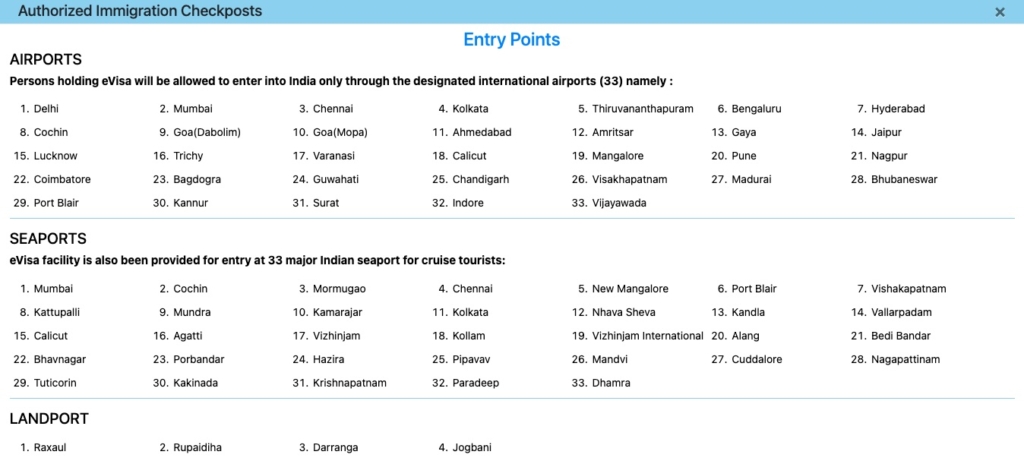
India manages its migratory flows via a network of immigration control posts (ICPs). Historically, e-visa was mainly designed for air arrivals. With this new directive, the indian network expands its list to reach 33 authorized seaports to receive travelers with electronic travel authorization.
The 14 new seaports recently added to the eligibility list include strategic gateways in two key states:
- Gujarat : Alang, Bedi Bandar, Bhavnagar, Porbandar, Hazira, Pipavav and Mandvi.
- Tamil Nadu: Cuddalore, Nagapattinam and Tuticorin.
- Andhra Pradesh Kakinada, Krishnapatnam
- Odisha Paradeep, Dhamra
This is excellent news for cruise operators and international travelers transiting the Indian Ocean. The e-visa application process is not only less costly, but also avoids the need to physically send your file to an Indian embassy or consulate.
Major ports where ETA remains invalid
This is where many a traveler's journey takes a turn for the worse. India does not apply visa reciprocity throughout its territory. Arriving with an ETA at an unapproved port means immediate refusal of entry to India, with no possibility of regularization on the spot.
If your ship or cruise disembarks at one of the following ports, you must obtain a traditional consular visa (paper visa affixed to the passport) before you leave :
The Port of Mormugao (Goa)
Despite Goa's status as India's tourist capital, its main seaport is not a major tourist attraction. not equipped to process e-Visas. International cruisers stopping over in Goa must apply for a regular visa in advance.
The Port of Cochin (Kochi, Kerala)
An essential stopover on Arabian Sea cruises and gateway to the famous Backwaters, Cochin requires a traditional visa for all sea disembarkations.
Jawaharlal Nehru Port (Nhava Sheva, Mumbai)
It is the country's largest container port. Although it is a global hub for maritime logistics, travelers and on-board personnel cannot use the electronic system.
The Port of Chennai (Tamil Nadu)
Located on the Coromandel coast, this major port for international shipping is still not on the list of facilities issuing visas on arrival or accepting E-Visa.
The Port of Kolkata (West Bengal)
Including the river port of Hooghly, this gateway to eastern India requires a consular visa for any foreigner setting foot on land.
The Port of Visakhapatnam (Andhra Pradesh)
Nicknamed Vizag Port, this major industrial hub on the east coast also requires a classic visa, whatever the length and purpose of your stopover.
Planning your trip: check the 3 steps
To avoid being turned back at Indian customs, preparation is essential. The complexity of immigration laws (Immigration Check Posts laws) leaves no room for improvisation.
Check with your cruise line: Before you even start, ask your shipping or cruise line for the exact list of ports of disembarkation and ports of call in India.
Identify the actual entry point: The Indian visa is activated at the first port of entry. If your ship touches down at a “Classic Visa” port before proceeding to an “E-Visa” port, the first port rule applies. You will need a consular visa.
Anticipate processing times:
For an ETA : Allow 3 to 5 working days via our services
For a Consular Visa : Allow a minimum of 15 to 30 days, depending on your nationality and the country you are applying to (biometric fingerprinting is often required).
Need assistance for your stopover in India? Visit our website to find out how to obtain an Indian ETA: visamundi.co/destinations/inde.

 English
  Français
  Deutsch
  Italiano
  Español