

A decree published on August 7, applicable from early 2026, overturns the way passengers can claim compensation for denied boarding, flight cancellation or long delays.
The new civil procedure, which will come into force 6 months after publication, i.e. on February 7, 2026is designed to improve the processing of compensation claims based on the European regulation of February 11, 2004, in particular by giving priority to the out-of-court settlement in the face of increasing litigation.
The courts, airlines, lawyers and the consumer ombudsman are the main players affected by these changes.
Prior mediation becomes the rule
The most significant change is the introduction of a obligatory amicable preliminary attempt to the consumer ombudsman. The aim is to resolve the dispute without going to court.
What's new :
- Referral to the Sanctioned Judge : If the passenger brings the case directly before the court without having gone through mediation, the claim will be dismissed.inadmissibilityand the judge will have to note this absence ex officio.
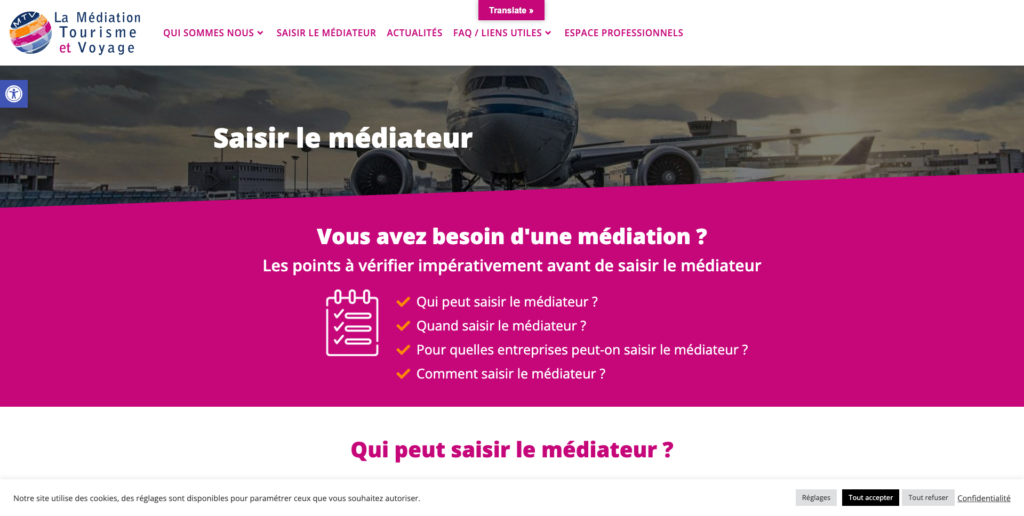
- The Competent Mediator : For this type of dispute (air transport), you must contact the Tourism and Travel Ombudsman (MT/V). This approach is free of charge.
- Before referring a case to the Mediation officer, the passenger must have sent a written complaint (by post or electronically) to the airline. The mediator can only be contacted if the professional has replied negatively or has not replied within a period of 2 months.
- Referral deadline : The applicant has a period ofone year from the date of the initial written complaint to the company to submit its mediation file.
Exceptions to mediation
The obligation of prior mediation is not applicable in several cases, in particular :
- If the claimant has filed a claim with the company before publication of the decree (i.e. before August 7, 2025).
- If the event giving rise to compensation is at least 4 years prior when the decree comes into force (i.e. before February 7, 2022).
- If a legitimate reason is invoked, such as the impossibility of referring the matter to the mediator within a year, or the unavailability of the mediator preventing resolution within six months.
Rules of legal procedure
If mediation fails, or in the event of an exception, recourse to the courts is now strictly regulated, to limit mass litigation.
Two major rules are imposed:
- Mandatory assignment : Applications must be submitted by writ of summonsThe company's new law, which puts an end to the possibility of applying to the court by simple petition.
- Limitation of joint applicants : The summons can only be issued in the name ofa single applicant Or jointly by several passengers of the same flight only if they belong to the same family.
The decree defines very precisely the family relationship that allows a joint assignment: the passengers must be ascendants or collaterals. up to 4th degreeor be spouses, PACS partners or cohabitants. The aim of this measure is to limit mass assignments and non-family class actions.
| Faced with these new procedural constraints, in particular the obligation to mediate and the strict framework of joint appeals, it may be wise to call on specialized services to simplify your procedures. If you want to streamline this process, use an intermediary such as Flightright, our partnerwhich manages the entire claims process (including mandatory prior mediation and management of the court summons if necessary), could save you time and ensure that all the new rules, including deadlines and appeal formats, are complied with. |

 English
  Français
  Deutsch
  Italiano
  Español